
Comprehensive vs. Third-Party Car Insurance: What Each One Covers

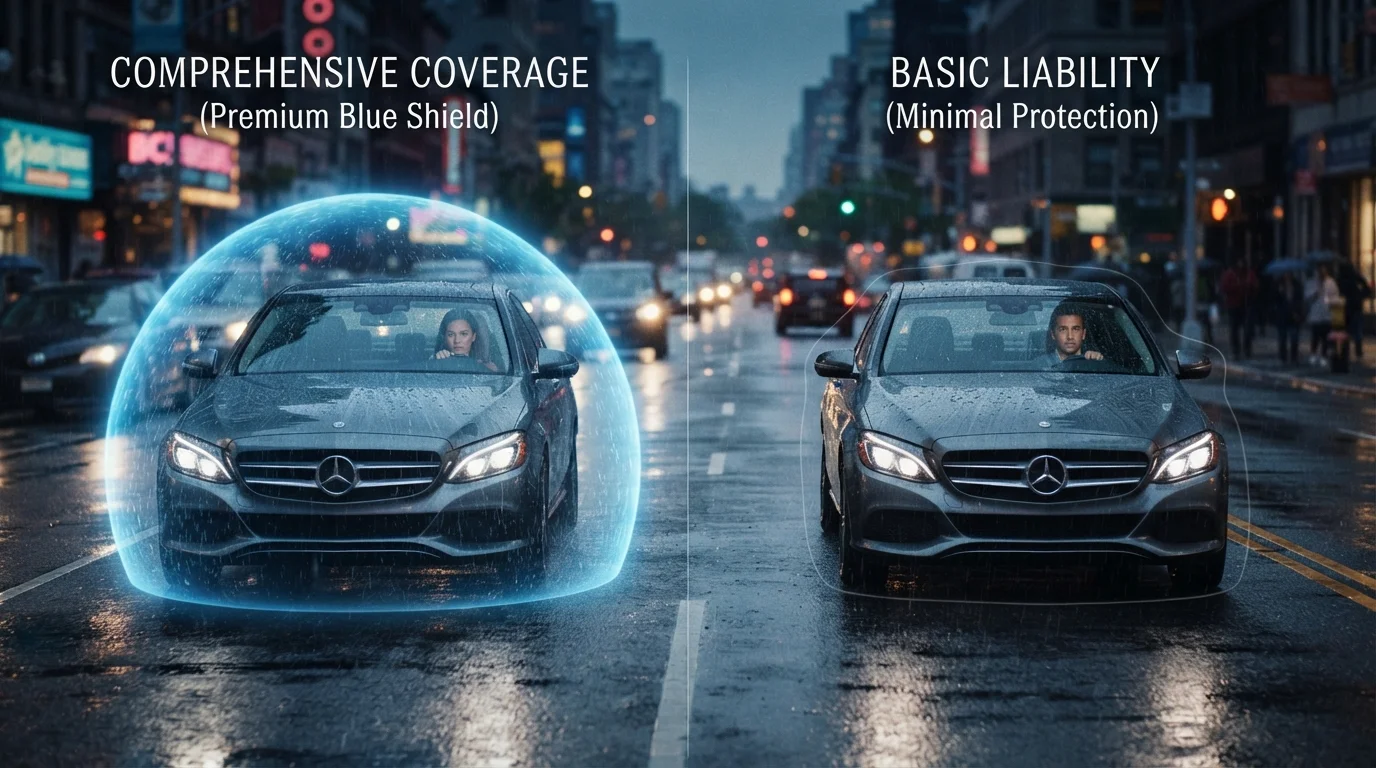
Photo: InsightsTurbo.com | Kickstart Your Knowledge Quest editorial
Key Takeaways
- Third-party insurance covers damage or injury you cause to others - it does not cover your own vehicle.
- Comprehensive insurance adds protection for your own car, including theft, weather events, and at-fault collisions.
- Choosing between them comes down to your car's value, your financial situation, and how much risk you can absorb.
- Lenders often require comprehensive coverage when you're financing or leasing a vehicle.
- A higher deductible on a comprehensive policy can lower your monthly premium significantly.
What Each Policy Actually Covers
Third-party car insurance - often called liability coverage in the US - is the foundation every driver is legally required to carry. It pays for bodily injury and property damage that you cause to other people. If you rear-end another driver, your third-party policy covers their medical bills and car repairs. What it doesn't cover: anything that happens to your own vehicle or your own medical costs.
Comprehensive car insurance adds a much wider safety net on top of that foundation. It covers damage to your own vehicle from incidents that aren't a collision with another car - think theft, fire, vandalism, flooding, hail, or a fallen tree. Most insurers bundle it with collision coverage (which pays for damage to your car from an at-fault accident), so you're protected from nearly every direction.
For a deeper look at how premiums, deductibles, and claims interact across both policy types, see our guide to how car insurance actually works.
| Criterion | Comprehensive | Third-Party |
|---|---|---|
| Damage you cause to others | Covered | Covered |
| Injury to others you cause | Covered | Covered |
| Damage to your own car (at-fault) | Covered (with collision add-on) | Not covered |
| Theft of your vehicle | Covered | Not covered |
| Weather damage (hail, flood, fire) | Covered | Not covered |
| Vandalism | Covered | Not covered |
| Typical monthly cost | Higher premium | Lower premium |
| Required by lenders/lessors | Usually yes | No |
| Meets state legal minimum | Yes | Yes |
How to Decide Which Level of Cover You Need
The core question is: can you afford to replace or repair your car out of pocket if something happens? If the answer is no, comprehensive coverage is almost certainly worth the added cost. If your car has depreciated to the point where its market value is only a few thousand dollars, paying for comprehensive might not make financial sense - you could be paying premiums that approach or exceed what you'd collect in a claim.
A useful rule of thumb: if your annual comprehensive premium plus your deductible (the amount you pay before insurance kicks in) is close to your car's current market value, the policy may not be cost-effective. You can check your car's approximate value through resources like your state's DMV guidance or publicly available vehicle valuation tools.
~77%
US drivers carrying comprehensive coverage
According to the Insurance Research Council, the majority of US drivers opt for comprehensive coverage, though rates vary significantly by state and vehicle age.
~$170
Average annual cost of comprehensive coverage alone
The National Association of Insurance Commissioners (NAIC) has reported that comprehensive coverage averages well below collision coverage in annual cost for most drivers.
Your driving environment matters too. If you live in an area with high vehicle theft rates, frequent hailstorms, or regular flooding, comprehensive coverage addresses risks that third-party policies leave wide open. Conversely, if you drive infrequently and store your car in a secure garage, your risk profile is lower.
New drivers often pay more across all policy types - understanding the factors behind that is worth exploring. See why new drivers often overpay for insurance to understand what's driving your premium.
For a broader look at how insurance tiers are structured - including third-party fire and theft as a middle option - see car insurance categories and what they actually cover.
Financing Changes the Equation
The content provided on our blog site traverses numerous categories, offering readers valuable and practical information. Readers can use the editorial team’s research and data to gain more insights into their topics of interest. However, they are requested not to treat the articles as conclusive. The website team cannot be held responsible for differences in data or inaccuracies found across other platforms. Please also note that the site might also miss out on various schemes and offers available that the readers may find more beneficial than the ones we cover.