
Car Insurance Categories and What They Actually Cover

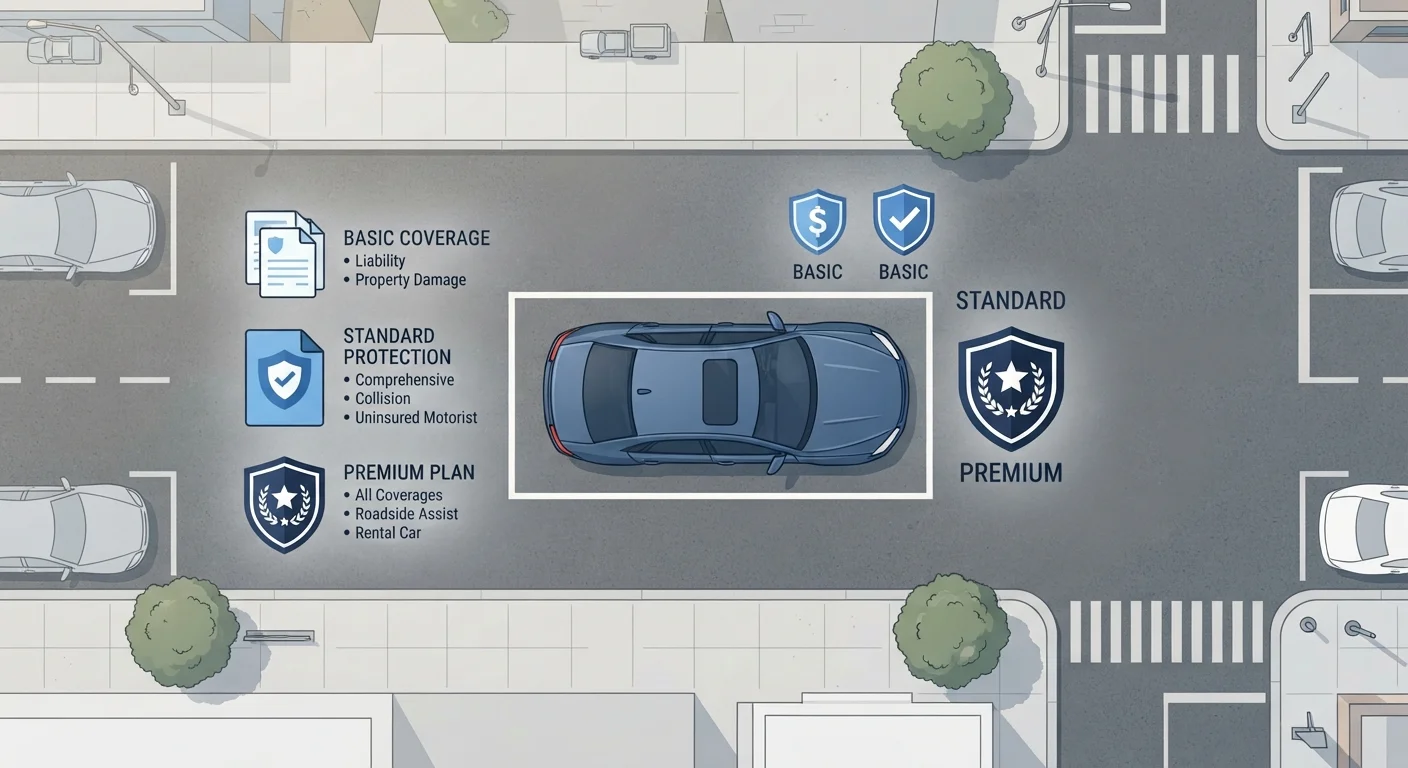
Photo: InsightsTurbo.com | Kickstart Your Knowledge Quest editorial
The Three Standard Insurance Tiers
Car insurance isn't one-size-fits-all, but most policies in the US and other English-speaking markets fall into three recognized tiers. Knowing what each one actually covers - and what it deliberately excludes - is the first step to choosing the right policy. For a broader look at how premiums and claims work, see our plain-language guide to how car insurance works.
| Minimum legal requirement (most US states) | Third-party liability coverage (State insurance commission requirements vary; verify your state's minimums.) |
| What third-party covers | Other people's injuries and property damage you cause |
| What comprehensive adds | Your own vehicle - collisions, theft, fire, weather, vandalism |
| Fire and theft tier fills the gap for | Vehicle theft and fire damage only - not collision |
| Lender requirement on financed vehicles | Comprehensive coverage typically required by lender (Check your loan or lease agreement for specifics.) |
| Common add-on coverages | Roadside assistance, rental reimbursement, uninsured motorist |
Third-Party Liability
Third-party liability is the legal minimum in most jurisdictions. If you cause an accident, this tier pays for the other driver's medical bills, their passengers' injuries, and damage to their vehicle or property. It covers them - not you, not your car. If your vehicle is totaled in a crash you caused, you receive nothing from a third-party-only policy.
Third-Party, Fire and Theft
This mid-tier adds two specific protections for your own vehicle: theft and fire damage. If your car is stolen or destroyed in a fire, you can make a claim. However, if you collide with a barrier, skid on ice, or are hit in a parking lot where fault is unclear, your own vehicle is still not covered. It's a meaningful step up from bare-minimum coverage but leaves a significant gap.
Comprehensive Coverage
Comprehensive is the broadest standard tier. It includes everything in the two lower tiers plus damage to your own vehicle from collisions, weather events (hail, flooding), vandalism, and other named perils listed in your policy. "Comprehensive" does not mean unlimited - every policy has liability limits and a deductible you pay before the insurer contributes. If you're financing your car, your lender will almost certainly require this tier. See our detailed comparison of comprehensive vs. third-party cover for a side-by-side breakdown.
Common Add-Ons Worth Understanding
The three tiers form the base, but policies frequently offer optional riders that fill specific gaps. Some states require certain add-ons by law; others leave them entirely optional.
Third-Party Insurance
The minimum legal level of car insurance in most US states and many other countries. It covers damage or injury you cause to other people and their property, but provides no protection for your own vehicle.
Third-Party Fire and Theft
A mid-tier policy that adds protection for your own car if it is stolen or damaged by fire, on top of standard third-party liability coverage. Damage from collisions to your own vehicle is still not covered.
Comprehensive Coverage
The broadest standard tier of car insurance. It covers third-party liability plus damage to your own vehicle from collisions, theft, fire, weather events, vandalism, and other named perils.
Deductible
Also called an excess in some markets - the fixed amount you pay out of pocket toward a claim before your insurer covers the rest. A higher deductible generally lowers your premium.
Liability Limit
The maximum dollar amount your insurer will pay on your behalf for a single claim. Any costs above this limit become your personal financial responsibility.
Uninsured Motorist Coverage
An optional or state-required add-on that pays for your injuries and vehicle damage if you are hit by a driver who carries no insurance or whose coverage is insufficient.
Named Perils
Specific risks explicitly listed in a policy as covered events. Damage caused by anything not on the list is excluded, which is why reading the policy schedule carefully matters.
- Uninsured/underinsured motorist coverage - pays for your injuries and repairs if the at-fault driver has no insurance or insufficient limits.
- Roadside assistance - covers towing, flat-tire help, and lockouts. Often cheaper through your insurer than standalone memberships.
- Rental reimbursement - covers a rental car while your vehicle is being repaired after a covered claim.
- Gap insurance - if your car is totaled and you owe more on the loan than the vehicle is worth, gap coverage pays the difference. Particularly relevant on new or heavily financed vehicles.
This Is General Information, Not Personal Advice
Driving without any valid coverage carries serious consequences. For a factual look at what happens, read what happens if you drive without valid insurance. If you're a newer driver wondering why quotes seem high, explore the factors that affect your premium before committing to a policy.
~12.6%
US drivers estimated to be uninsured
According to the Insurance Research Council's most recently published national estimate.
3 tiers
Standard car insurance categories
Third-party, third-party fire and theft, and comprehensive are the three universally recognized coverage tiers.
The content provided on our blog site traverses numerous categories, offering readers valuable and practical information. Readers can use the editorial team’s research and data to gain more insights into their topics of interest. However, they are requested not to treat the articles as conclusive. The website team cannot be held responsible for differences in data or inaccuracies found across other platforms. Please also note that the site might also miss out on various schemes and offers available that the readers may find more beneficial than the ones we cover.