
Hard Skills vs. Soft Skills: Understanding the Difference That Shapes Careers

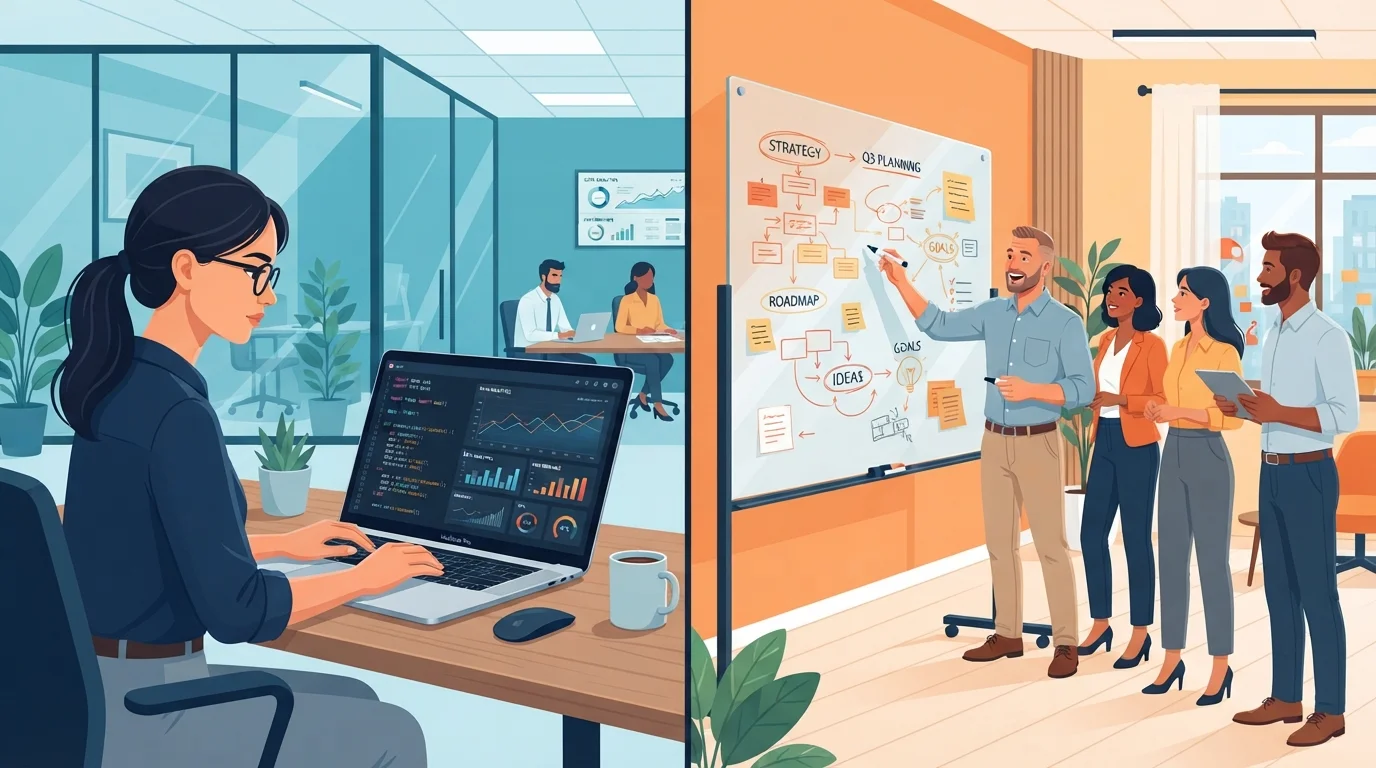
Photo: InsightsTurbo.com | Kickstart Your Knowledge Quest editorial
Key Takeaways
- Hard skills are specific, measurable abilities like coding, data analysis, or speaking a second language.
- Soft skills are interpersonal and behavioral - communication, adaptability, and problem-solving.
- Employers screen for hard skills but often promote based on soft skills.
- Both skill types can be deliberately developed with consistent, structured practice.
- The strongest career profiles combine technical depth with strong interpersonal ability.
What Hard Skills and Soft Skills Actually Mean
Hard skills are defined, teachable abilities that can be demonstrated and measured. They're usually acquired through formal education, training programs, certifications, or deliberate practice. Examples include Python programming, financial modeling, graphic design, fluency in a second language, or operating specialized equipment.
Soft skills are behavioral and interpersonal competencies - harder to quantify but equally important. They describe how you work rather than what you can do technically. Examples include active listening, critical thinking, time management, conflict resolution, and adaptability.
The word "soft" can be misleading - it doesn't mean easy. Research from Harvard University, Carnegie Foundation, and Stanford Research Institute has consistently found that long-term career success depends predominantly on interpersonal skills, with technical ability playing a supporting role. Neither type stands alone.
| Criterion | Hard Skills | Soft Skills |
|---|---|---|
| Definition | Specific, teachable technical abilities | Interpersonal and behavioral competencies |
| How they're learned | Courses, certifications, structured practice | Experience, feedback, reflection |
| How they're measured | Tests, portfolios, credentials | Performance reviews, peer feedback |
| Examples | Python, financial modeling, data analysis | Communication, adaptability, leadership |
| Role in hiring | Screening threshold for role eligibility | Key factor in advancement and fit |
| Transferability | Varies; some skills are industry-specific | High - valued across nearly all industries |
How Each Skill Type Is Built and Measured
Hard skills follow a relatively structured development path. You identify a skill gap, find a course, certification, or practice environment, and measure progress through tests, projects, or credentials. Online platforms, community colleges, and professional associations all offer structured pathways. See our skill gap audit guide to map which technical skills your target roles actually require.
Soft skills develop through experience, reflection, and intentional feedback - which makes them harder but not impossible to build deliberately. Some practical approaches:
- Communication: Join a structured speaking group, volunteer to run meetings, or seek written feedback on reports you produce.
- Adaptability: Take on stretch assignments outside your comfort zone; debrief what you learned after setbacks.
- Collaboration: Participate in team projects with people from different disciplines or backgrounds.
Focused, distraction-free practice accelerates both skill types - whether you're drilling a technical tool or rehearsing a difficult conversation.
92%
Employers citing soft skills as critical
According to LinkedIn's Global Talent Trends report, 92% of talent professionals said soft skills matter as much or more than technical skills when hiring.
85%
Job success attributed to soft skills
Research jointly published by Harvard University, Carnegie Foundation, and Stanford Research Institute found that approximately 85% of long-term job success is linked to soft skills.
44%
Core skills expected to change by 2027
The World Economic Forum's Future of Jobs Report projects that nearly half of workers' core skill sets will need updating within a few years, underscoring the need for continuous learning.
Why Employers Need Both - and Weigh Them Differently
Hiring managers use hard skills to determine whether a candidate can do the job on day one. These are often assessed through technical screens, portfolio reviews, or certification checks. They function as a threshold - you need enough to get in the room.
Once inside, soft skills frequently determine trajectory. The ability to communicate clearly with non-technical colleagues, manage competing priorities under pressure, or navigate team disagreements often separates candidates who advance from those who plateau.
Many entry-level roles explicitly list hard skill requirements, but job descriptions increasingly include language like "strong communicator," "team player," or "self-starter" - these are soft skill signals. Our entry-level career skills guide breaks down the in-demand competencies that give early-career candidates a real edge.
It's also worth noting that many soft skills - particularly communication and teamwork - overlap significantly with what employers call transferable skills: abilities that hold value across different roles and industries. Building soft skills is often the fastest way to expand your career options.
Hard vs. Soft Isn't Either/Or
The content provided on our blog site traverses numerous categories, offering readers valuable and practical information. Readers can use the editorial team’s research and data to gain more insights into their topics of interest. However, they are requested not to treat the articles as conclusive. The website team cannot be held responsible for differences in data or inaccuracies found across other platforms. Please also note that the site might also miss out on various schemes and offers available that the readers may find more beneficial than the ones we cover.