
Budgeting Methods Compared: Finding the Right Framework for Your Lifestyle

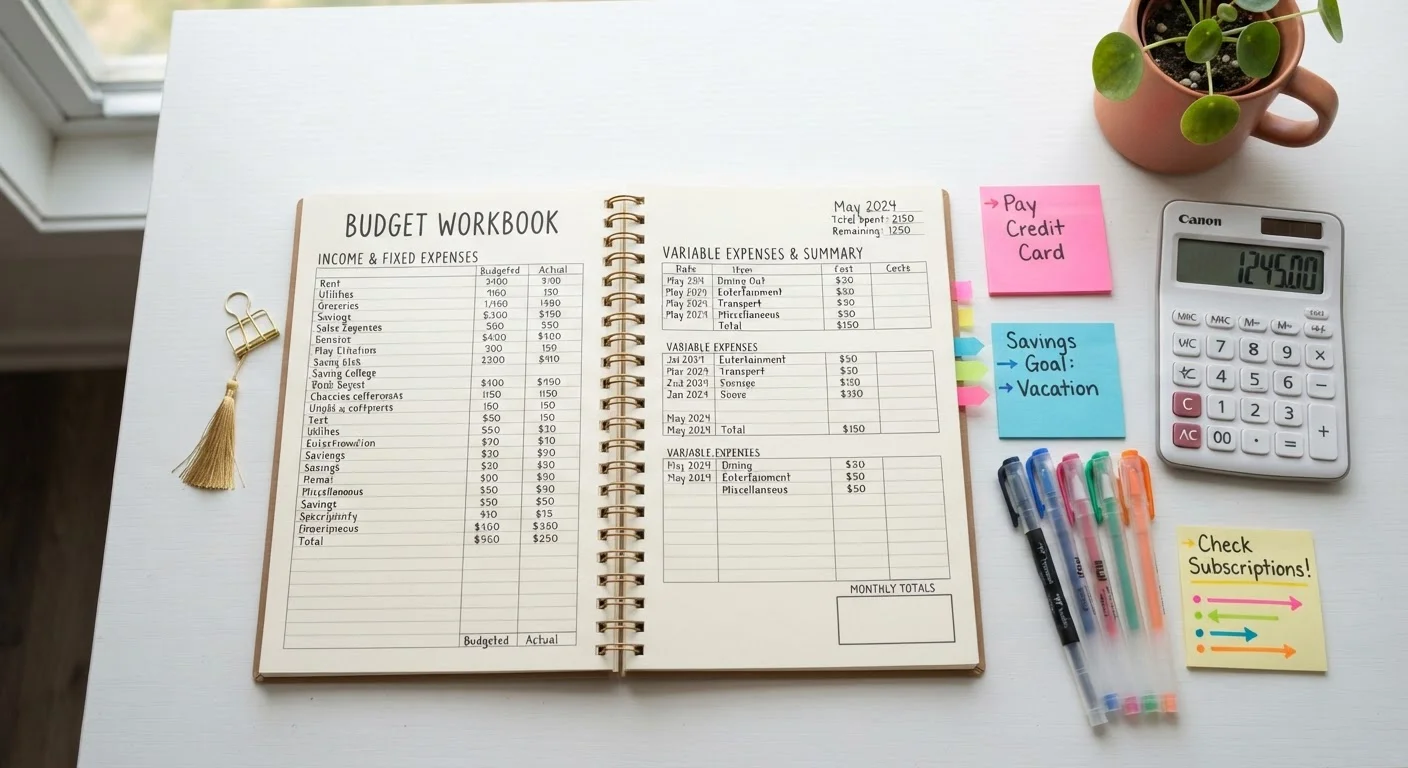
Photo: InsightsTurbo.com | Kickstart Your Knowledge Quest editorial
Key Takeaways
- No single budgeting method works for everyone - lifestyle, income type, and personality all matter.
- The 50/30/20 rule offers a simple percentage-based split for needs, wants, and savings.
- Zero-based budgeting assigns every dollar a job, giving high-detail control over spending.
- Pay-yourself-first prioritizes saving automatically before any discretionary spending occurs.
- Envelope budgeting (cash or digital) works well for people who overspend in specific categories.
- The best method is the one you'll maintain consistently over time, not the most sophisticated one.
Why Your Budgeting Method Matters
A budget is only useful if you use it. That sounds obvious, but it explains why so many people start strong in January and abandon their spreadsheet by March. The method you choose shapes how much mental energy budgeting demands from you each month - and whether it fits the way your money actually moves.
If you've ever felt like budgeting just isn't for you, it's worth asking whether the method was the mismatch, not the habit itself. Before diving in, it also helps to examine whether you're carrying any assumptions about budgets that might be holding you back - see our look at common budgeting myths for a useful reset.
Below, we compare four widely used frameworks across key practical dimensions so you can identify a starting point that fits your life.
The Four Frameworks at a Glance
Each method below represents a distinct philosophy about how to allocate money. They're not mutually exclusive - many people blend elements over time - but understanding each one individually helps you make a deliberate choice rather than a default one.
| 50/30/20 Rule | Zero-Based | Pay-Yourself-First | Envelope Budgeting | |
|---|---|---|---|---|
| Setup complexity | Low | High | Low | Medium |
| Ongoing time required | Low | High | Very low | Medium |
| Works with irregular income | Moderate | Difficult | Yes | Yes |
| Savings prioritization | Built-in percentage | Assigned explicitly | Automatic first step | Category-dependent |
| Spending detail visibility | Broad categories | Every dollar tracked | Minimal | Per-category caps |
| Best for overspending control | Moderate | Strong | Weak | Very strong |
For a deeper look at how spending categories interact with any of these methods, the guide on grouping your expenses clearly is a practical companion read.
Breaking Down Each Method
50/30/20 Rule
This framework divides after-tax income into three buckets: 50% toward needs (rent, utilities, groceries), 30% toward wants (dining out, subscriptions, entertainment), and 20% toward savings and debt repayment. Its appeal is its simplicity - you don't track individual purchases, just monitor whether your broad categories stay in range. The trade-off is that the percentages are guidelines, not universal rules. Someone in a high cost-of-living city may find 50% genuinely insufficient for needs alone.
Zero-Based Budgeting
Here, income minus all assigned expenses equals zero. Every dollar is deliberately allocated - to bills, savings, groceries, fun money, debt payments - before the month begins. Nothing is left unassigned. This gives you precise visibility into where money goes, but it demands more upfront time and a fairly predictable income. It's particularly effective for people who want to aggressively pay down debt or build savings fast. If you're also navigating student loans alongside savings goals, the framework in balancing student loan repayment with saving pairs well here.
Pay-Yourself-First
Sometimes called reverse budgeting, this method flips the typical sequence. You transfer a set amount to savings (or investments, or an emergency fund) immediately when income arrives, then spend what remains however you choose. It automates the most important move - saving - without requiring detailed category tracking. The risk is that if your remaining spending is undisciplined, you may still accumulate debt on variable expenses.
Automate to Reduce Friction
Envelope Budgeting
Originally a cash system where you'd physically stuff envelopes with money for each spending category, this approach now has digital equivalents. When an envelope is empty, spending in that category stops for the month. It creates a visceral spending limit that percentage-based methods don't provide. It works especially well for categories where you tend to overspend. The downside: it requires consistent effort to maintain and can feel rigid for irregular expenses.
Choosing What Fits Your Situation
The right method depends on three practical factors: income predictability, desired level of detail, and your natural tendency toward discipline or flexibility.
- Irregular or freelance income: Pay-yourself-first or envelope budgeting tend to adapt better than zero-based, which assumes a fixed monthly number to assign.
- Steady paycheck, savings-focused: Zero-based budgeting or 50/30/20 provide strong structure for channeling surplus toward goals.
- History of overspending specific categories: Envelope budgeting's hard stop mechanism is a meaningful check.
- Minimal time to budget: Pay-yourself-first requires the least ongoing maintenance once automated.
If your situation involves very tight margins, budgeting when living paycheck to paycheck addresses realistic starting points when there's little room for allocation. And once you've chosen a method, tracking spending without obsessing over every receipt offers approaches to monitoring your money without making every purchase feel like an interrogation.
This article is for general informational and educational purposes only and does not constitute personalized financial advice. Consider consulting a qualified financial professional for guidance tailored to your specific circumstances.
The content provided on our blog site traverses numerous categories, offering readers valuable and practical information. Readers can use the editorial team’s research and data to gain more insights into their topics of interest. However, they are requested not to treat the articles as conclusive. The website team cannot be held responsible for differences in data or inaccuracies found across other platforms. Please also note that the site might also miss out on various schemes and offers available that the readers may find more beneficial than the ones we cover.