
Reading the Road: How to Anticipate Hazards Before They Happen

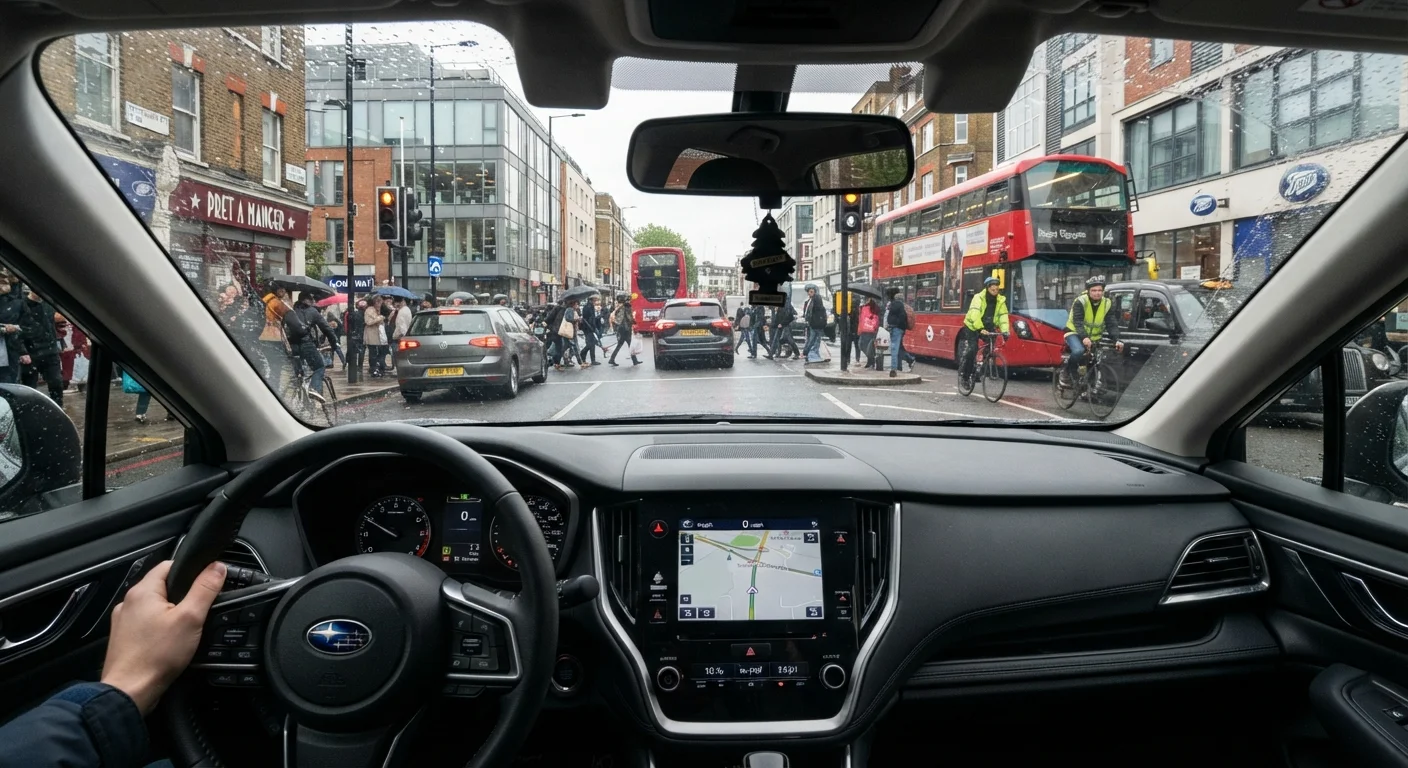
Photo: InsightsTurbo.com | Kickstart Your Knowledge Quest editorial
Key Takeaways
- Hazard perception is a trainable skill, not an innate talent - it improves with deliberate practice.
- Scanning 10-15 seconds ahead gives you time to identify and respond to developing risks.
- Context clues like parked vehicles, school zones, and blind bends signal hidden hazards before they appear.
- Driving posture, mirror use, and following distance directly affect how quickly you can react.
- Weather and road type change the hazard profile significantly - your scanning strategy must adapt.
Why Hazard Perception Is a Skill, Not a Reflex
Most new drivers assume that safe driving is mainly about reacting quickly. In reality, the drivers with the fewest incidents aren't the fastest reactors - they're the ones who rarely need to react urgently because they've already seen the situation developing. Hazard perception is the ability to read the road ahead, interpret environmental cues, and build a mental model of what's likely to happen next.
This skill is learnable. Research in driver training consistently shows that deliberate practice - specifically, conscious attention to scanning technique - measurably improves hazard recognition times. It's also testable: the hazard perception test in the UK driving exam and similar assessments in driver education programs in the US are designed specifically to measure this ability. For a broader foundation of new-driver skills, see our complete roadmap for new drivers.
Reaction Time Is Not Negotiable
The steps below translate hazard perception theory into a repeatable driving routine you can start applying on your next trip.
What you will need
Step-by-Step: Building Your Hazard Scanning Routine
Hazard perception isn't a single action - it's a cluster of habits that work together. The steps below build on each other: mirror setup enables effective scanning, extended gaze provides reaction time, and context reading turns that reaction time into genuine anticipation.
Adjusted Interior Mirrors
Provides a clear rear view to detect approaching vehicles before changing speed or position.
Properly Set Wing Mirrors
Minimises blind spots on both sides so lane-change and merging hazards are visible.
Clean Windshield (Inside and Out)
Removes glare and smearing that obscure hazards, especially in low-angle sunlight or rain.
Set Your Mirrors Before You Move
Before pulling away, adjust your interior mirror to frame the full rear window, and set each wing mirror so only a sliver of your own vehicle is visible at the inner edge. This maximises coverage and reduces the size of your blind spots. Proper mirror setup is the foundation every subsequent scan depends on - if your mirrors are off, your spatial picture of the road is incomplete from the start.
Extend Your Gaze to 10-15 Seconds Ahead
New drivers tend to fix their eyes just in front of the vehicle. Experienced drivers look much further - roughly 10 to 15 seconds of travel time ahead, which is about a city block at urban speeds or a quarter-mile on a highway. This forward gaze allows hazards to register as developing situations rather than sudden emergencies. Practice consciously pushing your focal point further down the road on every drive.
Read Context Clues, Not Just Visible Hazards
A parked delivery van signals a possible door opening or a pedestrian stepping out from behind it. A ball rolling into the road almost always precedes a child. A school zone sign at 3 p.m. means elevated foot traffic even if no children are visible yet. Train yourself to treat environmental cues - signage, parked vehicles, road geometry - as predictions about what may appear, not just neutral background.
Scan Your Mirrors in a Regular Pattern
Hazard perception isn't only about what's in front. Use a consistent mirror-check routine: interior mirror every 5-8 seconds, relevant wing mirror before any speed or position change. This rhythm builds a continuously updated mental picture of surrounding traffic. If you know a vehicle has been sitting in your left blind spot for 30 seconds, you're far better positioned to react if it suddenly merges.
Maintain a Following Distance That Gives You Options
The two-second rule - keeping at least two seconds of gap between your front bumper and the vehicle ahead - is a minimum in good conditions. In rain, fog, or heavy traffic, increase it to four seconds or more. This gap is not just braking space; it's your observation window. A larger following distance lets you see brake lights further back in the traffic flow and gives you time to respond before the situation becomes critical. See our guide to dangerous driving habits for more on why tailgating compresses your reaction time.
Adapt Your Scanning Strategy to the Environment
Urban and rural roads present fundamentally different hazard profiles. In cities, hazards emerge from the sides - side streets, cyclists, pedestrians - so peripheral awareness matters most. On rural roads, hazards tend to develop from ahead - blind bends, slow farm vehicles, animals. Adjust where you focus your long-range scan based on the environment you're in. Our breakdown of urban vs. rural risk covers this in depth.
Practice Commentary Driving
Weather conditions change which hazards dominate your attention. Rain reduces traction and visibility simultaneously; fog collapses your useful scanning distance to metres. Our guide to driving in adverse weather explains how to adjust each of these habits when conditions deteriorate.
Complacency Is a Hidden Risk
The content provided on our blog site traverses numerous categories, offering readers valuable and practical information. Readers can use the editorial team’s research and data to gain more insights into their topics of interest. However, they are requested not to treat the articles as conclusive. The website team cannot be held responsible for differences in data or inaccuracies found across other platforms. Please also note that the site might also miss out on various schemes and offers available that the readers may find more beneficial than the ones we cover.