
Safe Driving in Rain, Fog, Ice, and Other Adverse Conditions

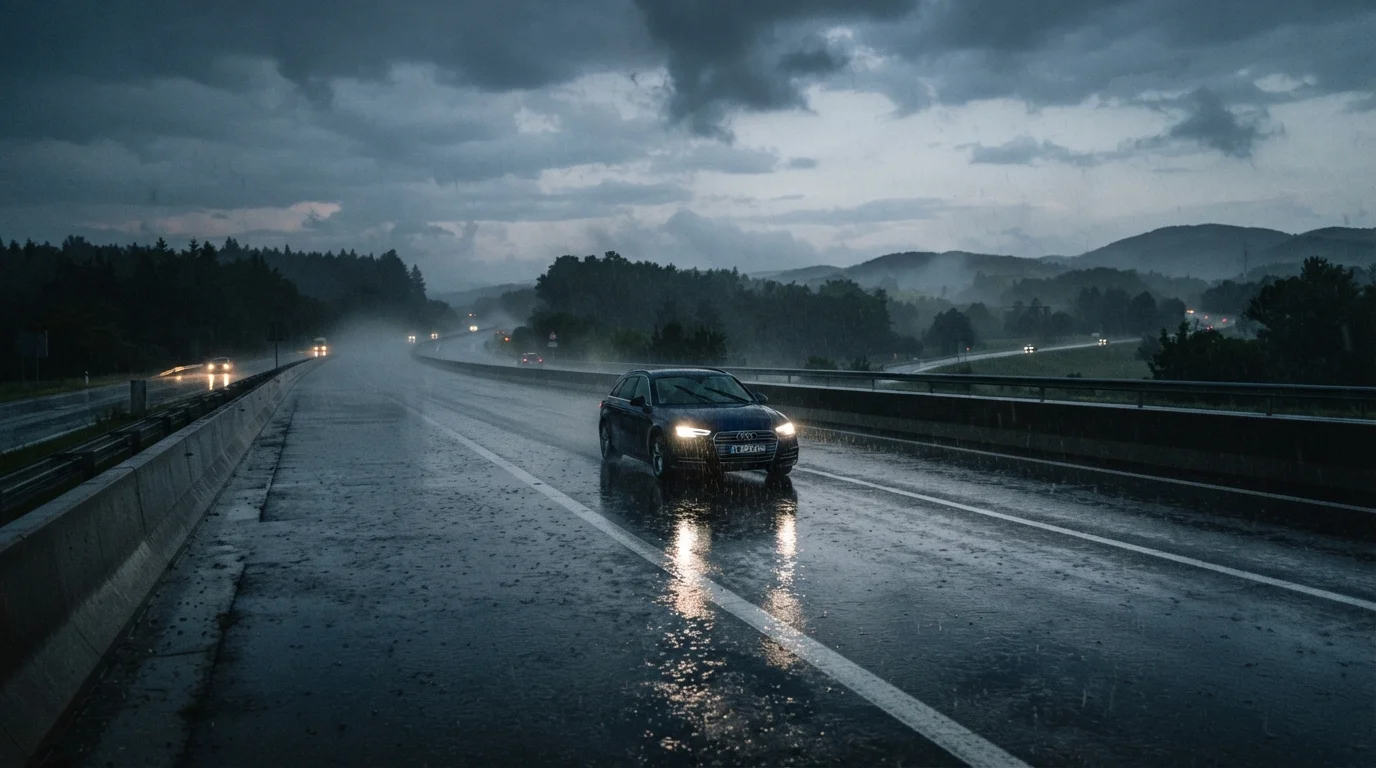
Photo: InsightsTurbo.com | Kickstart Your Knowledge Quest editorial
Key Takeaways
- Wet roads dramatically extend stopping distances - always increase your following gap in rain.
- In fog, use low-beam headlights and fog lights if available; high beams reflect back and reduce visibility.
- Black ice is nearly invisible - if temperatures are near or below freezing, treat every bridge and shaded road as potentially icy.
- When conditions become dangerous enough, the safest decision is to stop and wait them out.
- Each weather type requires specific adjustments to speed, lighting, and following distance.
Why Adverse Weather Demands a Different Mindset
Most new drivers learn to drive in clear, dry conditions - and that becomes their mental baseline. When the weather changes, the temptation is to drive the same way and simply feel more alert. That's not enough. Rain, fog, ice, and other challenging conditions change the fundamental physics of your car: how quickly it stops, how much grip the tires have, and how far ahead you can see.
Understanding these changes - and responding to each one specifically - is what separates a driver who stays safe from one who becomes a statistic. For a broader foundation, see our complete guide for new drivers.
Driving in Rain: Grip, Spray, and Following Distance
Rain reduces tire traction immediately, and the risk increases further on roads where oil and rubber have accumulated over dry days - the first 20-30 minutes of rainfall can create conditions almost as slippery as ice. Hydroplaning (when your tires ride on a film of water rather than gripping the road) can occur at speeds as low as 35 mph on standing water.
~21%
US crashes attributed to weather conditions annually
According to the Federal Highway Administration, weather-related crashes account for roughly 21% of all vehicle crashes in the United States each year.
2x
Increase in stopping distance on wet vs. dry pavement
Road safety research consistently shows that wet pavement can at least double the stopping distance required compared to dry conditions at the same speed.
The core adjustments in rain: reduce speed to a level that genuinely reflects reduced grip (not just the posted limit), increase your following distance to at least four seconds, turn on your headlights so other drivers can see you, and avoid sharp braking or sudden steering inputs. If you feel the steering go light, you may be hydroplaning - ease off the accelerator gently and do not brake hard. For a deeper look at how rain affects stopping, see our stopping distances explainer.
Fog and Low Visibility: The Light Settings That Matter
Fog is deceptive - drivers often underestimate how dramatically it compresses their stopping distance relative to visibility. A common error is using high-beam headlights, which reflect off fog droplets and actually reduce forward visibility. Use low beams and, if your vehicle has them, dedicated front fog lights.
The Right Fog Light Combination Matters
Rear fog lights (standard on most US vehicles as a single red lamp) should be activated in dense fog so the driver behind you can maintain awareness. Turn them off once visibility improves - they can dazzle other drivers in clear conditions. Match your speed to your actual sight distance: if you can only see 100 feet ahead, you need to be able to stop within 100 feet. If visibility drops to near zero, pull completely off the road, turn off your driving lights (leave hazards on), and wait.
Ice and Snow: The Slowest, Smoothest Inputs Win
Ice is the most dangerous common surface condition because it offers almost no traction and often cannot be seen. Black ice - a thin, transparent glaze that forms on pavement - looks like a wet road. It forms most readily on bridges, overpasses, and shaded sections of road even when the surrounding surface is dry.
On ice or packed snow, every driver input - acceleration, braking, steering - should be gradual and smooth. Sudden movements transfer weight abruptly and can cause a skid. If you skid, steer gently in the direction you want to go and avoid stomping the brakes. If your vehicle has ABS (anti-lock braking system), apply steady firm pressure and let the system modulate - you may feel a pulsing sensation, which is normal. Dramatically reduce speed, increase following distance to eight seconds or more, and know that four-wheel drive helps you accelerate but does not improve braking or cornering on ice.
Wind, Sun Glare, and When to Stop Entirely
High winds are most hazardous on exposed highways, bridges, and when passing large vehicles - a truck's slipstream can push a smaller car sideways. Keep a firm, two-handed grip and anticipate gusts in open sections. Reduce speed in sustained strong wind conditions.
Sun glare - particularly at dawn and dusk - can briefly blind drivers to traffic signals, pedestrians, and stopped vehicles. Keep sunglasses accessible, use your visor, and slow down if glare is severe enough that you cannot see the road ahead clearly. These are moments where hazard perception skills matter most.
Some conditions - a whiteout blizzard, rapidly rising floodwater, or zero-visibility fog - are genuinely too dangerous to continue driving in. Pulling into a parking lot, rest area, or safe shoulder and waiting is a sound, responsible decision. Fatigue compounds every one of these risks; see our guide on driver fatigue if you're also driving long distances in difficult conditions.
Floodwater Is More Dangerous Than It Looks
The content provided on our blog site traverses numerous categories, offering readers valuable and practical information. Readers can use the editorial team’s research and data to gain more insights into their topics of interest. However, they are requested not to treat the articles as conclusive. The website team cannot be held responsible for differences in data or inaccuracies found across other platforms. Please also note that the site might also miss out on various schemes and offers available that the readers may find more beneficial than the ones we cover.