
Skills That Separate Confident Drivers from Anxious Ones

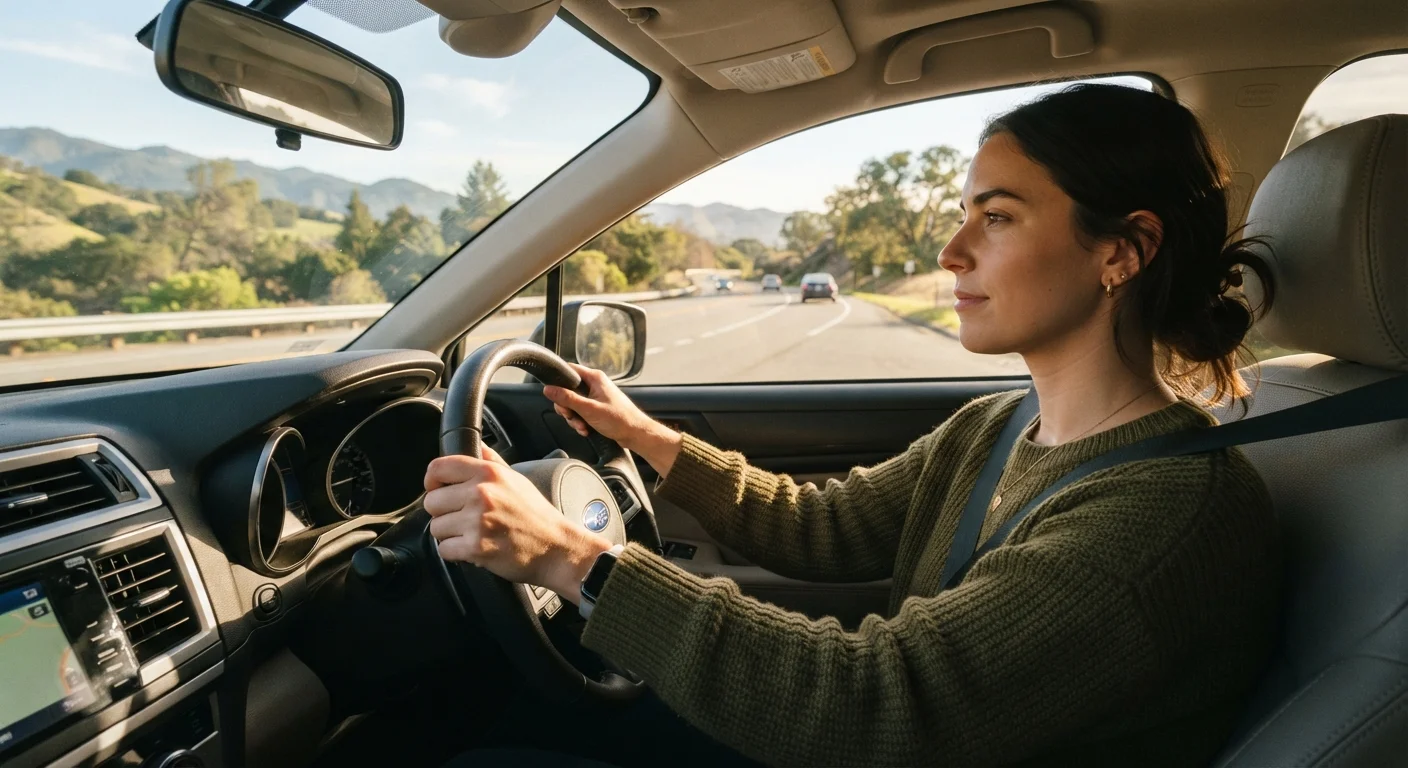
Photo: InsightsTurbo.com | Kickstart Your Knowledge Quest editorial
Key Takeaways
- Scanning far ahead rather than at your hood is one of the fastest ways to reduce driving anxiety.
- Smooth, deliberate inputs - steering, braking, accelerating - signal control to your nervous system.
- Building a pre-drive routine creates predictability that calms anxiety before you turn the key.
- Understanding following distance rules helps you stay in control even when others drive poorly.
- Confident drivers actively manage their mental state, not just their vehicle.
Why Confidence and Skill Are Inseparable
Driving anxiety is remarkably common among new drivers - and often misunderstood. Many people assume it fades automatically with more time on the road. In reality, time alone rarely builds confidence. What builds confidence is deliberately practised skill.
Anxious drivers and confident ones often share the same license and the same number of hours behind the wheel. What separates them is a small set of habits that shift driving from reactive guessing to informed decision-making. The good news: every one of these habits is learnable.
For a broader foundation, The New Driver's Complete Roadmap to Safe, Confident Driving covers everything from basic controls to highway merging in plain terms. This article zooms in on the specific skills that make the biggest psychological difference.
Look further down the road
Most new drivers fixate on the pavement directly in front of their hood. Experienced drivers scan 12-15 seconds ahead - roughly a city block at urban speeds - which gives them time to process and respond rather than react.
Shifting your visual focus further ahead does something immediate: it reduces the sensation that everything is coming at you too fast. Your brain stops interpreting motion as threat. Start practising this on quiet streets before applying it in traffic.
Scanning further ahead transforms driving from reacting to planning.
Use smooth, deliberate inputs
Jerky braking, sharp steering corrections, and abrupt acceleration all amplify anxiety - in the driver and passengers alike. Smooth inputs are not just about comfort; they keep the car's weight balanced and predictable, which means fewer surprises.
Practice braking earlier than you think you need to. Squeeze the brake progressively rather than stamping it. The same principle applies to acceleration from a stop: gradual pressure, then release. Over time, this smoothness becomes automatic and signals competence to your nervous system.
Smooth inputs keep the car balanced and your nervous system calm.
Maintain proper following distance
The standard guidance in the US is the three-second rule: pick a fixed point, watch when the car ahead passes it, then count - you should pass the same point no sooner than three seconds later. In poor weather or at highway speeds, extend this to four or five seconds.
Adequate following distance removes the single biggest source of anxiety in traffic: the feeling of being trapped. When you have space, you have options. You can brake gradually, change lanes, or respond to sudden stops without panic. Tailgating, Speeding, and Other Habits That Put You at Risk explains exactly why closing that gap is one of the riskiest habits new drivers develop.
Space ahead is not wasted space - it's your reaction time, preserved.
Develop a consistent pre-drive routine
Anxiety thrives on unpredictability. A short, repeatable routine before driving - mirrors adjusted, seat position confirmed, phone silenced - creates a psychological anchor. It signals to your brain that the environment is checked and prepared, not unknown.
This is not superstition; it's the same principle professionals in high-stakes fields use to manage performance anxiety. The routine doesn't need to be long - two to three minutes is enough to shift your mental state from uncertain to prepared.
A pre-drive routine converts uncertainty into a manageable, familiar process.
Learn to read traffic patterns, not just individual cars
Confident drivers don't just watch the car directly ahead - they observe the overall flow of traffic. When brake lights ripple three cars ahead, a skilled driver eases off the accelerator before the car in front brakes. When a lane is moving slower, they anticipate a merge rather than being surprised by it.
This is called hazard perception - recognising potential risk before it becomes an immediate problem. It's a learnable skill, not an innate talent. Reading the Road: How to Anticipate Hazards Before They Happen goes deeper on how experienced drivers scan and process risk in real time.
Reading traffic patterns ahead means fewer surprises and faster responses.
Adopt a defensive driving mindset
Defensive driving means assuming that other road users may make mistakes - and positioning yourself to handle those mistakes safely, not aggressively. It is not timid driving; it is deliberate driving. You occupy predictable lane positions, signal early, and leave yourself an exit from any situation.
This mindset shift is significant: instead of hoping other drivers behave perfectly, you accept that they won't and plan accordingly. That acceptance is, paradoxically, deeply calming. {{link:/cars-driving/driving-skills-safety/what-defensive-driving-actually-means-and-why-it-matters|What Defensive Driving Actually Means (And Why It Matters)|What Defensive Driving Actually Means (And Why It Matters)} explains the full system and why it matters on every type of road.
Defensive driving replaces hope with a plan - and plans reduce anxiety.
Building These Skills Progressively
None of these habits require a special course or ideal conditions. Start with whichever feels most accessible and practise it intentionally on your next few drives. Gradual exposure - quiet roads before busy ones, daylight before night - lets your skills grow faster than your anxiety can keep up.
Start with low-stakes practice sessions
Before any drive, a two-minute vehicle check does double duty: it confirms the car is road-ready and gives your mind a structured task to focus on before moving. See Pre-Drive Vehicle Checks Every Driver Should Know for a simple walkthrough.
Once these habits feel natural on local roads, you may find yourself ready for higher-speed environments. Motorway Driving: A First-Timer's Practical Introduction walks through lane discipline and safe merging when that step feels right.
The content provided on our blog site traverses numerous categories, offering readers valuable and practical information. Readers can use the editorial team’s research and data to gain more insights into their topics of interest. However, they are requested not to treat the articles as conclusive. The website team cannot be held responsible for differences in data or inaccuracies found across other platforms. Please also note that the site might also miss out on various schemes and offers available that the readers may find more beneficial than the ones we cover.