
Home Workouts: The Trade-Offs No One Talks About

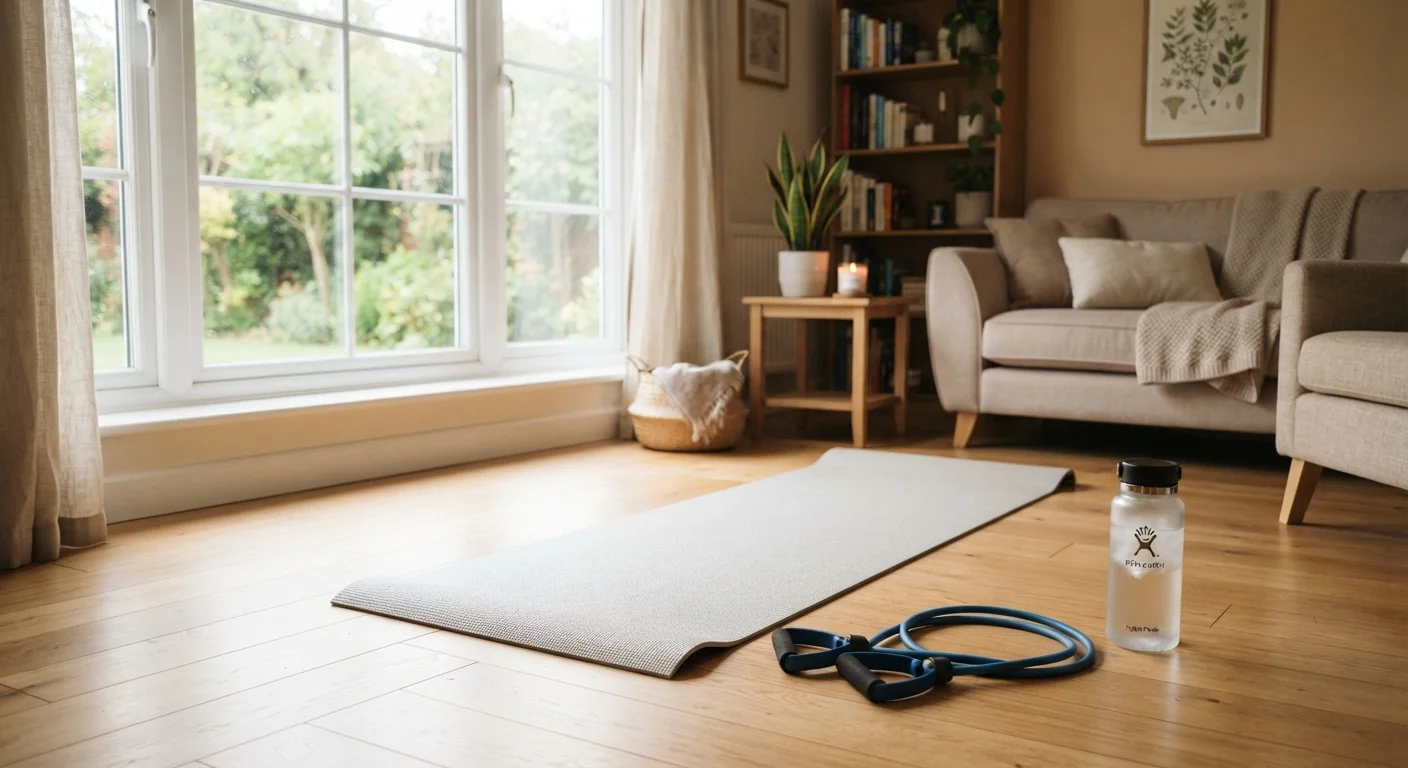
Photo: InsightsTurbo.com | Kickstart Your Knowledge Quest editorial
Key Takeaways
- Home workouts eliminate commute time and gym costs, lowering the barrier to starting a routine.
- Without structure or feedback, beginners risk poor form, stalled progress, and motivation drop-off.
- The home environment itself - space, noise, distractions - can either support or undermine consistency.
- Combining home training with occasional guided sessions can offset many of the key limitations.
No commute removes a major barrier to starting
Eliminating travel time means a 20-minute workout doesn't become a 90-minute commitment. This alone makes daily movement far more realistic for people with full schedules.
Lower cost than most gym memberships
A basic home setup - mat, resistance bands - costs far less than a monthly membership. Many effective routines require no equipment at all.
Private environment reduces self-consciousness
Beginners who feel anxious in gym settings can move at their own pace without comparison or observation. This can accelerate early habit formation.
Flexible scheduling around any lifestyle
Sessions can happen at 6am or 10pm, for 15 minutes or 50, without being tied to facility opening hours or class timetables.
No expert feedback on movement quality
Beginners learning squats, hinges, or push-up variations without correction can ingrain poor mechanics over time. Video instruction helps, but it isn't the same as in-person coaching.
Limited equipment caps progression
As strength improves, bodyweight exercises alone become insufficient for continued muscle development. Adding load at home requires deliberate equipment investment.
Home distractions undermine focus and consistency
Household responsibilities, family members, phones, and ambient noise compete for attention in ways that a gym environment naturally suppresses.
Lack of social accountability affects motivation
Group classes and gym communities create external motivation through shared effort and commitment. Home training relies almost entirely on internal drive, which is harder to sustain for many people.
Space constraints limit exercise variety
Lateral movements, jumping drills, and certain mobility work require floor space that many home environments simply don't have, narrowing the range of possible workouts.
Why Home Workouts Appeal to So Many Beginners
The appeal is straightforward: no commute, no membership fee, no waiting for equipment, and no audience. For someone new to exercise, removing those friction points can be the difference between starting and not starting. That matters more than most fitness content admits.
Research consistently identifies convenience as one of the strongest predictors of exercise adherence. When the barrier to beginning is low - lace up, press play, move - people are more likely to do it repeatedly. For a beginner, showing up consistently in an imperfect environment beats the perfect plan that never gets executed.
No commute removes a major barrier to starting
Eliminating travel time means a 20-minute workout doesn't become a 90-minute commitment. This alone makes daily movement far more realistic for people with full schedules.
Lower cost than most gym memberships
A basic home setup - mat, resistance bands - costs far less than a monthly membership. Many effective routines require no equipment at all.
Private environment reduces self-consciousness
Beginners who feel anxious in gym settings can move at their own pace without comparison or observation. This can accelerate early habit formation.
Flexible scheduling around any lifestyle
Sessions can happen at 6am or 10pm, for 15 minutes or 50, without being tied to facility opening hours or class timetables.
If you're also weighing whether bodyweight movement at home can match gym machines for results, our comparison of bodyweight and machine training breaks down effectiveness, learning curve, and accessibility side by side.
The Real Limitations You Should Know About
Convenience has a shadow side. The same environment that makes home workouts easy to start can make them hard to sustain and progress. Understanding these trade-offs upfront helps you plan around them rather than be surprised by them.
No expert feedback on movement quality
Beginners learning squats, hinges, or push-up variations without correction can ingrain poor mechanics over time. Video instruction helps, but it isn't the same as in-person coaching.
Limited equipment caps progression
As strength improves, bodyweight exercises alone become insufficient for continued muscle development. Adding load at home requires deliberate equipment investment.
Home distractions undermine focus and consistency
Household responsibilities, family members, phones, and ambient noise compete for attention in ways that a gym environment naturally suppresses.
Lack of social accountability affects motivation
Group classes and gym communities create external motivation through shared effort and commitment. Home training relies almost entirely on internal drive, which is harder to sustain for many people.
Space constraints limit exercise variety
Lateral movements, jumping drills, and certain mobility work require floor space that many home environments simply don't have, narrowing the range of possible workouts.
Form is one of the most underappreciated concerns. Without a coach or even a mirror at the right angle, beginners can repeat movement patterns that feel fine but gradually create joint stress. This isn't a reason to avoid home workouts - it's a reason to invest time in learning basic movement cues from credible video instruction before going heavy on volume or load.
Motivation is the other underrated challenge. The gym, for all its social awkwardness, provides an external cue to behave like someone who is there to work. At home, that cue disappears. The couch is visible. Notifications are close. Understanding why beginner plans often fail in the first month can help you set up your home routine to avoid the same patterns.
~30%
Adults meeting weekly physical activity guidelines
According to the CDC, roughly 1 in 3 U.S. adults meet recommended aerobic and muscle-strengthening activity levels - highlighting how big the gap between intention and habit remains.
Top reason
Lack of time cited for not exercising
Surveys on exercise barriers consistently identify time constraints as the leading reason adults skip workouts, which is the exact friction home training directly addresses.
Making the Home Environment Work For You
The physical space shapes the workout more than most people expect. A cluttered room, a hard floor without matting, or a space where family members walk through mid-session creates real friction. Designating even a small, consistent area for movement - even just enough room to lie down and stand up - builds a location-based habit cue that your brain starts to associate with exercise.
Equipment doesn't need to be extensive. A resistance band, a sturdy chair, and your own bodyweight cover an enormous range of movements across strength, mobility, and cardio. The key is progressive challenge: your routine needs to grow with you, or progress stalls. That's a discipline problem in a home setting, where there's no trainer nudging you to add load or try a harder variation.
Progressing Without a Trainer at Home
If you find home movement feels too isolated or limited over time, building activity into daily life is another approach that complements structured home sessions without requiring formal gym access.
Balancing Home Training With Other Movement Options
Home workouts don't have to be all-or-nothing. Many people find that a hybrid approach - two or three home sessions supplemented with a weekly walk, outdoor run, or occasional group class - captures the best of both worlds. The home sessions cover consistency; the external session covers variety, feedback, and social energy.
For beginners building a sustainable routine, balancing cardio, strength, and flexibility is a useful framework regardless of where the training happens. Home settings can cover all three pillars with the right programming - the challenge is knowing enough to program them thoughtfully. If you feel uncertain about where to start, that uncertainty is worth addressing directly rather than pushing through blind. Speaking with a qualified fitness professional, even for a single session, can give your home routine a more solid foundation.
This article is for general informational purposes only and does not constitute medical or fitness advice. Consult a qualified healthcare or fitness professional before starting a new exercise programme, particularly if you have any existing health conditions or injuries.
The content provided on our blog site traverses numerous categories, offering readers valuable and practical information. Readers can use the editorial team’s research and data to gain more insights into their topics of interest. However, they are requested not to treat the articles as conclusive. The website team cannot be held responsible for differences in data or inaccuracies found across other platforms. Please also note that the site might also miss out on various schemes and offers available that the readers may find more beneficial than the ones we cover.