
Bodyweight Training vs. Gym Machines: What New Exercisers Should Know

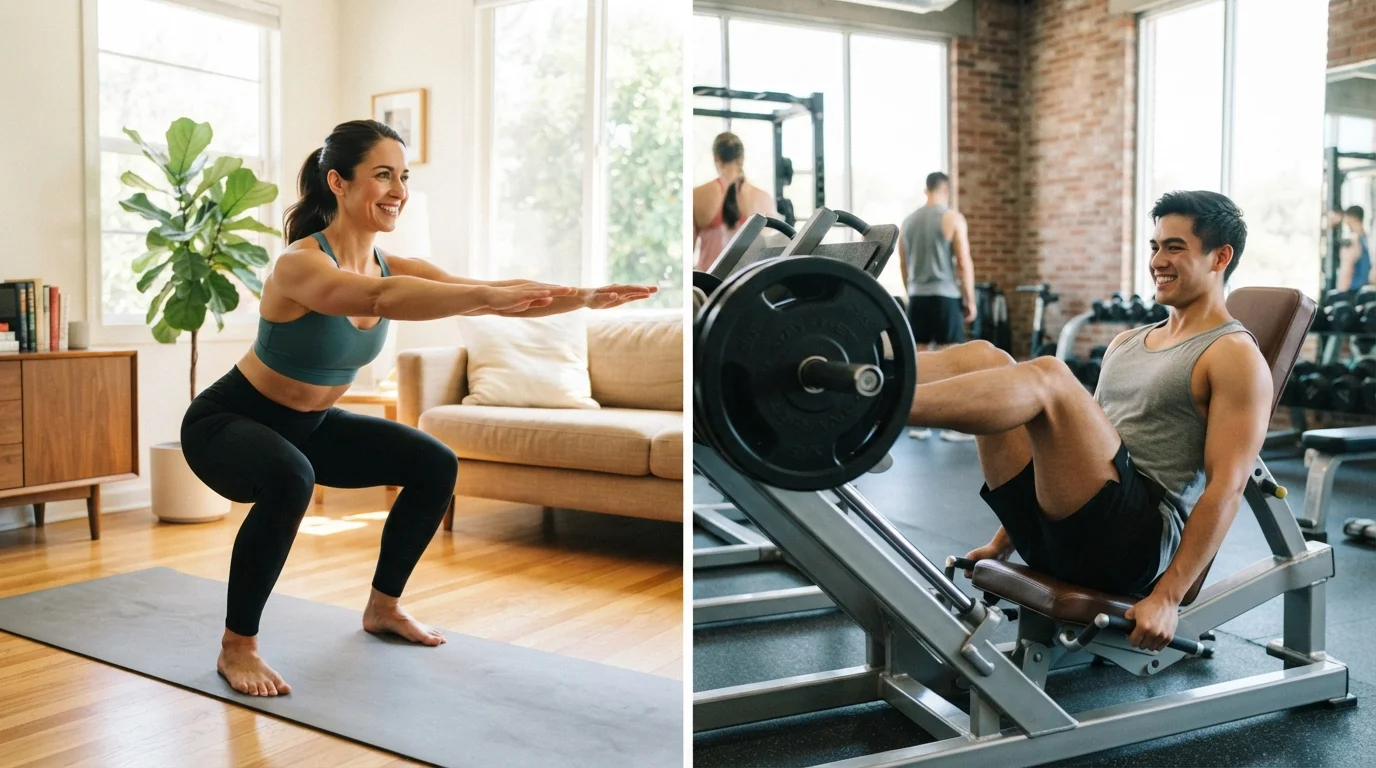
Photo: InsightsTurbo.com | Kickstart Your Knowledge Quest editorial
Key Takeaways
- Bodyweight training requires no equipment and can be done anywhere, making it highly accessible for beginners.
- Gym machines guide your movement path, which can reduce injury risk when learning new exercises.
- Neither approach is universally superior - consistency matters far more than which method you choose.
- Combining both over time gives most people a well-rounded, sustainable fitness foundation.
- Always consult a healthcare provider before starting a new exercise routine, especially with existing health conditions.
The Core Difference: How Each Approach Works
Bodyweight training uses your own body as resistance - think push-ups, squats, lunges, and planks. You control the movement through its full range, relying on multiple muscle groups working together. Gym machines, by contrast, guide your body along a fixed path using weighted stacks or plates, isolating specific muscles more precisely.
For beginners, this distinction matters practically. Bodyweight exercises demand coordination and body awareness from day one, which builds foundational movement skills. Machines reduce those demands, letting you focus on loading a muscle without worrying as much about balance or form complexity. Neither is a shortcut - both require effort to progress - but they develop slightly different physical capacities early on.
Before diving in, it's worth reviewing a readiness checklist before your first session to make sure you're set up for success from the start.
Accessibility, Cost, and Learning Curve
Bodyweight training's biggest advantage is that it costs nothing and requires no special location. A small clear floor space is enough to complete a full workout. This removes the logistical friction that causes many beginners to delay starting. The learning curve can feel steep at first - moves like a proper push-up or hip hinge require technique - but free tutorials and structured programs are widely available online.
Gym machines come with membership costs and a commute, but they offer a controlled environment. Most modern machines include illustrated guides showing correct positioning, which can be genuinely useful when you're new. Staff or personal trainers are often available for a quick orientation. That said, a gym floor full of unfamiliar equipment can feel overwhelming, and the social pressure of working out around others deters some beginners.
| Bodyweight Training | Gym Machines | |
|---|---|---|
| Cost | Free | Membership fee required |
| Location flexibility | Anywhere with floor space | Gym facility only |
| Learning curve | Moderate - technique self-taught | Lower - machines guide movement |
| Progression tracking | Less precise, variation-based | Easy - measurable weight increments |
| Muscle isolation | Limited - compound focus | High - targeted muscle groups |
| Functional movement development | High - full-body coordination | Lower - fixed movement path |
| Beginner accessibility | Very high - start immediately | Moderate - requires gym access |
If the idea of a gym feels like too much too soon, you're not alone - see the real trade-offs of home workouts for an honest look at what you gain and give up at home.
Effectiveness for Building Strength and Fitness
Research consistently shows that both bodyweight and machine-based resistance training can improve strength, muscle endurance, and overall fitness in beginners. The key variable is progressive overload - gradually increasing challenge over time. With machines, this means adding weight increments. With bodyweight, it means advancing to harder variations, adjusting leverage, or increasing volume.
Start Simple, Progress Deliberately
One area where machines have a clear edge is measurable progression. You can track exactly how much resistance you're using and increase it in small increments. Bodyweight progressions can be less linear - the jump from a standard push-up to an archer push-up is significant. That said, bodyweight training naturally develops functional strength and coordination that carries over well into daily life.
It's also worth noting that strength is only one of three fitness pillars. Whichever method you choose, pairing it with cardio and flexibility work gives you a more complete foundation.
Which One Supports a Lasting Habit?
Consistency is the factor that determines long-term results more than any other. Research in behavior change suggests that reducing friction - the effort required to start - dramatically increases exercise adherence. By that measure, bodyweight training has a meaningful advantage: there's no commute, no membership fee, and no scheduling around facility hours.
However, some people find a gym environment genuinely motivating. The dedicated space, the social atmosphere, and the variety of equipment can make workouts feel more purposeful. If that describes you, a gym membership may actually support better consistency than working out at a home that's full of distractions.
Watch out for the patterns that derail new exercisers regardless of setting - common reasons beginner workout plans fail in the first month cover the traps that catch most people early. And if you're still uncertain about either approach, fitness myths that make beginners quit too soon can help reset your expectations with evidence-backed clarity.
This article is for general informational purposes only and is not a substitute for professional medical advice. Consult a qualified healthcare provider before beginning any new exercise program, particularly if you have existing health conditions or physical limitations.
The content provided on our blog site traverses numerous categories, offering readers valuable and practical information. Readers can use the editorial team’s research and data to gain more insights into their topics of interest. However, they are requested not to treat the articles as conclusive. The website team cannot be held responsible for differences in data or inaccuracies found across other platforms. Please also note that the site might also miss out on various schemes and offers available that the readers may find more beneficial than the ones we cover.