
Hydration and Food: How What You Eat Affects Your Fluid Balance

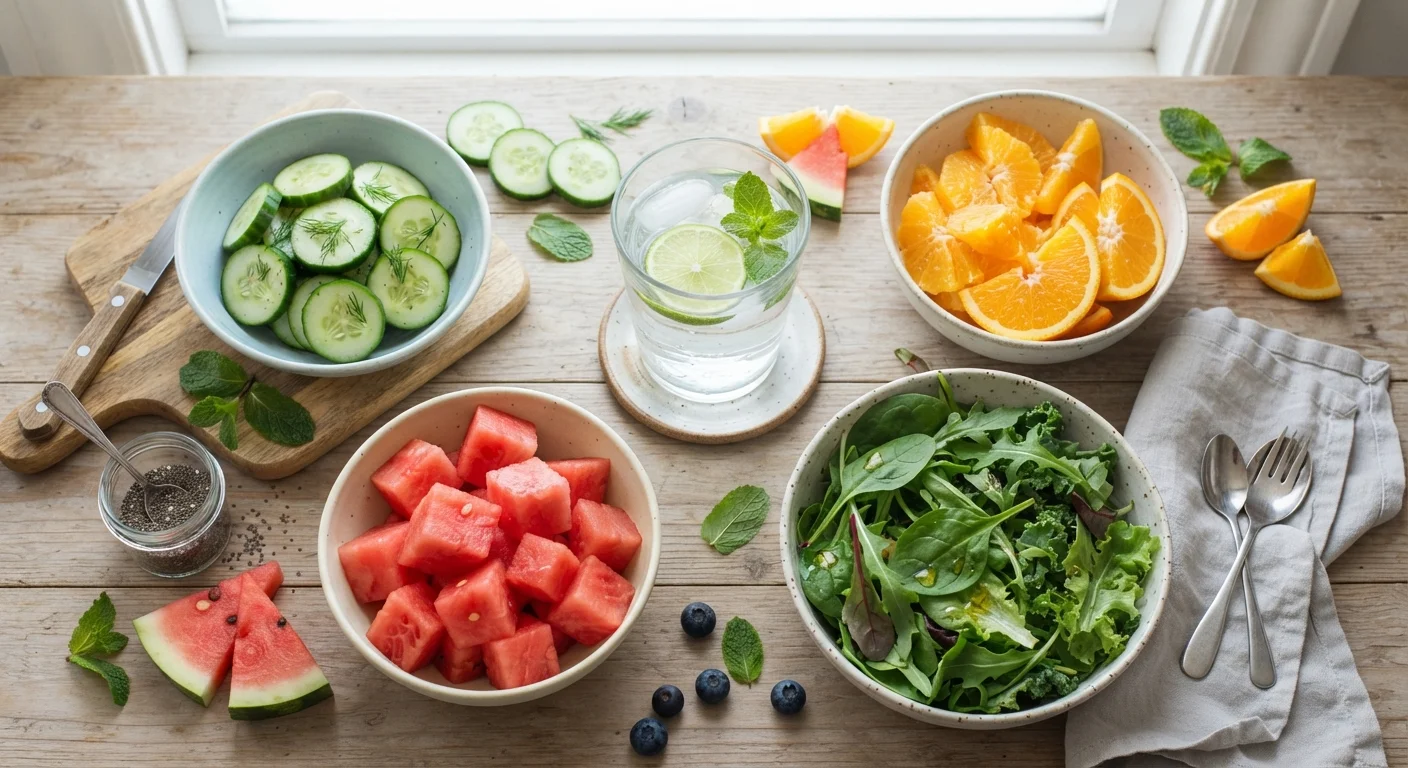
Photo: InsightsTurbo.com | Kickstart Your Knowledge Quest editorial
Key Takeaways
- Food contributes a meaningful portion of your daily fluid intake - not just drinks.
- Fruits and vegetables with high water content are among the most hydrating foods.
- High-sodium, high-sugar, and high-protein foods can increase your fluid requirements.
- Thirst, urine color, and energy levels are practical signals of your hydration status.
- Individual hydration needs vary based on body size, activity level, climate, and diet.
Why Hydration Is About More Than Your Water Bottle
Most hydration advice starts and ends with "drink more water" - but that picture is incomplete. Your body doesn't distinguish between the water you sip and the water you eat. Both count toward your daily fluid intake, and both influence how well your cells, organs, and energy systems function.
Understanding the food-hydration connection is especially useful if you're building better eating habits. It reframes the question from "am I drinking enough?" to "how is my whole diet affecting my fluid balance?" - a more complete and useful lens.
Hydration Needs Vary Person to Person
Foods That Hydrate: The High-Water Content Lineup
Some foods are primarily water. Cucumbers, lettuce, celery, tomatoes, and zucchini all exceed 90% water by weight. Watermelon, strawberries, oranges, and cantaloupe follow closely behind. Eating a varied diet rich in these foods adds a meaningful buffer to your fluid intake without any extra effort.
Soups, broths, oatmeal, and yogurt are also significant contributors - they hold onto water during preparation and release it during digestion. This is part of why a diet that emphasizes whole, minimally processed foods tends to support hydration more naturally than one heavy in dry, packaged snacks.
This connects to a broader idea about food volume and satiety - the same foods that rank high in water content often rank low in calorie density, which is worth exploring if you're thinking about how food volume affects fullness. See our guide to calorie density for more on that relationship.
~20-30%
Daily water intake from food
The National Academies of Sciences, Engineering, and Medicine notes that roughly 20-30% of total water intake typically comes from food sources.
90%+
Water content in cucumbers and lettuce
Many common vegetables and fruits exceed 90% water by weight, making them meaningful hydration contributors in a balanced diet.
Foods That Increase Fluid Needs
Just as some foods contribute to hydration, others push your body to use or lose more water. Knowing which foods do this helps you compensate accordingly.
- High-sodium foods: Salt draws water out of cells and signals the kidneys to adjust fluid levels. Processed foods, cured meats, and fast food are common high-sodium sources.
- High-sugar foods and beverages: Excess sugar - particularly in sugary drinks - can pull water into the gut during digestion and may increase urine output, raising your fluid needs.
- High-protein diets: Protein metabolism generates urea, a waste product that must be flushed out through urine, placing greater demand on your kidneys and requiring adequate fluid intake.
- Alcohol: Alcohol suppresses a hormone that tells the kidneys to conserve water, leading to increased urination and fluid loss.
Balance High-Sodium Meals With Extra Fluids
Reading Your Body's Hydration Signals
Your body provides reliable feedback about fluid balance if you pay attention. Urine color is one of the most practical indicators: pale yellow typically suggests adequate hydration, while darker yellow or amber often signals a need for more fluids. Clear urine can indicate over-hydration, which is also something to be aware of.
Fatigue, difficulty concentrating, dry mouth, and headaches are early signs that fluid balance may be off. These symptoms overlap with many other conditions, so it's worth considering your recent food and fluid intake as a first step - and speaking with a healthcare provider if symptoms persist or are severe.
Because individual needs vary significantly based on body size, activity level, climate, and diet composition, specific fluid targets should be treated as general starting points rather than universal prescriptions. A registered dietitian can help you assess your personal needs.
This article is for general informational and educational purposes only and does not constitute medical or nutritional advice. Consult a qualified healthcare professional for guidance specific to your health needs.
Frequently Asked Questions
The content provided on our blog site traverses numerous categories, offering readers valuable and practical information. Readers can use the editorial team’s research and data to gain more insights into their topics of interest. However, they are requested not to treat the articles as conclusive. The website team cannot be held responsible for differences in data or inaccuracies found across other platforms. Please also note that the site might also miss out on various schemes and offers available that the readers may find more beneficial than the ones we cover.