
Understanding Calorie Density: Why Volume of Food Matters as Much as Calories

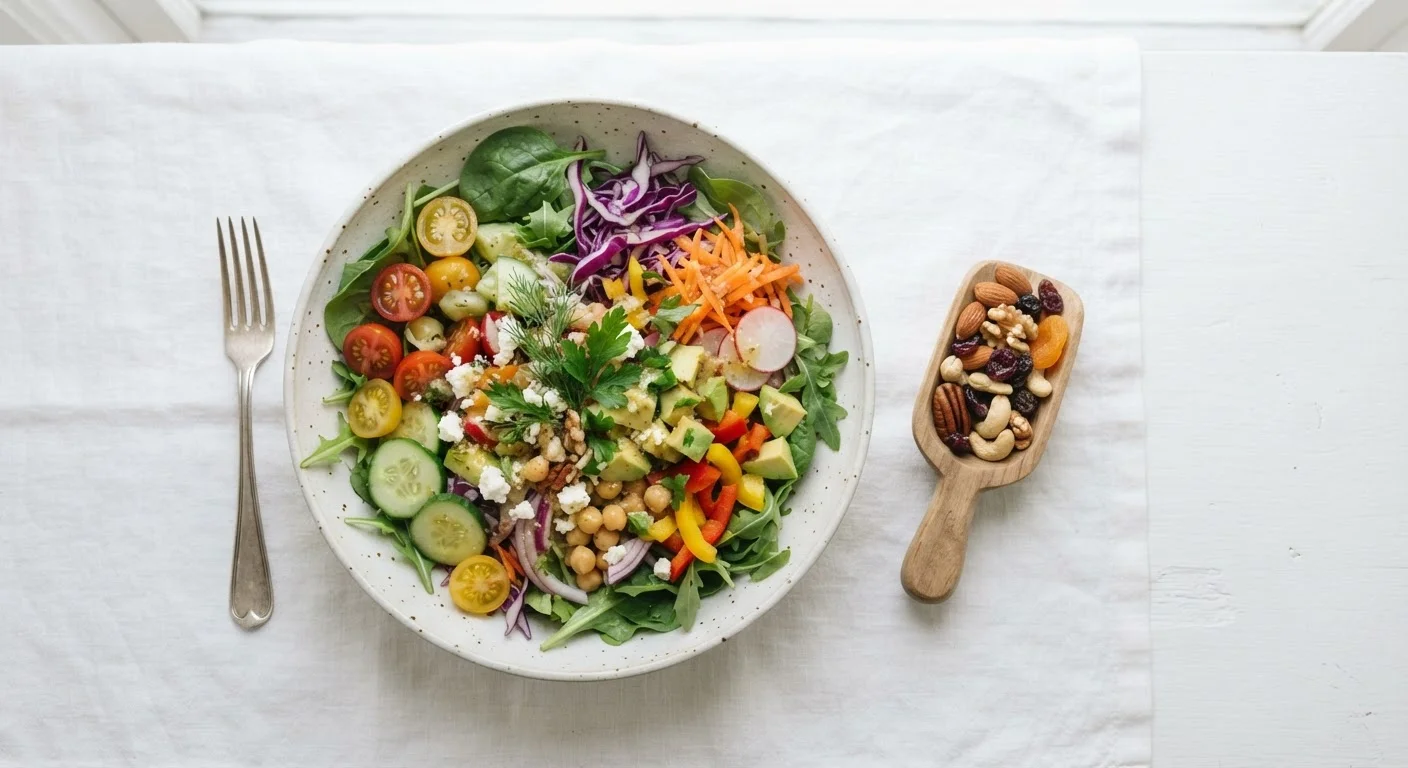
Photo: InsightsTurbo.com | Kickstart Your Knowledge Quest editorial
Key Takeaways
- Calorie density measures how many calories are in a specific amount (weight) of food.
- Foods high in water and fiber tend to have low calorie density and promote fullness.
- You can eat a larger volume of low-calorie-dense foods without dramatically increasing your calorie intake.
- Fat is the most calorie-dense macronutrient at 9 calories per gram.
- Understanding calorie density is a tool for awareness, not a reason to avoid entire food groups.
What Calorie Density Actually Means
If you've ever wondered why a handful of almonds and a large bowl of watermelon can have roughly the same number of calories, calorie density is your answer. It's a straightforward concept: how many calories does a food contain per unit of weight?
Two foods can share a calorie count but look completely different on a plate. That's because calories are influenced by what a food is made of - specifically its content of water, fiber, carbohydrates, protein, and fat. Water and fiber add weight without adding calories. Fat adds a lot of calories in very little space. This interplay is what creates dramatic differences in portion sizes across foods.
To get more grounded in how nutrients work within food, it helps to understand what each macronutrient actually does in the body. See our overview of macronutrients for a clear breakdown.
9 kcal/g
Calories per gram of fat
Fat is more than twice as calorie-dense as carbohydrates or protein, which each provide 4 kcal per gram, according to basic nutritional biochemistry.
~95%
Water content of cucumber
Cucumbers are among the most water-dense foods available, contributing near-zero calorie density and making them an exceptionally high-volume snack option.
0 kcal/g
Caloric contribution of water
Water adds weight and volume to food without any caloric contribution, which is why water-rich foods like fruits and vegetables tend to have low calorie density.
Why Volume Matters for Satiety
Your stomach is a physical organ - it responds to stretch and volume, not just calorie counts. Research on hunger and satiety consistently shows that the bulk of food plays a role in how full you feel after eating. This is part of why people often report feeling unsatisfied after eating highly processed, calorie-dense foods even when they've technically consumed enough calories.
Low calorie density foods - think leafy greens, cucumbers, broth-based soups, and most fruits - take up more space in your stomach relative to their calorie contribution. This can extend the feeling of fullness and delay the return of hunger. High calorie density foods, like crackers, pastries, and oils, deliver many calories in a very small physical package, which can make it easier to consume more than intended.
This doesn't mean high-density foods are bad - it means understanding the relationship helps you make more informed choices throughout your day. Pair higher-density foods with high-volume foods for a more satisfying plate. Our guide on building a balanced plate explores exactly how to do this practically.
Using Calorie Density as a Practical Tool
You don't need to calculate calories per gram for every meal - that level of precision isn't sustainable or necessary for most people. Instead, use calorie density as a mental framework when making food choices.
A few useful habits: start meals with a broth-based soup or a large salad to add volume before the calorie-denser parts of your meal. Fill roughly half your plate with vegetables, which are almost universally low in calorie density. When snacking, pair a small amount of a higher-density food (like nut butter) with a high-volume food (like celery or apple slices) to get both satisfaction and volume.
Understanding nutrition labels can also help here - knowing how to read serving sizes and calorie counts per gram gives you concrete data. Our article on reading a nutrition label walks you through the key numbers to look for.
A Simple Plate Strategy
It's also worth knowing that foods with high water content - like cucumbers, strawberries, and soups - contribute to your daily fluid intake alongside actual beverages. For more on this connection, see our piece on how food affects hydration.
This article is for general informational and educational purposes only and is not a substitute for professional medical or nutritional advice. Consult a qualified healthcare provider or registered dietitian for guidance tailored to your individual health needs.
Frequently Asked Questions
The content provided on our blog site traverses numerous categories, offering readers valuable and practical information. Readers can use the editorial team’s research and data to gain more insights into their topics of interest. However, they are requested not to treat the articles as conclusive. The website team cannot be held responsible for differences in data or inaccuracies found across other platforms. Please also note that the site might also miss out on various schemes and offers available that the readers may find more beneficial than the ones we cover.