
What a Community College Education Actually Looks Like

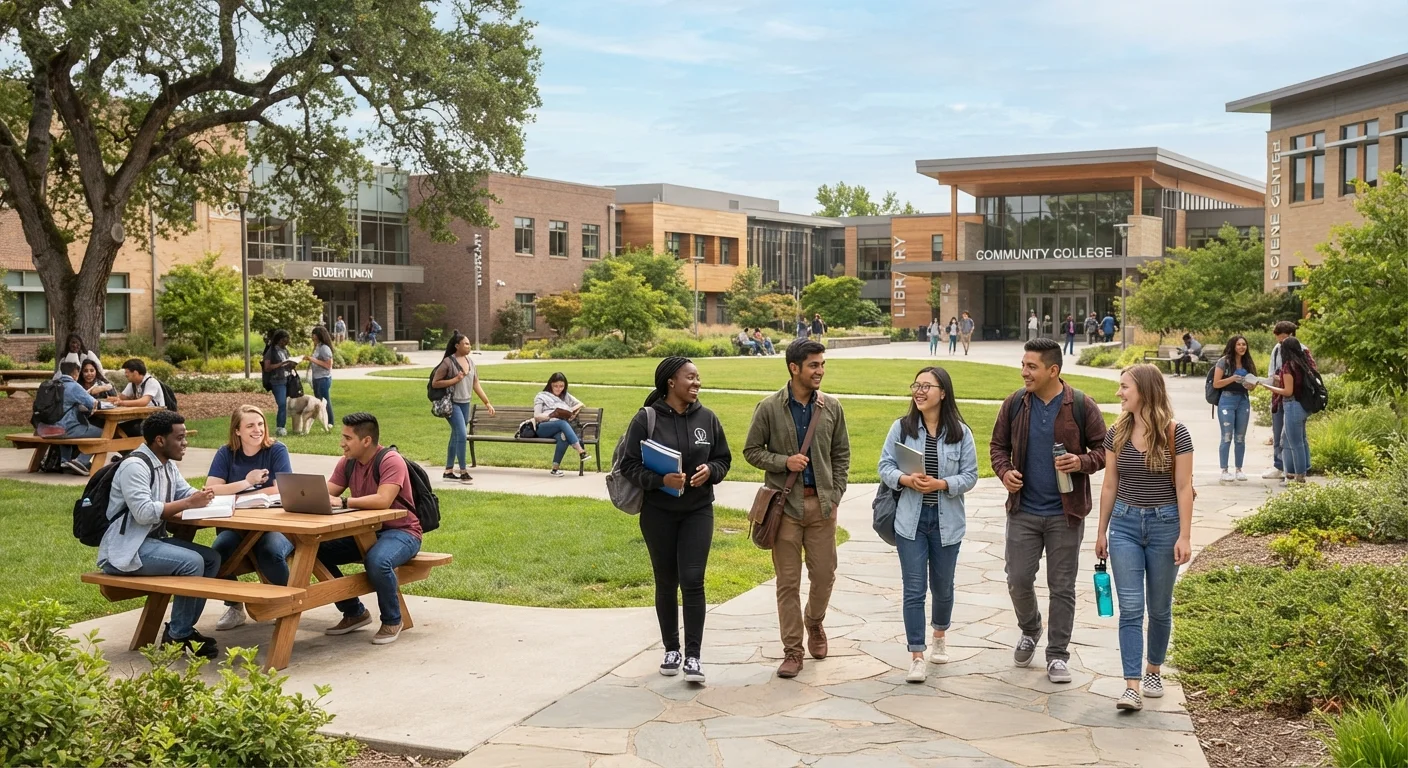
Photo: InsightsTurbo.com | Kickstart Your Knowledge Quest editorial
Key Takeaways
- Community colleges offer short-term certificates, associate degrees, and structured transfer pathways to four-year universities.
- Open-access admissions mean most students with a high school diploma can enroll without a competitive selection process.
- Tuition at public community colleges is typically much lower than at four-year universities.
- The type of associate degree you choose - A.A., A.S., or A.A.S. - determines how well your credits transfer to a bachelor's program.
- Many states have articulation agreements that formalize credit transfer between community colleges and public universities.
- Community college serves a broad population, including recent high school graduates, working adults, and returning learners.
How Community Colleges Are Organized
Community colleges run on a semester or quarter schedule and offer classes in multiple formats - morning, evening, and increasingly online - so students can fit coursework around jobs and family obligations. Courses typically fall into two broad tracks: transfer-oriented general education, which satisfies foundational requirements recognized at four-year universities, and career and technical education (CTE) programs, which prepare students for specific industries and lead directly to workforce entry.
Each program has a defined sequence of required courses called a program of study. Students work with academic advisors to map out which courses to take each term and ensure they're on track toward their credential. Standard general education subjects - English composition, college-level math, social and natural science - appear across virtually all programs and are frequently transferable to other institutions when students plan ahead.
What Credentials You Can Earn
Community colleges issue three main types of credentials: short-term certificates, longer-term certificates, and associate degrees. Short-term certificates - often completed in under a year - focus on specific workforce skills such as medical coding, HVAC technology, or IT support. Longer certificates run one to two years and cover broader technical areas.
Associate degrees generally require about 60 semester credit hours, or roughly two years of full-time study. The Associate of Arts (A.A.) and Associate of Science (A.S.) are built for students planning to transfer to a bachelor's program. The Associate of Applied Science (A.A.S.) is aimed at workforce entry and may not transfer as directly into a four-year degree - so knowing your goal before choosing a degree type matters. For a full breakdown of what each credential type means, see our guide to education credentials.
Who Typically Enrolls - and Why
The community college student body is remarkably broad. Traditional-age students (roughly 18-24) frequently enroll to complete the first two years of a bachelor's degree at significantly lower cost before transferring to a four-year university. Working adults return to earn certificates that update their qualifications or open doors to new roles. Others use community college as a re-entry point - rebuilding foundational skills and academic momentum before moving into a more demanding program.
~1,000
Public community colleges operating in the U.S.
According to the American Association of Community Colleges (AACC), approximately 1,000 public two-year colleges operate across the country.
~4 in 10
U.S. undergraduates enrolled at community colleges
The AACC reports that community colleges serve roughly four in ten U.S. undergraduates, reflecting their broad reach across age groups and demographics.
~60
Semester credit hours needed for an associate degree
Most associate degree programs at community colleges require approximately 60 semester credit hours, equivalent to about two years of full-time study.
Cost and access are central draws. Tuition at public community colleges is generally a fraction of four-year university rates, and open-access admissions - most require only a high school diploma or equivalent - remove the competitive entry barriers common at selective four-year schools. For a direct side-by-side look at the two paths, see how two-year and four-year programs compare.
The Transfer Pathway Explained
One of community college's most practical features is the structured transfer pathway. Many states have formal articulation agreements - arrangements between community colleges and public universities that specify which courses transfer and how they apply toward a bachelor's degree. Completing an A.A. or A.S. under one of these agreements can place a student at a four-year university with junior-year standing, effectively converting two years of lower-cost coursework into meaningful progress toward a bachelor's degree.
Verify Transfer Agreements Before Finalizing Courses
Students returning to education after time away will find community college's support services - tutoring centers, financial aid counseling, and flexible scheduling - especially practical. Our non-traditional student's roadmap covers the full planning picture for returning learners. If you're still comparing options, our overview of today's education paths provides a broader comparison across all major routes.
Frequently Asked Questions
The content provided on our blog site traverses numerous categories, offering readers valuable and practical information. Readers can use the editorial team’s research and data to gain more insights into their topics of interest. However, they are requested not to treat the articles as conclusive. The website team cannot be held responsible for differences in data or inaccuracies found across other platforms. Please also note that the site might also miss out on various schemes and offers available that the readers may find more beneficial than the ones we cover.