
Accountability Systems Compared: Partners, Apps, Coaches, and Public Commitments

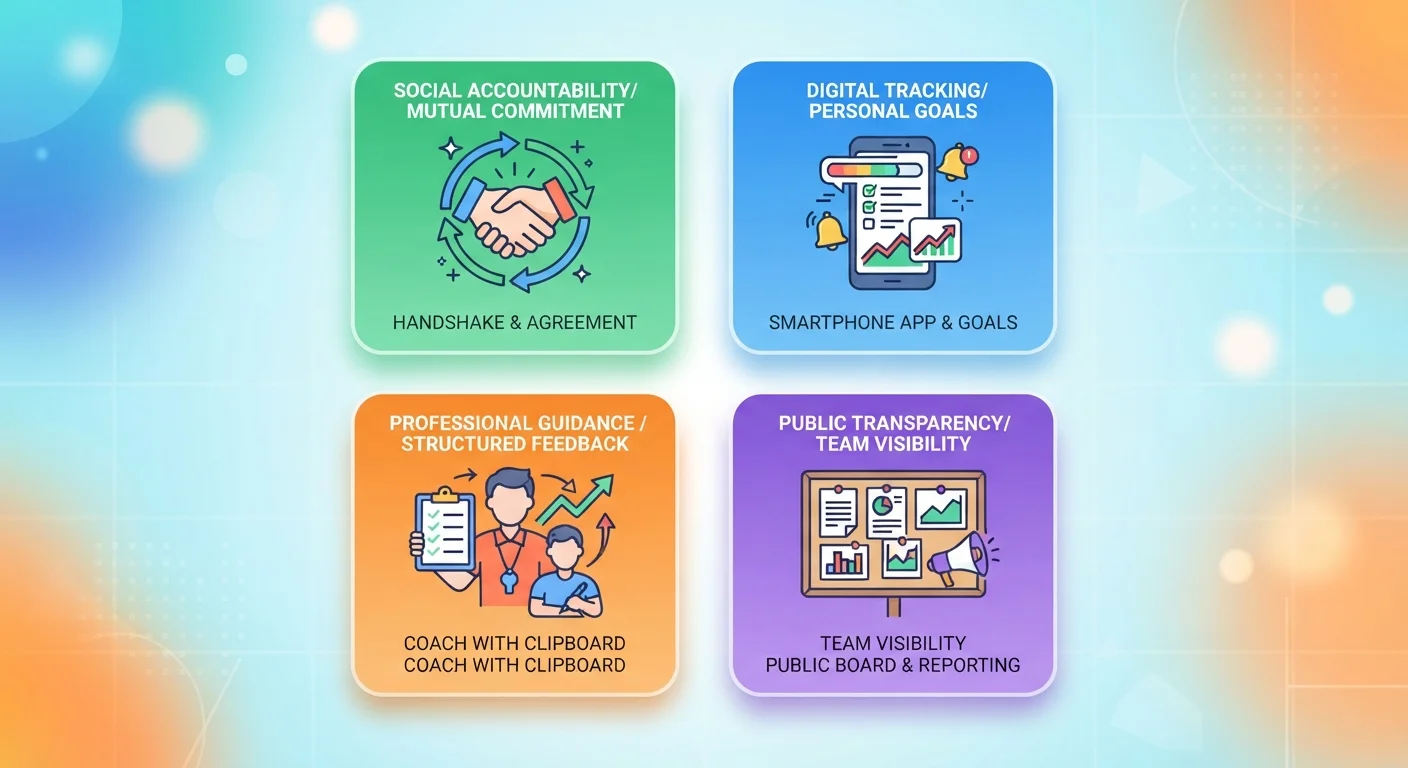
Photo: InsightsTurbo.com | Kickstart Your Knowledge Quest editorial
Key Takeaways
- Accountability partners offer social motivation but depend heavily on both people staying committed.
- Apps provide low-friction tracking but lack the emotional weight of human accountability.
- Coaches deliver structure and expertise but come with significant time and financial cost.
- Public commitments create strong external pressure but can backfire if goals aren't realistic.
- Combining two complementary methods often outperforms any single approach used alone.
Why Accountability Systems Matter
Most people know what they want to change - exercise more, study consistently, save money, develop a skill. The gap isn't knowledge; it's follow-through. Research in behavioral psychology consistently shows that external accountability mechanisms significantly increase the likelihood of goal completion, compared to private intentions alone.
But accountability isn't one-size-fits-all. The system that keeps one person on track can feel suffocating or hollow to another. This comparison breaks down four common approaches - accountability partners, apps, coaches, and public commitments - so you can choose based on your actual personality, resources, and goals rather than what sounds inspiring in theory.
If you're also working on staying consistent over time without burning out, see our guide on sustaining self-improvement momentum for complementary strategies.
The Four Accountability Systems at a Glance
Before diving into each method's strengths and limitations, here's a structured look at how they compare across the criteria that matter most to someone just starting their research.
| Accountability Partner | Habit Tracking App | Coach | Public Commitment | |
|---|---|---|---|---|
| Cost | Free | Free to low | Moderate to high | Free |
| Human connection | High | None | High | Low to moderate |
| Flexibility | Moderate | High | Low to moderate | Low |
| Expert guidance | None | None | High | None |
| Emotional stakes | High | Low | Moderate to high | High |
| Reliability | Variable | Consistent | Consistent | Variable |
| Best goal type | Routine habits | Daily behaviors | Complex skill goals | Time-bound milestones |
Each system operates on a different psychological mechanism. Partners rely on social obligation. Apps use behavioral triggers and streaks. Coaches apply expert feedback and structured planning. Public commitments leverage identity and reputation. Understanding which mechanism resonates with you is the fastest way to pick the right tool.
Accountability Partners: High Warmth, Variable Reliability
An accountability partner is someone - a friend, classmate, or colleague - who checks in on your progress and shares in the commitment. The social bond creates genuine emotional stakes: you don't want to let someone down who's rooting for you.
Where it works well: For goals with a clear weekly rhythm (gym sessions, study hours, job applications), a simple check-in text or call is often enough to maintain momentum. Shared goals - where both partners are working toward something similar - tend to produce the strongest results.
Where it breaks down: The system depends on two people staying motivated. If your partner loses focus, your accountability structure collapses. Mismatched commitment levels are the most common failure mode. It also requires vulnerability - openly admitting when you've fallen short - which not everyone finds comfortable.
Make Your Partnership Explicit From the Start
Apps: Low Friction, Low Stakes
Habit tracking apps log your progress, send reminders, and visualize streaks. They're available on demand, require no scheduling, and adapt to your pace. For routine-based goals - daily reading, hydration, sleep tracking - they lower the activation energy to get started.
Where they work well: Apps excel when the goal is behavioral consistency rather than skill development. If you just need a reminder and a visual record, an app delivers that efficiently. Many also include community features that add a light social layer.
Where they break down: Notifications are easy to dismiss. Without any human relationship at stake, breaking a streak feels low-cost - and skipping becomes a habit of its own. Apps rarely help you understand why you're struggling or how to adjust your approach. They track behavior; they don't interpret it.
65%
Goal completion rate with accountability partner
According to the American Society of Training and Development, having a specific accountability partner raises the probability of completing a goal to around 65%.
40%
Users who abandon habit apps within a month
Industry data consistently shows high early drop-off rates for self-tracking apps, with many users disengaging within the first four weeks.
Coaches: High Support, Higher Investment
A coach - whether in fitness, career development, academic tutoring, or life coaching - provides structured, expert-guided accountability. They assess where you are, design a plan, and course-correct in real time. This is the highest-fidelity accountability system available.
Where it works well: Complex, multi-step goals with significant skill gaps benefit most from coaching. If you're preparing for a professional certification, building a business, or navigating a major career transition, a coach offers what no app or partner can: informed feedback. The financial and time investment also tends to increase your personal commitment - when you've paid for sessions, you show up.
Where it breaks down: Cost is the primary barrier. Quality coaching is expensive, and the market is inconsistent - credentials, methods, and outcomes vary widely. Before committing, ask direct questions about their approach, experience, and what success looks like for your specific goal. Our checklist for evaluating any program or mentor applies here too.
Public Commitments: Powerful but Double-Edged
Announcing a goal publicly - via social media, to a group, or in a community challenge - creates reputational stakes. Behavioral research suggests that public declarations increase follow-through because people are motivated to maintain consistency between their stated identity and their actions.
Where it works well: Public commitments work best for time-bound, measurable goals with a clear finish line: completing a course, running a specific distance, publishing a project. The visibility creates energy and sometimes invites community support.
Where it breaks down: If the goal is poorly scoped or the timeline unrealistic, public accountability can become a source of shame rather than motivation - the opposite of helpful. Some research also suggests that announcing a goal can create a premature sense of achievement, slightly reducing drive. Use public commitments for goals you've already stress-tested privately, not as a substitute for proper planning.
Regardless of which system you choose, the same principle applies to financial habits - the right framework is the one you'll actually use, not the one that sounds most rigorous.
The content provided on our blog site traverses numerous categories, offering readers valuable and practical information. Readers can use the editorial team’s research and data to gain more insights into their topics of interest. However, they are requested not to treat the articles as conclusive. The website team cannot be held responsible for differences in data or inaccuracies found across other platforms. Please also note that the site might also miss out on various schemes and offers available that the readers may find more beneficial than the ones we cover.