
What a Personal Budget Actually Is (And What It Isn't)

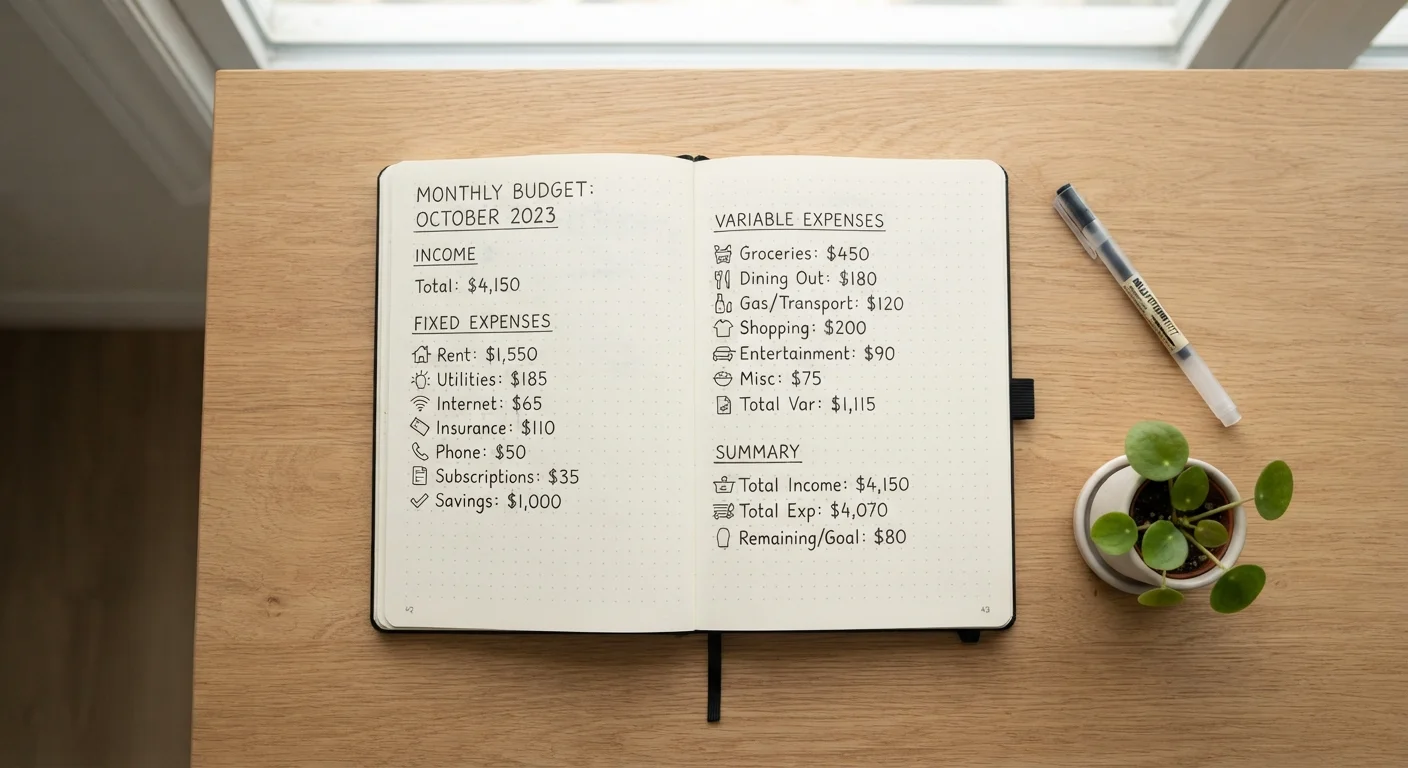
Photo: InsightsTurbo.com | Kickstart Your Knowledge Quest editorial
Key Takeaways
- A personal budget is a forward-looking spending plan, not a record of past financial mistakes.
- Budgets don't restrict your choices — they make your spending deliberate and intentional.
- Every budget is built from three core parts: income, expenses, and financial goals.
- The format of your budget matters less than the consistency with which you use it.
- Budgets should be updated regularly — they're living documents, not one-time plans.
- You don't need a perfect financial situation to start budgeting — any starting point works.
What a Budget Actually Is
A personal budget is a plan. At its core, it matches your income — money coming in — to your expenses and savings goals — money going out — over a set period, most commonly one month. That's it. The purpose isn't to police yourself or eliminate enjoyment; it's to make your spending intentional rather than accidental.
Budgets can take almost any form: a spreadsheet, a notebook, a notes app, or dedicated budgeting software all qualify. The tool is secondary. What makes something a budget is the deliberate act of deciding in advance how money will move, before the spending happens. That forward-looking quality is what separates a budget from simply checking your bank balance after the fact.
What a Budget Isn't
Most people who resist budgeting carry a specific picture in their head: a joyless spreadsheet, a list of things they can't have, a constant source of guilt. That picture is wrong — and it's one of the main reasons people put off starting.
A budget doesn't tell you to stop spending on things you value. It asks you to be explicit about that spending. If dining out matters to you, a budget makes room for it — as a conscious choice, not an afterthought. For a deeper look at where these misconceptions come from, see our article on budgeting myths worth re-examining.
Less than 1 in 2
U.S. adults who maintain a formal monthly budget
National surveys on personal finance consistently find that fewer than half of American adults report keeping a formal, regular budget.
~1 in 5
U.S. adults with no emergency savings
Federal Reserve surveys on household economic well-being have documented that roughly one in five American adults reports having no dedicated emergency savings set aside.
A budget also isn't a one-and-done exercise. Life changes — jobs shift, rent goes up, goals evolve. A plan you drafted six months ago and never revisited isn't serving you. Aim to review your budget at least once a month and revise it whenever your situation changes meaningfully.
The Three Core Components
Every personal budget, no matter how simple or detailed, is built from the same three elements:
- Income: All money arriving — take-home pay (net income after taxes), freelance work, side income, financial aid, or any other source. Always use what actually lands in your account, not your gross salary figure.
- Expenses: Everything going out. Fixed expenses (rent, loan payments, subscriptions) stay consistent each month. Variable expenses (groceries, gas, entertainment) fluctuate. Both count. See our budgeting glossary for plain-language definitions of these and other common terms.
- Goals: What you're intentionally directing money toward — an emergency fund, debt payoff, travel savings, or anything else with personal meaning.
When income, expenses, and goals are visible in one place, you can see immediately whether your spending aligns with your priorities. That visibility — not restriction — is the central value a budget provides.
From Concept to Your First Real Budget
Knowing what a budget actually is removes the biggest barrier most people face: the belief that it requires special knowledge, perfect finances, or a complicated system. None of that is true. You need a reasonable estimate of your income, an honest list of your regular expenses, and clarity on at least one financial goal.
Start With What You Already Know
When you're ready to put a plan on paper, a step-by-step guide to building your first budget walks through the process from scratch. If you're unsure which budgeting style fits your life, comparing common budgeting methods is a useful next read.
This article is for general informational and educational purposes only and does not constitute personalized financial advice. For guidance tailored to your specific situation, consider speaking with a qualified financial professional.
Frequently Asked Questions
The content provided on our blog site traverses numerous categories, offering readers valuable and practical information. Readers can use the editorial team’s research and data to gain more insights into their topics of interest. However, they are requested not to treat the articles as conclusive. The website team cannot be held responsible for differences in data or inaccuracies found across other platforms. Please also note that the site might also miss out on various schemes and offers available that the readers may find more beneficial than the ones we cover.