
Credit Myths That Keep People From Building a Strong Financial Foundation

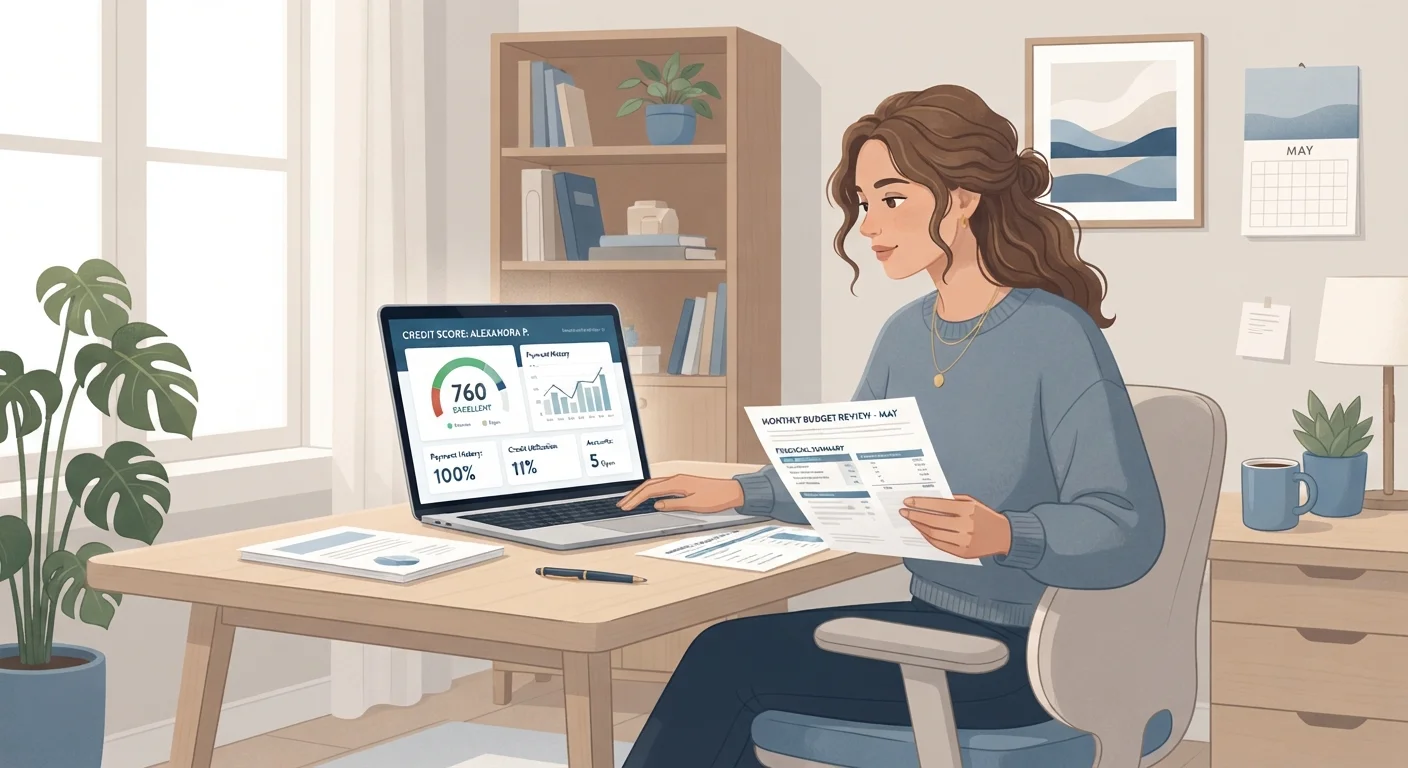
Photo: InsightsTurbo.com | Kickstart Your Knowledge Quest editorial
Key Takeaways
- Checking your own credit score never lowers it — only hard inquiries from lenders can do that.
- Carrying a credit card balance each month does not help your score and costs you interest.
- Closing old credit cards can actually hurt your score by reducing your available credit history.
- You do not need to be in debt to build a strong credit profile.
- Credit scores are built from multiple factors — payment history carries the most weight.
Why Credit Myths Are So Persistent
Credit can feel like a black box — the rules seem inconsistent, the scoring is invisible, and the advice you receive from friends or family often contradicts what you read online. That confusion is fertile ground for myths to take hold. The stakes are real: acting on bad information can hold your score back for months or even years.
This article addresses the most common credit misconceptions head-on, with clear explanations of what's actually true and why it matters. If you're just starting out, our guide to building credit from scratch is a useful companion to this piece.
Myth
Checking your own credit score lowers it.
Fact
Checking your own score is a "soft inquiry" and has no effect on your credit score whatsoever.
Inquiries come in two forms. A soft inquiry occurs when you check your own score, when a lender pre-screens you for an offer, or when a background check is run. Soft inquiries do not affect your score. A hard inquiry occurs when you formally apply for credit — a loan, a card, a mortgage. Hard inquiries can lower your score by a small amount, typically for up to 12 months. Avoiding your own score out of fear only keeps you in the dark about where you stand.
Myth
You need to carry a balance on your credit card to build credit.
Fact
Paying your balance in full each month demonstrates responsible credit use and costs you nothing in interest.
This is one of the most financially costly myths. Lenders report your account activity — including whether you pay on time — to the credit bureaus regardless of whether you carry a balance. Keeping a balance doesn't signal financial health to scoring models; it just means you're paying interest. What matters is that you use the card and pay on time. Carrying a balance month to month only benefits the card issuer, not your score. For a closer look at how interest compounds, see how credit card interest accumulates faster than most people expect.
Myth
You need to be in debt to have good credit.
Fact
Responsible credit use — not ongoing debt — is what builds a strong score.
Good credit is built through a pattern of borrowing and repaying responsibly over time. That can mean using a credit card for regular purchases and paying it off in full every month — you're technically using credit, but you're not carrying debt. The scoring models reward on-time payments, low utilization of your available credit limit, and a history of managing different types of credit. None of that requires maintaining an outstanding balance.
Myth
Closing credit cards you don't use anymore will help your score.
Fact
Closing accounts can hurt your score by reducing available credit and shortening your credit history.
Two scoring factors are directly affected when you close a card: your credit utilization ratio (the percentage of available credit you're using) and your length of credit history. If you close a card with a $3,000 limit and your other cards total $5,000 in limits, you've just reduced your available credit significantly — which raises your utilization percentage even if your balances haven't changed. Older accounts also contribute positively to your average account age. Unless the card carries a fee you can't justify, keeping it open and occasionally active is usually the better move.
Myth
You only have one credit score.
Fact
You have multiple credit scores, calculated by different models and used differently by different lenders.
FICO and VantageScore are the two most widely used scoring frameworks, but each has multiple versions — and different lenders may pull different versions for different purposes (a mortgage lender may use a different model than an auto lender). Your scores can also vary across the three major credit bureaus (Equifax, Experian, and TransUnion) because not all creditors report to all three, and the data on each report may differ slightly. The number you see in a banking app is a useful reference point, but it may not be identical to the score a specific lender pulls.
Myth
Being added as an authorized user on someone else's card won't affect your credit.
Fact
Authorized user status can meaningfully help — or in some cases hurt — your credit profile depending on the primary cardholder's habits.
When you're added as an authorized user, the primary cardholder's payment history and utilization on that account may appear on your credit report. If they pay on time and keep balances low, this can give your profile a boost — especially when you're just starting out. But if they miss payments or max out the card, those negative marks can appear on your report too. It's a strategy worth understanding fully before agreeing to it. Our article on the pros and cons of becoming an authorized user covers the full picture.
What These Myths Cost You in Practice
Believing even one of these myths can steer you toward habits that quietly damage your financial standing. Carrying a balance to "build credit" means paying unnecessary interest. Avoiding new credit entirely means you never establish a track record. Closing old accounts to simplify your wallet can shrink your available credit and spike your utilization ratio — one of the most impactful factors in your score. To understand how that ratio works in detail, see our explainer on credit utilization and your score.
35%
Weight of payment history in FICO scoring
According to FICO, payment history is the single largest factor in calculating a standard credit score.
1 in 5
Americans with a credit report error
The U.S. Federal Trade Commission has reported that approximately one in five consumers has an error on at least one of their credit reports.
The good news is that most credit damage from myths is correctable. Scores respond to current behavior, meaning consistent on-time payments and lower balances will gradually outweigh past missteps. For practical habits to adopt right now, building smart credit card habits early is worth reading alongside this article.
Don't Close Old Accounts Without Thinking It Through
One final point: your credit report and your credit score are not the same thing, and errors on your report can drag your score down without you knowing it. If you'd like to understand the difference clearly, see credit report vs. credit score explained. And if you spot an error, our step-by-step guide to disputing credit report errors walks you through the process.
This article is for general informational and educational purposes only and does not constitute personalized financial advice. For guidance specific to your situation, consult a licensed financial professional.
The content provided on our blog site traverses numerous categories, offering readers valuable and practical information. Readers can use the editorial team’s research and data to gain more insights into their topics of interest. However, they are requested not to treat the articles as conclusive. The website team cannot be held responsible for differences in data or inaccuracies found across other platforms. Please also note that the site might also miss out on various schemes and offers available that the readers may find more beneficial than the ones we cover.