
Automating Your Savings: The Logic Behind Paying Yourself First

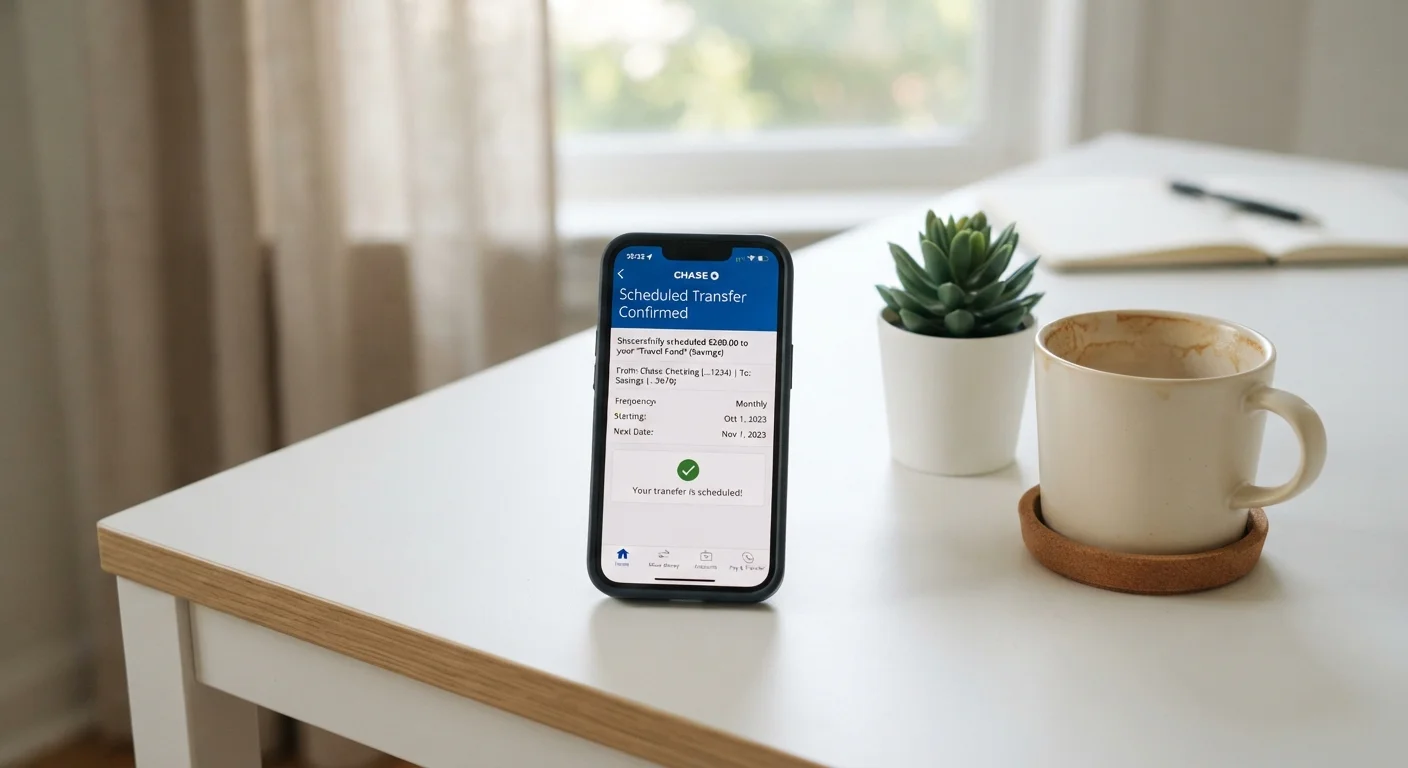
Photo: InsightsTurbo.com | Kickstart Your Knowledge Quest editorial
Key Takeaways
- Automation removes the moment of temptation that causes most savings plans to break down.
- The pay-yourself-first approach treats savings as a fixed expense, not money left over after spending.
- Starting with a small, sustainable transfer builds the habit more reliably than an ambitious amount you'll cancel.
- Timing transfers to coincide with payday prevents spending the money before it moves.
- Increasing your transfer amount when income grows limits lifestyle inflation before it takes hold.
The Behavioral Case for Automation
Most savings plans fail not because of bad math but because of human psychology. Behavioral finance research consistently finds that people favor immediate rewards over future ones — a pattern researchers call present bias. When money sits in a checking account after bills are paid, what's left tends to feel spendable, regardless of how firm the saving intention was at the start of the month. That gap between intention and action is where most savings goals quietly dissolve.
Automation closes that gap before it can open. By moving money into savings before any spending decisions begin, you eliminate the moment of choice — and with it, the pull toward immediate spending. This is the central logic behind the pay-yourself-first philosophy: treat your savings contribution as a fixed obligation that comes out first, not a discretionary line item that competes with everything else.
Research on automatic enrollment in workplace retirement programs illustrates just how influential default settings can be. When employees are enrolled automatically rather than required to opt in, participation rates increase substantially — even when the financial incentive is identical. The difference isn't motivation or discipline; it's the structure. You can apply the same principle to your personal bank account by making saving the automatic default and leaving spending as the active choice.
If you're still deciding how savings fits into a broader budget plan, reviewing common budgeting frameworks can help you identify a structure that supports automation from day one.
Setting Up Your Automatic Transfer
The mechanics are simpler than most people expect and typically take under 30 minutes. Before you start, make sure you have the following in place:
What you will need
You'll also want the right tools on hand:
Online banking portal or mobile app
Used to schedule and manage the recurring automatic transfer between your accounts.
Dedicated savings account
A separate account keeps savings visually and mentally distinct from everyday spending money.
Monthly budget or expense list
Helps you identify a sustainable transfer amount without risking overdrafts.
Work through these steps in order:
Calculate your financial baseline
List your monthly take-home pay alongside your fixed costs — rent, utilities, subscriptions, and minimum debt payments. Subtracting those from your income shows the realistic range for a transfer amount. You don't need a fully detailed budget at this stage; a clear enough picture is enough to choose a number that won't cause overdrafts.
Open or designate a dedicated savings account
Savings kept in the same account as spending money tends to get spent. Open a separate savings account — ideally one that doesn't appear prominently in your daily banking view. Most banks allow you to open additional accounts in minutes through their app or website.
Choose a starting transfer amount
Pick a figure that is meaningful but well within your means. A transfer you maintain consistently will outperform a larger one you cancel after two months. Start conservatively — you can always increase the amount once the system is running smoothly. Your savings rate can grow gradually as your confidence and income grow.
Schedule the recurring transfer in your banking app
Log in to your bank's online portal or mobile app and navigate to Transfers, Scheduled Payments, or Automatic Savings — the terminology varies by institution. Select your savings account as the destination, enter the amount, and set the frequency. Weekly or per-paycheck are both common and effective choices.
Align the transfer timing with your payday
Set the transfer for the same day your paycheck arrives or the next business day. This ensures savings move before discretionary spending begins. If your deposit date can shift slightly from pay period to pay period, add a one-business-day buffer rather than scheduling for the exact deposit date.
Review the setup after 60 to 90 days
After two to three months, assess whether the transfer has caused any overdrafts or financial strain. If not, consider increasing the amount incrementally. If it did create stress, reduce the figure slightly rather than stopping the transfer altogether. Consistency over time matters more than the exact dollar amount on any given payday.
Keep a buffer in your checking account
Keeping the System Working Over Time
Once automation is running, the most important action is to leave it alone. Months with lower bills or an unexpected windfall can make it tempting to pause the transfer or redirect the surplus. In most cases, the better approach is to keep the transfer running and handle any genuine shortfall separately — adjusting the amount once rather than stopping and restarting repeatedly.
Treat income increases as a savings opportunity
Tracking your progress adds a useful accountability layer. Monitoring your savings rate — the share of your income you're setting aside — gives you a concrete benchmark to improve over time. Even modest percentage increases compound meaningfully across years.
As the habit solidifies, the next natural question is where to put money beyond a standard savings account. Understanding the difference between saving and investing is an important step before moving money into higher-risk vehicles. And since credit card debt can erode savings progress quickly, building strong credit card habits alongside a savings plan helps keep your finances reinforcing rather than undermining each other.
This article is for general informational and educational purposes only and does not constitute personalized financial advice. For guidance specific to your financial situation, consider consulting a qualified, licensed financial professional.
The content provided on our blog site traverses numerous categories, offering readers valuable and practical information. Readers can use the editorial team’s research and data to gain more insights into their topics of interest. However, they are requested not to treat the articles as conclusive. The website team cannot be held responsible for differences in data or inaccuracies found across other platforms. Please also note that the site might also miss out on various schemes and offers available that the readers may find more beneficial than the ones we cover.