
Key Terms Every Young Adult Should Know Before Managing Debt

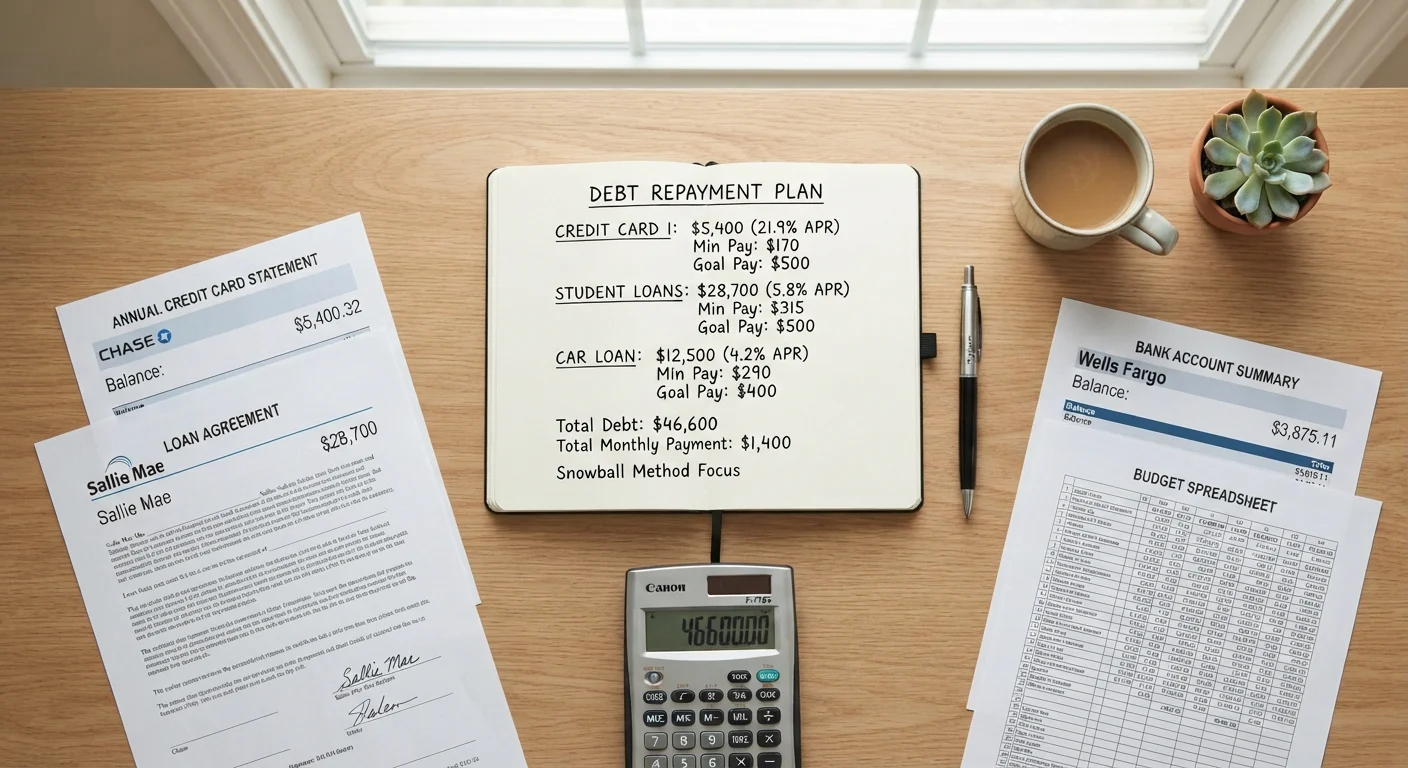
Photo: InsightsTurbo.com | Kickstart Your Knowledge Quest editorial
Why Debt Vocabulary Matters
Walking into a loan agreement or credit card application without knowing the terminology is like signing a contract in a language you only half-speak. The words lenders use — APR, principal, amortization — aren't just jargon. They describe real mechanics that affect how much you pay and for how long.
This reference covers the core terms you're most likely to encounter when borrowing or repaying money. Bookmark it, return to it, and use it alongside our guide to budgeting terms to build a solid financial vocabulary foundation.
This article is for general educational purposes only and does not constitute personalised financial or legal advice. For decisions specific to your situation, consult a qualified financial professional.
Principal
The original sum of money borrowed, excluding interest and fees. Each payment you make reduces the principal balance over time, though early payments on amortized loans often cover more interest than principal.
APR (Annual Percentage Rate)
The total yearly cost of borrowing expressed as a percentage, including the interest rate plus most fees. APR gives a more complete picture of loan cost than the interest rate alone, making it useful for comparing offers.
Amortization
The process of paying off a debt through regular scheduled payments over a set period. Each payment covers interest first, with the remainder reducing the principal — the mix shifts gradually in the borrower's favour as the balance decreases.
Minimum Payment
The smallest amount a lender requires you to pay each billing cycle to keep the account in good standing. Paying only the minimum on high-interest debt extends repayment significantly and increases the total interest paid.
Credit Utilization
The ratio of your current revolving credit balances to your total credit limits, expressed as a percentage. It is one factor in credit score calculations, with lower utilization generally viewed more favourably.
Default
A formal status reached when a borrower has failed to meet the terms of a loan — usually after a sustained period of non-payment. Defaulting can trigger severe consequences including credit damage, penalty rates, and collection actions.
Debt-to-Income Ratio (DTI)
Your total monthly debt obligations divided by your gross monthly income, expressed as a percentage. Lenders use DTI to assess whether you can reasonably take on additional debt.
Compound Interest
Interest calculated on both the original principal and any interest already accumulated. On debt, compounding works against the borrower — unpaid interest is added to the balance, and future interest is charged on that larger amount.
Delinquency
The status of a loan or credit account when a payment has not been made by its due date. Delinquency is typically reported to credit bureaus after 30 days and worsens in severity the longer it continues.
Grace Period
A window of time after a payment due date — or after a credit card billing cycle closes — during which no interest is charged if the full balance is paid. Not all loan types include a grace period.
Core Debt Terms at a Glance
Use the quick-reference card below to orient yourself, then read on for fuller explanations of the concepts that tend to trip people up most.
| What APR includes | Interest rate + lender fees, expressed as an annual percentage (Consumer Financial Protection Bureau (CFPB)) |
| When delinquency is typically reported | After 30 days past due (General industry standard; varies by lender) |
| Common default threshold | 90–180 days of missed payments, depending on loan type (Varies by lender and loan agreement) |
| Utilization guideline (general) | Below 30% of available revolving credit (Commonly cited; scoring models weigh multiple factors) |
| How interest compounds on many credit cards | Daily, based on the Average Daily Balance (Standard practice for most U.S. credit card issuers) |
Understanding how these figures interact is critical. Your interest rate determines the cost of borrowing, but it's the APR that captures the true annual cost — including fees — making it the more useful number when comparing loan offers. Meanwhile, your minimum payment keeps you out of default but rarely makes a meaningful dent in the principal balance when interest is high.
To understand why tackling expensive debt early makes such a difference, see why high-interest debt usually comes before long-term savings.
Terms That Determine What You Actually Owe
Several terms describe how your debt balance changes over time — and misunderstanding them can lead to surprises on your statement.
Principal vs. Interest
Your principal is the original amount borrowed. Interest is the fee charged on top of that for using the lender's money. Early in most loan schedules, a larger share of each payment goes toward interest; as time passes, more goes toward reducing the principal. This is called amortization.
Compounding Frequency
Interest doesn't always accrue once a year. Many credit cards compound daily, meaning unpaid interest is added to your balance every day, and tomorrow's interest is calculated on that higher number. This is why carrying a credit card balance grows expensive quickly. Our article on compound interest explained plainly walks through exactly how this works.
Default and Delinquency
A payment that is missed becomes delinquent. If you remain delinquent long enough — typically 90–180 days depending on the lender and loan type — the account enters default. Default can trigger penalty interest rates, damage your credit report, and in some cases prompt collection activity or legal action. Knowing these thresholds helps you prioritise which payments to protect when money is tight.
If You're Struggling to Make Payments
Avoiding the habits that quietly extend repayment is just as important as knowing the vocabulary. See financial decisions that make getting out of debt harder for a practical look at common pitfalls.
Debt and Your Credit Profile
Debt doesn't exist in isolation — it feeds directly into your credit report and credit score, which in turn influence whether future lenders offer you money and at what cost.
Credit Utilization
This is the percentage of your available revolving credit (like a credit card limit) that you're currently using. Keeping utilization low — a commonly cited general guideline is below 30%, though lower is generally better — is one factor credit scoring models consider. Paying down balances reduces utilization and can improve your score over time.
Debt-to-Income Ratio (DTI)
Lenders calculate your DTI by dividing your total monthly debt payments by your gross monthly income. A lower ratio signals that you have enough income headroom to handle new obligations. Different loan types carry different DTI thresholds, so understanding yours before applying helps set realistic expectations.
For a broader look at how credit works — scores, reports, and cards — explore our Credit Essentials hub. And if you're building a budget alongside managing debt, Budgeting Basics offers straightforward strategies to make both work together.
~$6,500
Average U.S. credit card balance per borrower
According to Federal Reserve and TransUnion data tracking consumer revolving debt trends.
20%+
Typical credit card APR range in the U.S.
Federal Reserve consumer credit data indicates average credit card rates have risen substantially in recent years.
The content provided on our blog site traverses numerous categories, offering readers valuable and practical information. Readers can use the editorial team’s research and data to gain more insights into their topics of interest. However, they are requested not to treat the articles as conclusive. The website team cannot be held responsible for differences in data or inaccuracies found across other platforms. Please also note that the site might also miss out on various schemes and offers available that the readers may find more beneficial than the ones we cover.