
The Real Reason Crate Training Works — and How to Do It Kindly

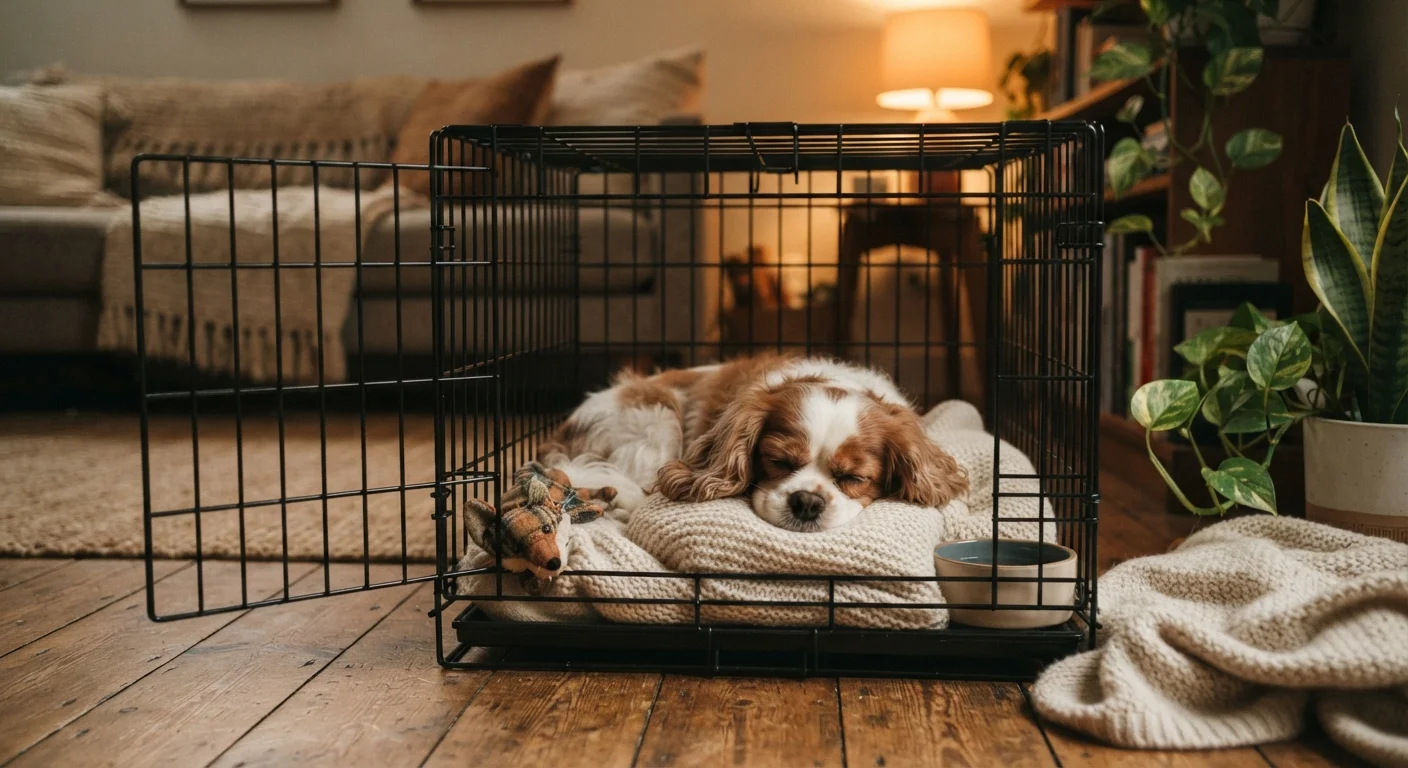
Photo: InsightsTurbo.com | Kickstart Your Knowledge Quest editorial
Key Takeaways
- Dogs are naturally drawn to small, enclosed spaces — crates tap into that instinct constructively.
- Rushing the process creates anxiety; a slow, reward-based introduction builds lasting comfort.
- Treats, meals, and calm praise are the main tools — no coercion or punishment involved.
- A crate should never be used as a penalty or consequence for unwanted behaviour.
- Most dogs reach reliable crate comfort within one to two weeks of consistent, kind practice.
Why Crates Work: The Den Instinct Explained
Crate training is one of the most misunderstood tools in dog care. Critics sometimes frame it as confinement; supporters occasionally over-sell it as a cure-all. The reality is more grounded: crates work because they align with something dogs are already wired for.
Dogs, like their wolf ancestors, are denning animals. In the wild, small, enclosed spaces offer shelter, security, and a predictable resting place. A well-introduced crate taps into that same instinct, giving a domestic dog a clearly defined space that belongs to them — one that doesn't change, doesn't carry unpredictable social demands, and signals rest. This is why a dog who has been kindly introduced to a crate will often choose to sleep there voluntarily, even when the door is open.
The key word is kindly. The psychological benefit of the crate only materialises if the dog learns to associate it with safety and comfort — not with punishment or confinement against their will. This connects to the broader evidence base behind reward-based training approaches: dogs learn faster and with fewer behavioural side effects when good things predict good things.
A crate also supports housetraining, because dogs generally avoid soiling a space they consider their own. It provides a safe containment option during travel or vet stays, when a crate-naive dog would experience significant stress. And it gives new owners a reliable way to prevent destructive behaviour during unsupervised periods — without needing to manage the whole house.
Wire or plastic dog crate
Provides the enclosed den-like space that makes crate training possible — choose a size where the dog can stand, turn, and lie flat.
High-value training treats
Used to create positive associations with the crate at every stage of introduction.
Crate liner or soft mat
Makes the crate comfortable and inviting, encouraging the dog to settle willingly.
Stuffed chew toy (e.g. rubber Kong-style toy)
Gives the dog a calm, rewarding activity to do inside the crate, helping them self-settle.
Crate cover or blanket
Draping the sides of a wire crate creates a darker, more den-like feel that many dogs find calming.
How to Crate Train: A Step-by-Step Approach
The process below is gradual by design. Rushing any stage — especially door-closing and extended absences — is the single most common reason crate training creates anxiety instead of relieving it. If your dog is showing stress signals (persistent whining, drooling, frantic scratching), slow down and return to the previous step.
What you will need
Position the crate and make it inviting
Place the crate in a room where your household spends time — not an isolated laundry room or garage. Dogs are social animals and feel more secure near their people. Leave the door open and put a soft blanket inside. Do nothing else yet; simply let your dog investigate at their own pace. Some dogs will walk straight in out of curiosity; others will take a day or two to approach.
Reward every voluntary entry
Each time your dog steps toward or into the crate, mark the moment with a calm "yes" or a clicker, and follow immediately with a treat. You are building a simple association: crate equals something good. Repeat this 10–15 times across a few short sessions per day. Keep sessions under five minutes so your dog stays engaged rather than bored or overwhelmed.
Feed meals inside the crate
Once your dog is comfortable stepping in voluntarily, start placing their food bowl just inside the entrance. Over several meals, gradually move the bowl further toward the back. This builds a strong, repeated positive association without requiring any training commands. Most dogs begin to walk in confidently within three to five days of this practice.
Practice closing the door — briefly
Once your dog eats calmly with the bowl at the back of the crate, close the door softly while they finish eating. Open it as soon as they're done — before any whining or scratching starts. Over successive meals, gradually extend the time the door stays closed after the meal ends: 30 seconds, then 1 minute, then 2, and so on. Stay nearby and remain calm.
Build duration with you in the room
Begin asking your dog to stay in the closed crate for progressively longer periods while you're present — sitting nearby, reading, or working. A stuffed chew toy placed inside gives them something to do. Aim for 15 to 30 minutes of calm settling before moving to leaving the room. Only increase duration when your dog appears relaxed, not merely tolerating the situation.
Introduce short absences
Once your dog settles comfortably for 30 minutes with you in the room, begin leaving briefly — step out of sight for 5 minutes, then return calmly. Avoid dramatic departures or arrivals, which can heighten the emotional weight of your coming and going. Gradually extend absences over days. Most adult dogs can work up to 3–4 hours without distress; puppies need more frequent breaks due to bladder limitations.
For a broader look at the mistakes that make early dog ownership harder than it needs to be, including how to handle alone time, see our guide to first-year pitfalls.
Common Mistakes That Undermine the Process
Even well-intentioned owners can stall their dog's crate progress with a few predictable errors:
- Using the crate as punishment. Sending a dog to their crate after an accident or a chewing incident teaches them to associate it with negative outcomes. The crate should always be a neutral-to-positive space.
- Progressing too fast. Moving from door-closing to long absences within a day or two is a common mistake. Each dog moves at their own pace, and some — particularly rescue dogs with prior negative associations — may need several weeks at the earliest stages.
- Crating for too long. Adult dogs generally shouldn't be crated for more than 4–5 hours at a stretch during waking hours. Puppies need much more frequent breaks. A crate is a rest space, not a storage solution.
- Responding to whining by opening the door immediately. If your dog whines and you open the door in response, you've taught them that whining works. Instead, prevent the whining by not exceeding your dog's current threshold — and only open the door once they've been quiet for a few seconds.
If you're curious about how older theories about dog behaviour influenced (and sometimes distorted) training advice, our piece on why dominance-based training fell out of favour offers useful context.
Crate Training Older or Rescue Dogs
The content provided on our blog site traverses numerous categories, offering readers valuable and practical information. Readers can use the editorial team’s research and data to gain more insights into their topics of interest. However, they are requested not to treat the articles as conclusive. The website team cannot be held responsible for differences in data or inaccuracies found across other platforms. Please also note that the site might also miss out on various schemes and offers available that the readers may find more beneficial than the ones we cover.