
Iceland in a Week: What First-Time Visitors Actually Need to Know

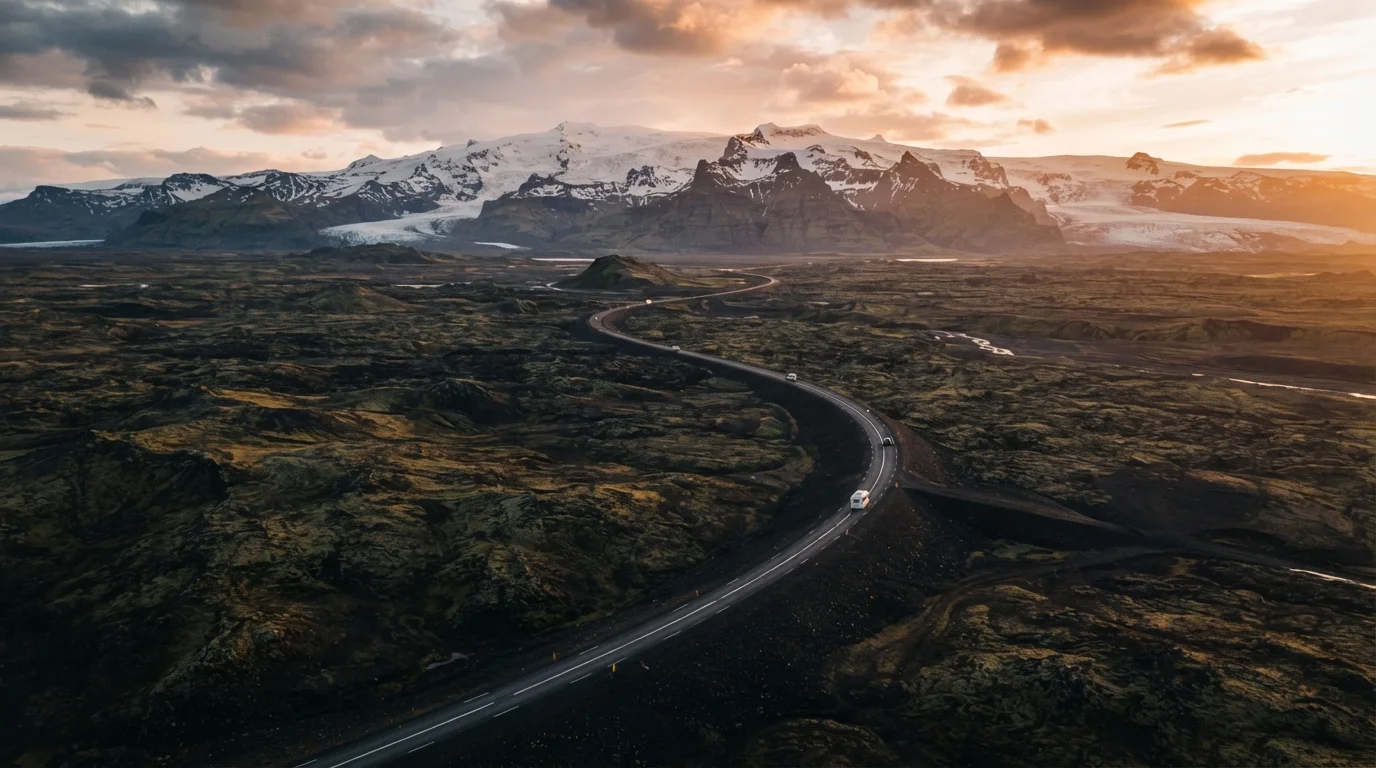
Photo: InsightsTurbo.com | Kickstart Your Knowledge Quest editorial
Key Takeaways
- Seven days is enough for a focused first trip if you choose one region and don't overpack your itinerary.
- Renting a car is nearly essential outside Reykjavík — Iceland's landscapes are spread far apart.
- Northern Lights sightings depend on clear skies, solar activity, and dark conditions — they're never guaranteed.
- Iceland is one of Europe's more expensive destinations; budget carefully before you go.
- Weather changes fast — always dress in waterproof layers regardless of the forecast.
- Verify passport, visa, and entry requirements well in advance through official government sources.
Is One Week in Iceland Actually Enough?
Short answer: yes — with the right expectations. Iceland is a relatively small island (about the size of Kentucky), but its landscapes are dramatically spread out and road speeds are slow. A week won't cover everything, but it absolutely can deliver a genuinely transformative first experience.
The key is resisting the urge to do it all. First-timers who chase every waterfall, every glacier, and every hot spring often end up exhausted and rushed. Picking one coherent region or route — and giving yourself breathing room within it — leads to a far richer trip than an overstuffed checklist.
Before anything else, make sure your travel documents are in order. Our pre-trip checklist for first-time international travelers covers passports, visas, and entry requirements — essential reading before you book anything. And if you're building your planning framework from the ground up, trip planning from scratch walks you through each stage without the overwhelm.
Ring Road (Route 1)
Iceland's main highway that circles the entire island, roughly 830 miles long, passing through all major regions and serving as the backbone of most road trip itineraries.
Aurora Borealis
The Northern Lights — a natural light display caused by charged solar particles interacting with Earth's atmosphere, visible in Iceland during dark months when skies are clear.
F-Roads
Iceland's unpaved highland interior roads, open only in summer and legally requiring a high-clearance 4WD vehicle. Driving a standard car on F-roads voids most rental insurance coverage.
Golden Circle
A popular ~190-mile tourist route near Reykjavík linking three landmarks: Þingvellir National Park, the Geysir geothermal area, and Gullfoss waterfall.
KP Index
A scale from 0–9 measuring global geomagnetic activity. A higher KP index means more intense and widespread Northern Lights activity; most Iceland sightings occur at KP 3 or above.
Schengen Area
A group of 27 European countries, including Iceland, that operate with a shared visa policy allowing border-free travel between member states for eligible visitors.
The Ring Road vs. the South Coast: Choosing Your Route
Iceland's famous Ring Road (Route 1) circles the entire island — roughly 830 miles. Completing it fully in a week is technically possible but leaves almost no time to actually stop and experience places. For a first visit, most travelers find the South Coast a far smarter choice.
The South Coast runs from Reykjavík eastward through Selfoss, Vík, and Jökulsárlón glacier lagoon. Within this corridor you'll encounter black sand beaches, towering waterfalls like Skógafoss and Seljalandsfoss, the Vatnajökull glacier area, and charming small towns — all accessible on well-maintained paved roads.
- Days 1–2: Reykjavík — city exploration, Golden Circle day trip (Geysir, Gullfoss, Þingvellir National Park)
- Days 3–4: South Coast drive — Seljalandsfoss, Skógafoss, black sand beaches at Reynisfjara
- Days 5–6: Glacier lagoon and diamond beach at Jökulsárlón, glacier hiking if desired
- Day 7: Return west, Blue Lagoon or Reykjanes Peninsula exploration before departure
Iceland's approach contrasts sharply with multi-country European trips — planning a Euro trip requires a completely different logistical mindset across borders, while Iceland rewards depth over breadth.
Book Accommodation Before You Finalize Your Route
Northern Lights: What to Realistically Expect
The aurora borealis is many visitors' top Iceland dream — and it's genuinely spectacular when conditions align. But first-timers frequently arrive with unrealistic expectations, and disappointment follows.
Three conditions must overlap for a sighting: darkness (no midnight sun, so late August through April), clear skies (Iceland's cloud cover is frequent and unpredictable), and sufficient solar activity (measured on a KP index scale). All three rarely cooperate on demand.
Practical tips for increasing your chances:
- Stay somewhere rural or coastal — light pollution kills aurora visibility
- Monitor the Icelandic Meteorological Office cloud forecasts nightly
- Check aurora forecasting apps for KP index alerts
- Plan at least three nights of aurora-hunting to give yourself real odds
- Be prepared to drive away from cloud cover — flexibility is your biggest asset
Northern Lights Are Never Guaranteed
If your primary goal is Northern Lights, winter travel (November through February) gives you the longest dark windows, but road conditions are significantly more challenging. Travel insurance and careful route planning become even more important in that season.
Logistics, Costs, and Common First-Timer Mistakes
Iceland is consistently one of Europe's most expensive travel destinations. Accommodation, rental cars, fuel, groceries, and dining all carry premium price tags compared to most other destinations. Going in without a realistic budget — including buffer funds for weather delays or detours — is one of the most common first-timer missteps.
Getting around: Outside Reykjavík, public transportation is extremely limited. Renting a car is effectively essential for accessing Iceland's most celebrated landscapes. For the Ring Road and South Coast, a standard 2WD vehicle suffices in summer; highland F-roads legally require a 4WD. Always check current road conditions at the official Icelandic road authority site before driving.
Packing reality check: Iceland's weather can shift dramatically within hours — wind, rain, sunshine, and even snow are all possible in a single afternoon regardless of season. Waterproof outer layers, sturdy footwear with ankle support, and thermal base layers are non-negotiable even in July.
Other mistakes to sidestep:
- Skipping travel insurance — evacuation and medical costs in remote areas can be very high
- Ignoring safety signs at waterfalls and coastlines — sneaker waves at black sand beaches are a genuine hazard
- Booking accommodation too late — popular towns like Vík have limited lodging options that fill quickly
- Over-relying on credit cards in very remote areas — carry some local currency (Icelandic króna) as backup
Icelandic Road and Coastal Administration (road.is)
The official source for real-time road conditions, road closures, and F-road opening dates across Iceland. Check this daily while driving — conditions change rapidly.
Icelandic Meteorological Office Aurora Forecast
Provides cloud cover forecasts and aurora activity predictions specific to Iceland, updated regularly. Essential for planning Northern Lights viewing nights.
Safe Travel Iceland (safetravel.is)
Iceland's official traveler safety resource, with weather alerts, emergency registration for road trips, and up-to-date advisories. Registering your travel plan here is a smart precaution on remote routes.
Entry requirements, road conditions, and safety advisories can change. Always verify current information through official government sources and the Icelandic Road and Coastal Administration before and during your trip.
Frequently Asked Questions
The content provided on our blog site traverses numerous categories, offering readers valuable and practical information. Readers can use the editorial team’s research and data to gain more insights into their topics of interest. However, they are requested not to treat the articles as conclusive. The website team cannot be held responsible for differences in data or inaccuracies found across other platforms. Please also note that the site might also miss out on various schemes and offers available that the readers may find more beneficial than the ones we cover.