
Trip Planning From Scratch: A Complete Walkthrough for First-Time Travellers

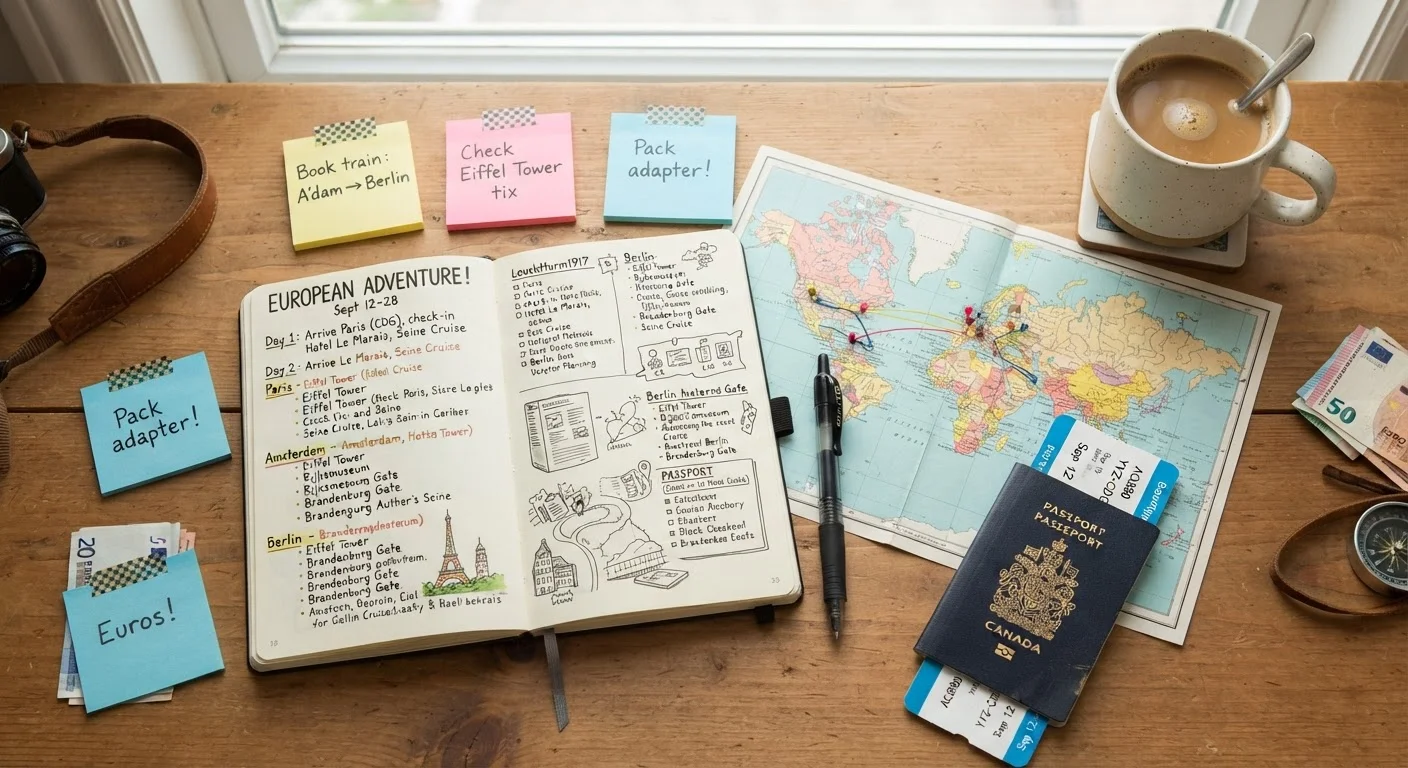
Photo: InsightsTurbo.com | Kickstart Your Knowledge Quest editorial
Key Takeaways
- Match your destination to your current budget, time, and experience level — not just your wish list.
- Build a full-cost budget before booking anything to avoid mid-trip financial stress.
- Shoulder seasons often offer the best balance of good weather, smaller crowds, and lower costs.
- Leave buffer time in your itinerary — over-scheduling is one of the most common first-timer mistakes.
- Verify entry requirements, travel advisories, and insurance needs well before your departure date.
- A written pre-departure checklist catches the details that excitement makes easy to forget.
Choosing Your Destination
The hardest part of planning a first trip is often deciding where to go. Rather than defaulting to the most Instagrammed place of the moment, start with three honest questions: How much time do I have? What's my rough budget? And how comfortable am I navigating somewhere unfamiliar?
These answers naturally narrow your options. A week and a moderate budget might point toward a domestic road trip or a single international city rather than a multi-country tour. If language barriers feel daunting, an English-friendly destination or a guided tour structure can ease that anxiety significantly.
Browse the Destinations Guide to explore both US and international options with practical, on-the-ground context. Once you've landed on a shortlist of two or three places, compare their peak seasons, entry requirements, and general cost of living — that comparison usually makes the final choice clear.
Shoulder season
The travel period just before or after a destination's peak season. It typically offers lower prices and smaller crowds while most services remain available.
Travel advisory
An official government warning or notice about safety, health, or entry conditions for a specific country or region. In the US, these are issued by the State Department.
Contingency buffer
A percentage of your total travel budget set aside for unexpected costs — things like medical expenses, a missed connection, or an unplanned extra night.
Entry requirements
The rules a country sets for who can enter and under what conditions — including passports, visas, vaccinations, or proof of onward travel. These vary by destination and nationality.
Itinerary
A day-by-day plan for a trip that outlines where you'll go, what you'll do, and where you'll stay. A good itinerary is flexible, not rigid.
Setting a Realistic Budget
A trip budget has more line items than most first-timers expect. Beyond flights and hotels, factor in: ground transportation (airport transfers, local transit, car rental), meals, attraction entry fees, travel insurance, and a contingency buffer of around 10–15% for surprises.
Write every category down before you book anything. This full-picture view prevents the common trap of spending heavily on flights and scrambling to cover everything else. If the total feels out of reach, adjust the destination or travel dates — not the safety buffer.
For general guidance on researching and structuring a travel budget end to end, the travel planning from scratch guide covers the full framework in detail.
Track Every Budget Category Before Booking
Timing Your Trip
When you travel matters almost as much as where. Peak season brings reliable weather and fully open attractions — but also higher prices and crowds. Off-season can mean significant savings but comes with trade-offs like limited hours or unpredictable conditions.
Shoulder season — the weeks on either side of peak — is often the sweet spot for first-timers. Prices ease, crowds thin, and most services remain fully operational. Research the specific shoulder window for your destination, since it varies widely by region.
Also align your trip length with the destination's pace. A jam-packed city like New York rewards a shorter, high-energy visit. A slower coastal region or national park calls for more days and fewer agenda items per day.
Booking Flights and Accommodation
Once your destination, dates, and budget are set, it's time to lock in the big two: flights and a place to stay. Search flight options with flexibility on departure times — early morning and late evening flights often carry lower fares. If flying internationally, check whether a layover versus a nonstop route makes sense for your schedule and comfort level.
For accommodation, match the type to your travel style. Hotels offer consistency and on-site support — helpful when you're new to a city. Vacation rentals work well for longer stays or groups. Hostels are social and cost-effective for solo travellers on tighter budgets. Whatever you choose, read recent reviews and verify the cancellation policy before confirming.
Book your main accommodation for the first and last nights well ahead; middle nights can sometimes be adjusted once you're on the ground and know your rhythm.
Building Your Itinerary
A good itinerary is a loose framework, not a minute-by-minute schedule. Group activities by neighborhood or area to minimize travel time between them. Aim for two or three anchoring experiences per day, then leave the rest open for wandering, eating, or simply recovering from jet lag.
One of the most reliable ways to ruin a first trip is over-scheduling. The itinerary mistakes guide breaks down exactly which planning habits burn people out by mid-trip and how to build in sustainable pacing from the start.
Also consider mixing high-effort activities (full-day hikes, museum marathons) with low-key afternoons. Your future self — tired, possibly carrying a blister — will thank you.
Don't Confuse a Full Itinerary With a Good One
Documents, Safety, and Final Prep
The final planning phase is about verification, not discovery. Confirm that your passport is valid for at least six months beyond your return date — many countries require this. Check visa requirements through official government sources well in advance, as processing times vary. For health-related entry requirements or recommended vaccinations, consult the CDC's Travelers' Health resource and your healthcare provider.
If your destination is remote or less traveled, go deeper with the pre-trip readiness checklist for remote destinations — it covers connectivity, emergency planning, and health prep specific to off-the-beaten-path travel.
In the final week before departure, run through a written pre-departure checklist. The pre-trip checklist covers documents, bookings, finances, and safety steps for any trip length. Print it, check it twice, and then — enjoy the adventure.
Frequently Asked Questions
The content provided on our blog site traverses numerous categories, offering readers valuable and practical information. Readers can use the editorial team’s research and data to gain more insights into their topics of interest. However, they are requested not to treat the articles as conclusive. The website team cannot be held responsible for differences in data or inaccuracies found across other platforms. Please also note that the site might also miss out on various schemes and offers available that the readers may find more beneficial than the ones we cover.