
Southeast Asia or Central America: Choosing Your First Big Trip Abroad

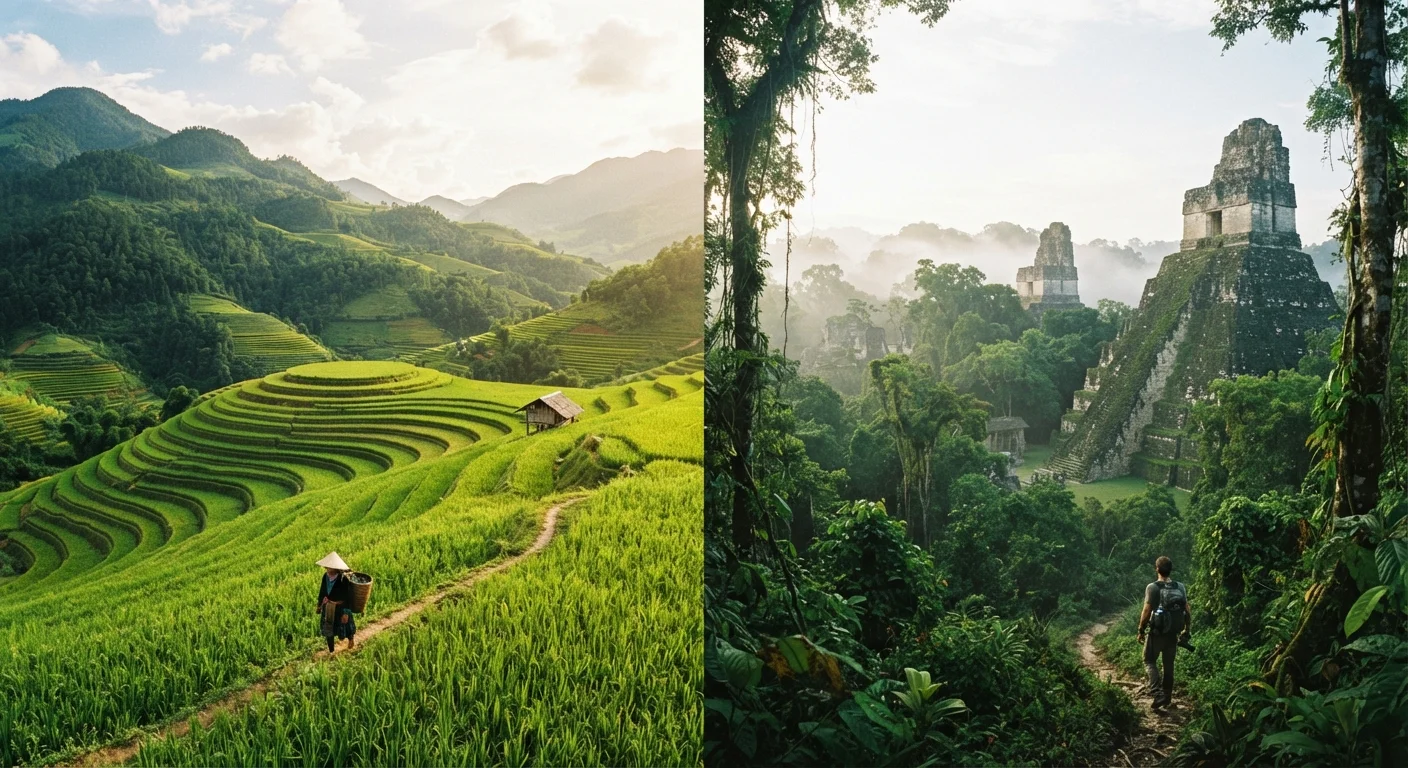
Photo: InsightsTurbo.com | Kickstart Your Knowledge Quest editorial
Key Takeaways
- Southeast Asia generally offers lower daily costs and a wider variety of destinations within a single trip.
- Central America is geographically closer for US travelers, reducing jet lag and long-haul flight costs.
- Both regions have distinct dry and rainy seasons that significantly affect your experience — timing matters.
- English is more widely spoken in tourist corridors of both regions, but basic Spanish helps enormously in Central America.
- Visa requirements are more straightforward in most of Central America for US passport holders.
- Your ideal choice depends on your budget, available trip length, adventure style, and comfort with long-haul travel.
The Core Difference: Scale, Distance, and What You're After
Choosing between Southeast Asia and Central America isn't just about picking a place on a map — it's about figuring out what kind of first big trip you actually want. These two regions attract similar traveler types but reward them in very different ways.
Southeast Asia spans roughly 11 countries, each with its own language, religion, cuisine, and landscape. A well-planned circuit might take you from the temples of northern Thailand to the island beaches of the Philippines, with Vietnam's UNESCO-listed towns in between. Central America, by contrast, is compact — you can drive across several countries in a day, and many travelers combine Guatemala, Belize, and Costa Rica in a single two-week trip.
Distance is a real factor, too. From most US cities, flights to Central America typically run four to six hours, while Southeast Asia demands twelve to twenty-plus hours in the air. That gap shapes everything: your budget, your recovery time, and how much of your trip you spend actually exploring. If you're still putting together the overall framework for your adventure, our travel planning guide walks through how to research, budget, and prepare for any destination from scratch.
Cost Breakdown: Daily Budgets and Hidden Expenses
Budget is usually the first real decision point. Southeast Asia has a long-standing reputation as one of the most affordable travel regions on earth — and for good reason. In countries like Vietnam, Cambodia, and Indonesia, daily budgets of $40–$60 can cover a comfortable guesthouse, three meals of excellent local food, and short transport hops. Street food is abundant, safe, and delicious, making it easy to eat well without spending much.
Central America is less uniformly cheap. Costa Rica, one of the region's most visited countries, has a cost of living that's closer to a mid-range European destination than a classic backpacker haven. Budget travelers in Central America typically spend $50–$80 per day, though Guatemala and Nicaragua can bring that down closer to Southeast Asian territory.
~$45
Average daily spend in Vietnam
Numbeo's cost-of-living data consistently places Vietnam among the most affordable countries for travelers, including accommodation and meals.
~$75
Average daily spend in Costa Rica
The World Bank and travel cost aggregators position Costa Rica closer to mid-range destinations, significantly higher than its Central American neighbors.
4–6 hrs
Flight time from US East Coast to Central America
Most nonstop routes from cities like Miami, Houston, or Atlanta reach Guatemala City, San José, or Belize City in under six hours.
One often-overlooked cost is the flight itself. Round-trip flights to Southeast Asia from US hubs frequently range from $700 to $1,200+, whereas Central America flights can often be found in the $300–$600 range, depending on departure city and season. For shorter trips, that flight cost difference can significantly shift your overall value calculation.
Climate, Timing, and When to Go
Both regions have clearly defined dry and wet seasons, and getting the timing wrong can mean heavy daily rain or closed attractions. In Southeast Asia, the dry season generally runs November through April across most of the region, though it varies by country — the Thai islands, for instance, have microclimates that can differ dramatically by coast. The wet season brings lush green landscapes and fewer crowds, but also the risk of flooding and road closures in rural areas.
Central America's dry season typically runs December through April. The rainy season (May–November) aligns with hurricane season in the Caribbean — not something to ignore if your itinerary includes Belize's cayes or the Caribbean coast of Costa Rica. However, the Pacific side of countries like Costa Rica remains more manageable during shoulder months.
| Criterion | Southeast Asia | Central America |
|---|---|---|
| Flight time from US | 12–20+ hours | 4–6 hours |
| Average daily budget | $40–$60 (budget traveler) | $50–$80 (budget traveler) |
| Dry season | Nov–April (most areas) | Dec–April |
| Primary languages | Thai, Vietnamese, Khmer, etc. | Spanish (Belize: English) |
| Number of countries to explore | 10+ distinct nations | 7 compact nations |
| Visa ease (US passport) | Varies; some require advance visas | Most offer visa-free entry |
| Overland transport | Trains, buses, low-cost airlines | Shuttles, local buses |
| Street food culture | Exceptional and very affordable | Strong, especially in Guatemala |
For US travelers, Central America's dry season aligns neatly with winter holiday travel windows, making it a natural fit for December or spring break trips. Southeast Asia's prime season similarly overlaps with US winter, making both regions popular — and occasionally crowded — at the same time of year.
Cultural Depth, Language, and Getting Around
Southeast Asia's cultural richness is almost overwhelming in the best way. Buddhism, Hinduism, Islam, and indigenous traditions intersect across the region, producing extraordinary temples, festivals, and culinary traditions unlike anything most American travelers encounter at home. The language barrier is more pronounced — Thai, Vietnamese, Khmer, and Bahasa Indonesia share almost no roots with English — but tourist infrastructure in major hubs is well-developed.
Central America's cultural texture is shaped by Indigenous traditions, Spanish colonial history, and Afro-Caribbean influences along the coasts. Spanish is the dominant language across most of the region (Belize being the notable English-speaking exception), which means even a basic command of conversational Spanish will meaningfully improve your experience. The cultural learning curve is gentler for many American travelers, but that doesn't mean Central America is shallow — Guatemala's Indigenous Maya communities and Belize's Creole and Garifuna cultures offer genuine depth.
Getting around differs significantly too. Southeast Asia has mature low-cost airline networks, overnight trains, and well-worn bus routes connecting countries. Central America relies more on shuttle services and local buses, with fewer domestic flight options outside Costa Rica. If multi-country travel is your goal, see how other regions handle cross-border logistics in our Euro trip starter framework — many of the same planning principles apply.
Check Entry Requirements Before You Book
Curious how Southeast Asia stacks up against other Asian destinations? Our Japan vs. South Korea comparison offers a closer look at two very different travel styles within the broader region.
The content provided on our blog site traverses numerous categories, offering readers valuable and practical information. Readers can use the editorial team’s research and data to gain more insights into their topics of interest. However, they are requested not to treat the articles as conclusive. The website team cannot be held responsible for differences in data or inaccuracies found across other platforms. Please also note that the site might also miss out on various schemes and offers available that the readers may find more beneficial than the ones we cover.