
Currency Exchange Myths That Cost Travelers Money

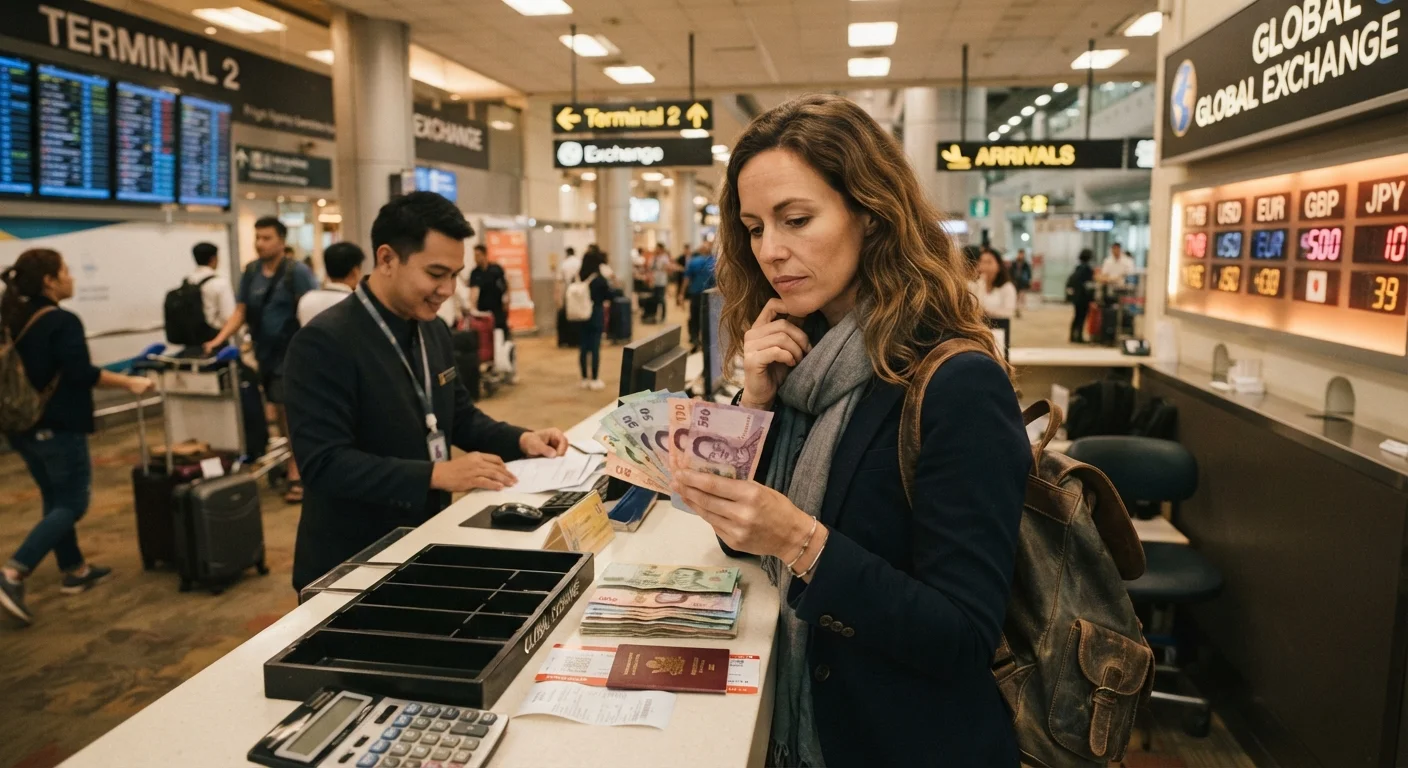
Photo: InsightsTurbo.com | Kickstart Your Knowledge Quest editorial
Key Takeaways
- Airport exchange kiosks aren't always the worst option — fees vary widely by location and provider.
- Dynamic currency conversion almost always costs you more than paying in local currency.
- Credit cards with no foreign transaction fees often deliver competitive exchange rates.
- Carrying zero cash abroad is risky — many destinations still rely heavily on physical currency.
- The interbank rate you see on Google is a wholesale rate; no retail consumer receives it directly.
Why Currency Myths Are Expensive
Few travel decisions carry as much quiet financial weight as how you handle currency. A bad exchange strategy doesn't announce itself — it simply chips away at your budget one fee at a time. The problem is that a lot of common wisdom on this topic is outdated, oversimplified, or just plain wrong.
Whether you're prepping for your first international trip or you've been traveling for years, it's worth stress-testing what you think you know. Some widely repeated rules actually steer travelers toward worse deals, while genuinely useful strategies get overlooked. For a broader look at travel money management, see our guide on managing money while travelling.
Myth
Airport currency exchange booths always offer the worst rates, so you should never use them.
Fact
Airport kiosks vary significantly — some are genuinely poor value, others are competitive. Location and provider matter more than the airport setting itself.
The blanket "never exchange at the airport" rule has real roots — some high-traffic airport concessions do charge elevated margins. But it's not a universal truth. Exchange booths in arrival halls at major international hubs sometimes post competitive rates because they're competing for volume. The only reliable way to know is to check the rate against a mid-market reference (like the rate displayed on a financial data site) and factor in any flat fees. A modestly worse rate on a small amount may still be acceptable if it saves you scrambling for cash at midnight after a long flight.
Myth
The exchange rate you see on Google is what you should expect to receive.
Fact
The Google rate reflects the interbank (mid-market) rate — a wholesale benchmark that no retail consumer receives directly.
Banks, exchange services, and card networks all build a margin into their rates relative to this benchmark. That margin is how the conversion service earns revenue. The gap can be narrow (under 1% with some travel-optimized cards) or wide (4–7% or more with some high-street bank cards and many airport kiosks). Use the mid-market rate as a reference point to evaluate how much margin you're being charged — not as an expectation of what you'll actually get.
Myth
Paying by card abroad is always safer and cheaper than using cash.
Fact
Cards can be cost-effective, but foreign transaction fees, dynamic currency conversion, and ATM charges mean cards aren't automatically the cheaper option.
A card without foreign transaction fees and with a tight exchange rate margin is genuinely excellent for travel. But not all cards meet that bar. Many standard bank cards charge 2–3% on every foreign purchase, and some levy additional ATM withdrawal fees on top. Before assuming your card is travel-friendly, review its fee schedule specifically for international use. Meanwhile, cash — obtained via a low-fee ATM in the destination country — can sometimes work out cheaper for everyday small purchases where card surcharges apply.
Myth
You should convert all your money before you leave home to lock in the rate.
Fact
Pre-trip conversion at a bank or exchange service rarely locks in a meaningfully better rate, and it leaves you holding unused foreign currency if plans change.
Exchange rates fluctuate, but for most leisure travelers, trying to time conversions is neither practical nor particularly fruitful — the margins charged by retail services tend to dwarf any short-term rate movement. Converting a small emergency float before departure makes sense for peace of mind. Converting your entire travel budget weeks in advance, however, adds currency risk (your trip currency could weaken before you leave) and creates a logistical problem if you end up with leftover foreign cash that's costly to convert back.
Myth
Going cashless is perfectly fine for any destination.
Fact
Many destinations — including popular ones — rely heavily on cash for everyday transactions, particularly outside major city centers.
Card acceptance has expanded globally, but coverage is far from universal. Rural areas, local markets, smaller restaurants, taxis, temples, and many street-food vendors in destinations across Southeast Asia, Latin America, Eastern Europe, and parts of Southern Europe routinely expect cash. Even in card-friendly cities, terminal outages, minimum purchase requirements, and surcharges for card payments are common. Arriving with no cash and no clear plan for obtaining it quickly is a genuine risk, not a minor inconvenience.
Building a Smarter Currency Strategy
Once you strip away the myths, a practical approach emerges. Before departure, check whether your bank offers fee-free ATM withdrawals abroad or currency orders at branch rates — many do, and it's worth a five-minute phone call to find out. Notify your bank of your travel dates to avoid cards being flagged for suspicious activity.
On the ground, always decline dynamic currency conversion when a card terminal offers it. That option routes your transaction through a third-party conversion service that typically applies a worse rate than your card's standard foreign transaction process. Pay in the local currency every time.
Always Decline Dynamic Currency Conversion
Finally, carry a modest amount of local cash regardless of how card-friendly your destination appears. Transit situations, street markets, rural areas, and power outages can all make card payments impossible at inconvenient moments. A diversified approach — one travel-friendly card plus a small cash reserve — tends to be more resilient than any single method alone.
If currency myths have you questioning other financial assumptions, our piece on budgeting myths that keep people from starting covers similar ground for everyday finances. And if your overseas spending tends to spiral despite good intentions, why your budget always blows up abroad is worth a read before your next departure.
The content provided on our blog site traverses numerous categories, offering readers valuable and practical information. Readers can use the editorial team’s research and data to gain more insights into their topics of interest. However, they are requested not to treat the articles as conclusive. The website team cannot be held responsible for differences in data or inaccuracies found across other platforms. Please also note that the site might also miss out on various schemes and offers available that the readers may find more beneficial than the ones we cover.