
Manual vs. Automatic Transmission: A Decision Guide for New Drivers

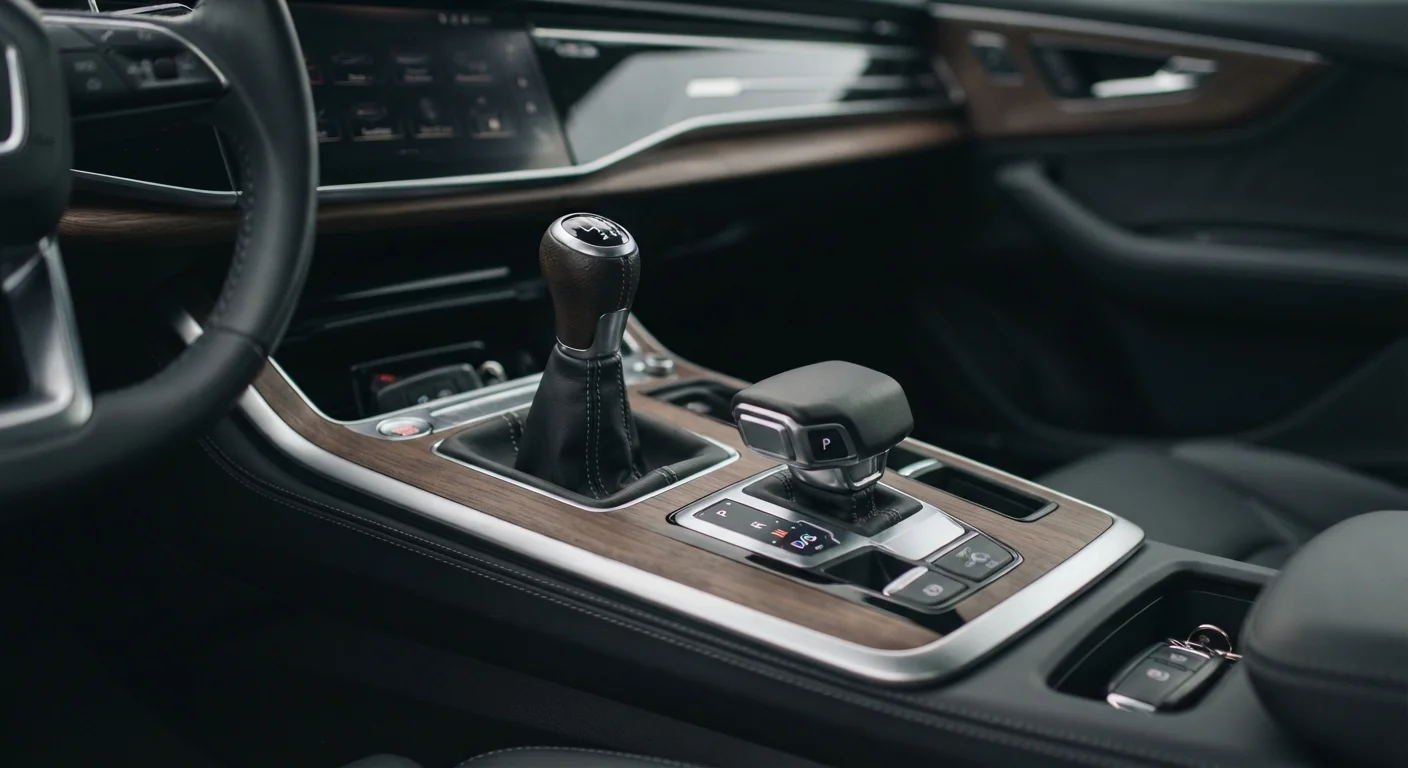
Photo: InsightsTurbo.com | Kickstart Your Knowledge Quest editorial
Key Takeaways
- Manual transmissions generally have a lower purchase price and simpler mechanical structure than automatics.
- Automatic transmissions reduce driver workload, making them easier to learn and less tiring in stop-and-go traffic.
- Modern automatics have largely closed the fuel economy gap with manuals, though results vary by vehicle.
- Manual vehicles are increasingly rare in the US market, limiting your model and trim choices.
- Your daily driving environment - city versus highway - should heavily influence which transmission you choose.
- Whichever you learn on shapes your foundational driving skills, so think long-term before deciding.
What Each Transmission Actually Does
A transmission transfers engine power to the wheels, and the type determines how gear changes - moving from lower to higher ratios as speed increases - are managed. Understanding the mechanics helps you evaluate each option honestly rather than defaulting to habit or hearsay.
In a manual transmission (sometimes called a stick shift), the driver operates a clutch pedal with their left foot to disengage the engine from the drivetrain, then manually selects a gear using a floor-mounted stick. Mastering the coordination of clutch, throttle, and shift timing takes practice and typically a few weeks of regular driving before it feels natural.
In an automatic transmission, an internal system called a torque converter manages gear changes based on vehicle speed and engine load - with no clutch pedal required. The driver selects Park, Reverse, Neutral, or Drive, and the car handles everything else. Newer variants include CVTs (continuously variable transmissions), which use a belt-and-pulley system to deliver seamless power without distinct gear steps, and dual-clutch automatics, which shift faster than conventional automatics but can feel jerky at low speeds.
For a broader picture of what to evaluate before committing to any vehicle, see our First-Time Car Buyer's Complete Roadmap.
Cost, Availability, and the US Market Reality
Manual transmissions have historically carried a modest price advantage - sometimes $1,000 to $1,500 less than the automatic variant of the same model. However, as manuals become rarer in the US, this gap is shrinking, and in some cases, the automatic has become the standard trim while the manual is a special-order option.
| Criterion | Manual Transmission | Automatic Transmission |
|---|---|---|
| Typical upfront cost | Generally lower | Generally higher |
| US new car availability | Under 5% of market | Over 95% of market |
| Learning curve | Moderate to steep | Minimal |
| City driving ease | Tiring with heavy traffic | Comfortable and low-effort |
| Fuel economy | Marginal advantage (varies) | Near parity with modern units |
| Mechanical complexity | Lower - fewer components | Higher - more systems involved |
| Driver control | Full manual gear selection | Automated; some offer paddle shifters |
| Versatility (global driving) | High - works anywhere | Limited if traveling abroad |
Availability is a real constraint. Data from automotive research organizations consistently shows that fewer than 5% of new cars sold in the US each year are manual-transmission models. If you have a specific vehicle in mind, confirm early whether a manual variant is offered in your target trim level - many are not.
On the used market, manuals can be slightly less expensive, partly because demand is lower. However, a used manual with a worn clutch may need that component replaced, a repair that can run several hundred dollars depending on the vehicle. Factor that into your total cost of ownership assessment. The new vs. used trade-offs article covers how these mechanical considerations play into the new-versus-used decision.
<5%
Share of new US car sales that are manual
Automotive industry data consistently shows manual transmissions account for a small and declining fraction of new vehicle sales in the United States.
~$1,000-$1,500
Typical price difference (manual vs. automatic)
Where both options are offered on the same model, the manual trim has historically been modestly cheaper, though this gap has narrowed as manuals become less common.
Driving Experience, Skill, and Long-Term Fit
The transmission you learn on tends to shape your default driving instincts. Drivers who start on a manual often report a stronger sense of vehicle control and a better intuitive understanding of engine behavior - skills that carry over to any car they later drive. Drivers who start on an automatic can focus their early learning phase entirely on observation, hazard response, and road positioning, which are arguably more safety-critical skills for a new driver.
Consider your primary driving environment carefully. Urban commuting with frequent stops heavily favors automatics - the repeated clutch engagement of city driving is physically demanding and increases clutch wear over time. Mostly highway or suburban driving narrows the ergonomic gap considerably.
Fuel Economy: Smaller Gap Than You May Think
If you anticipate traveling internationally or regularly borrowing other people's vehicles, having manual competency is a practical asset. It's also worth noting that in some states, driving examiners may note on your license if your test was taken in an automatic, which can limit you administratively in certain jurisdictions. Check your state's DMV rules before you test.
Once you've decided and made your purchase, the first year of car ownership guide will help you anticipate what comes next - from insurance to unexpected maintenance needs.
The content provided on our blog site traverses numerous categories, offering readers valuable and practical information. Readers can use the editorial team’s research and data to gain more insights into their topics of interest. However, they are requested not to treat the articles as conclusive. The website team cannot be held responsible for differences in data or inaccuracies found across other platforms. Please also note that the site might also miss out on various schemes and offers available that the readers may find more beneficial than the ones we cover.