
New Car vs. Used Car: What Actually Changes for a First-Time Buyer

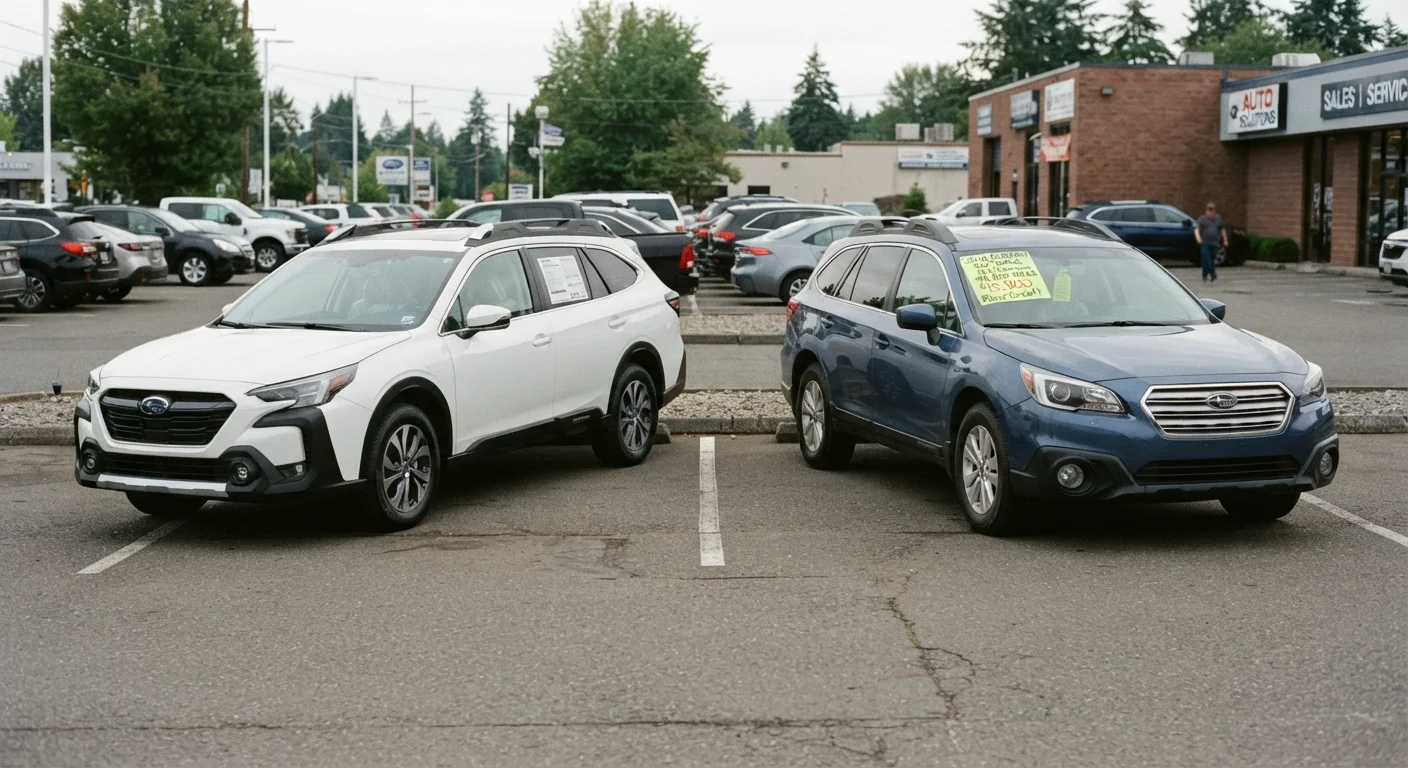
Photo: InsightsTurbo.com | Kickstart Your Knowledge Quest editorial
Key Takeaways
- New cars cost more upfront but come with manufacturer warranties that cover most early repair costs.
- Used cars lose less value the moment you buy them, but require more due diligence before purchase.
- Depreciation hits new cars hardest in the first two to three years of ownership.
- Financing terms, insurance premiums, and registration fees often differ between new and used vehicles.
- A pre-purchase inspection and vehicle history report are essential steps for any used car buyer.
- Neither option is universally better - the right choice depends on your budget, risk tolerance, and driving needs.
The Core Trade-Off: Certainty vs. Value
At its simplest, buying new means paying a premium for a known quantity - a car with no prior owners, no hidden history, and full factory coverage. Buying used means accepting some unknowns in exchange for a lower price and a slower rate of future value loss.
Neither is wrong. But for a first-time buyer, the difference between these two paths affects nearly every aspect of ownership: what you pay monthly, how much insurance costs, what happens when something breaks, and how much the car is worth if you sell it in three years. See our complete first-time buyer roadmap for a fuller picture of the process before you commit to either direction.
| Criterion | New Car | Used Car |
|---|---|---|
| Purchase price | Higher - full market value | Lower - reflects prior depreciation |
| Depreciation impact | Steepest in years 1-3 | Slower - value already dropped |
| Warranty coverage | Full manufacturer warranty included | Limited or none (CPO is an exception) |
| Vehicle history | No prior owners or accidents | Must be verified independently |
| Financing rates | Often lower from lenders | Typically higher for older vehicles |
| Insurance cost | Higher - greater replacement value | Generally lower |
| Safety technology | Latest driver-assist features standard | Varies by model year |
| Due diligence required | Minimal - factory condition confirmed | High - inspection and history check needed |
Depreciation: Why the First Few Years Cost More Than You Think
Depreciation - the rate at which a car loses monetary value - is one of the most consequential factors in this decision, and the one most first-time buyers underestimate. A new vehicle typically loses a meaningful share of its purchase value within the first two to three years, simply because it's no longer new. When you buy used, that loss has already happened under someone else's ownership.
This doesn't mean new cars are a bad financial decision, but it does mean the math looks different depending on how long you plan to keep the vehicle. If you're buying a car you intend to drive for eight or ten years, the initial depreciation matters less over time. If you think you might trade in or sell within a few years, you could recover less of your original outlay on a new vehicle. Our article on how depreciation works breaks this down in more detail.
~20%
Typical new car value loss in year one
Industry estimates commonly cited by consumer automotive research organisations suggest new vehicles can depreciate roughly 15-25% in their first year of ownership.
2-4 years
Age of used cars with best value-to-reliability ratio
Automotive analysts generally point to lightly used vehicles in this age range as offering the strongest balance between price reduction and remaining usable life.
~$1,000+
Estimated average annual repair cost on older used vehicles
Consumer research groups note that repair costs tend to rise significantly as vehicles age past the 5-7 year mark, though actual costs vary widely by make and maintenance history.
Warranty, Reliability, and the Real Cost of Repairs
A new car comes with a manufacturer's warranty - typically covering the powertrain (engine and transmission) for longer and the bumper-to-bumper components for a shorter period, though terms vary by manufacturer. This matters because mechanical repairs in the first few years are largely covered at no cost to you.
Used cars usually carry limited or no remaining warranty, though certified pre-owned (CPO) programs - offered by some dealerships - extend manufacturer-backed coverage to qualifying used vehicles. CPO cars are inspected and reconditioned to specific standards before resale, and they occupy a middle ground between the certainty of new and the value of used.
For any non-CPO used car, independent due diligence is essential. A pre-purchase inspection by a qualified mechanic can surface problems that aren't visible during a test drive, and a vehicle history report can reveal prior accidents, title issues, or inconsistent odometer readings.
What 'Certified Pre-Owned' Actually Means
Financing, Insurance, and the Ongoing Costs You'll Actually Pay
First-time buyers often focus on the sticker price and overlook how new vs. used affects everything that comes after. Financing rates (the interest charged on an auto loan) are often lower for new vehicles because lenders consider them lower-risk collateral. However, the loan amount itself is typically higher, which means higher monthly payments even at a better rate.
Insurance premiums also tend to be higher on new cars - both because the vehicle is worth more and because lenders on new car loans usually require comprehensive and collision coverage. Registration fees in many US states are calculated as a percentage of vehicle value, so a more expensive car costs more to register annually.
The full picture of what you'll spend beyond the purchase price is worth mapping out before you decide. Our breakdown of ownership costs new drivers rarely budget for covers these ongoing expenses in plain terms. You should also think carefully about where you buy - because a dealership and a private seller offer very different levels of protection and flexibility, regardless of whether the car is new or used.
The content provided on our blog site traverses numerous categories, offering readers valuable and practical information. Readers can use the editorial team’s research and data to gain more insights into their topics of interest. However, they are requested not to treat the articles as conclusive. The website team cannot be held responsible for differences in data or inaccuracies found across other platforms. Please also note that the site might also miss out on various schemes and offers available that the readers may find more beneficial than the ones we cover.