
Private Seller vs. Dealership: Where Should You Buy Your First Car?

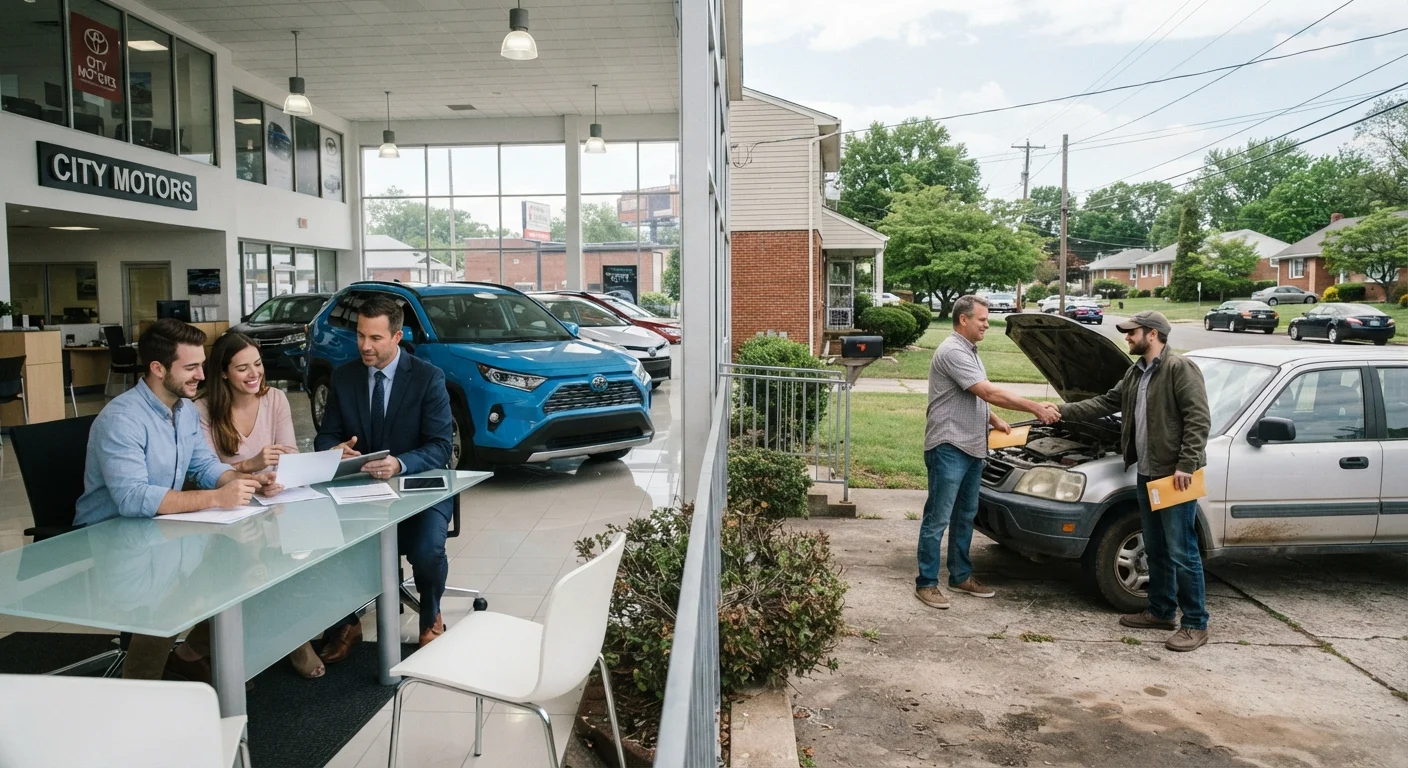
Photo: InsightsTurbo.com | Kickstart Your Knowledge Quest editorial
Key Takeaways
- Dealerships offer more consumer protections, financing options, and paperwork support - but typically at a higher price.
- Private sellers often list cars below market value, but buyers assume more risk and handle more of the process themselves.
- First-time buyers with limited car knowledge may benefit from the structured environment a dealership provides.
- Always get a pre-purchase inspection from an independent mechanic regardless of where you buy.
- Your budget, confidence level, and vehicle knowledge should all factor into which route you choose.
Why This Decision Matters More Than It Seems
For most people, a car is the largest purchase they've made outside of rent. Where you buy determines not just the price you pay, but the protections you have, the paperwork you manage, and the recourse available if something goes wrong afterward. Before getting into the specifics, see the First-Time Car Buyer's Complete Roadmap to understand how this decision fits into the broader process.
The core trade-off is straightforward: dealerships offer structure and accountability; private sellers offer price flexibility and less overhead. But there's real nuance inside each option that first-time buyers often miss.
| Criterion | Dealership | Private Seller | |
|---|---|---|---|
| Typical price | Higher (overhead included) | Lower (negotiable) | |
| Financing options | Available on-site | Arrange independently beforehand | |
| Warranty coverage | CPO options available | None (as-is sale) | |
| Paperwork handled by | Dealer (largely) | Buyer (yourself) | |
| Consumer protections | State-licensed, regulated | Minimal legal recourse | |
| Vehicle condition transparency | Varies; CPO inspected | Varies; PPI strongly advised | |
| Negotiation room | Moderate | Often significant |
Buying from a Dealership: What You're Actually Getting
Licensed dealerships - whether franchised (selling a specific brand's new and used cars) or independent (used vehicles only) - operate under state regulations that private sellers don't. This matters in concrete ways:
- Financing access: Most dealerships work with multiple lenders and can arrange financing on-site. If you haven't secured a loan through your bank or credit union beforehand, a dealer's finance department can fill that gap - though it's worth comparing their rate against outside offers.
- Title and paperwork: Dealers handle the title transfer, registration processing, and in many states, temporary tags. This reduces the administrative burden on a first-time buyer significantly.
- Certified pre-owned (CPO) programs: Franchised dealers often offer manufacturer-certified used vehicles that include inspections and extended warranty coverage. This is a meaningful layer of protection that doesn't exist in private sales.
- Return policies and arbitration: Some dealers offer limited return windows or dispute resolution processes. These vary widely, so always ask explicitly.
The downside is price. Dealership overhead - staff, facilities, profit margin - is baked into every sticker. Negotiation is expected, but you're rarely going to match the pricing flexibility of a motivated private seller.
Get Pre-Approved Before You Visit a Dealer
Buying from a Private Seller: The Real Trade-offs
Private sellers list vehicles on platforms like Craigslist, Facebook Marketplace, and similar sites. The main draw is price: without dealership overhead, sellers often accept offers closer to a vehicle's actual market value. For a budget-stretched first-time buyer, that gap can be significant - sometimes several thousand dollars on comparable vehicles.
But the risk profile is different. Private sales are typically "as-is," meaning once money changes hands, the car is yours - problems included. There's no warranty, no CPO inspection, and no licensing board to complain to if something goes wrong. You're also responsible for handling the title transfer yourself, which varies by state.
Never Skip the Independent Inspection
The paperwork, while manageable, requires attention. You'll need the signed title, a bill of sale, and potentially an odometer disclosure statement. Your state's DMV website will list exactly what's required. For a broader look at what comes after the purchase, the guide to post-purchase car ownership steps covers registration and insurance setup in detail.
How to Protect Yourself in Either Scenario
The single most important protective step - regardless of where you buy - is a pre-purchase inspection (PPI). This means paying an independent mechanic (not the seller's preferred shop) to put the vehicle on a lift before you commit. A PPI typically costs $100-$150 and can surface issues that aren't visible to the untrained eye.
Beyond that, a few principles apply to both contexts:
- Run a vehicle history report using the VIN (vehicle identification number). Reports from services like Carfax or AutoCheck show accident history, odometer readings, and title status. Dealers sometimes provide these; private sellers should be willing to share the VIN so you can pull one yourself.
- Understand what "market value" means for the specific vehicle. Tools like Kelley Blue Book or Edmunds provide value ranges based on year, make, model, mileage, and condition. Going in with this knowledge prevents overpaying.
- Never feel pressured to decide on the spot. A legitimate seller - private or dealer - will give you time to think. If urgency is being manufactured, that itself is a signal.
Understanding how a vehicle's value holds over time is also worth factoring in - the guide to depreciation and car value explains why some vehicles cost less upfront but more in the long run.
And once you've made your purchase, the first year of car ownership often brings surprises - being prepared helps.
The content provided on our blog site traverses numerous categories, offering readers valuable and practical information. Readers can use the editorial team’s research and data to gain more insights into their topics of interest. However, they are requested not to treat the articles as conclusive. The website team cannot be held responsible for differences in data or inaccuracies found across other platforms. Please also note that the site might also miss out on various schemes and offers available that the readers may find more beneficial than the ones we cover.