
How Depreciation Works and Why It Matters When Choosing a Car

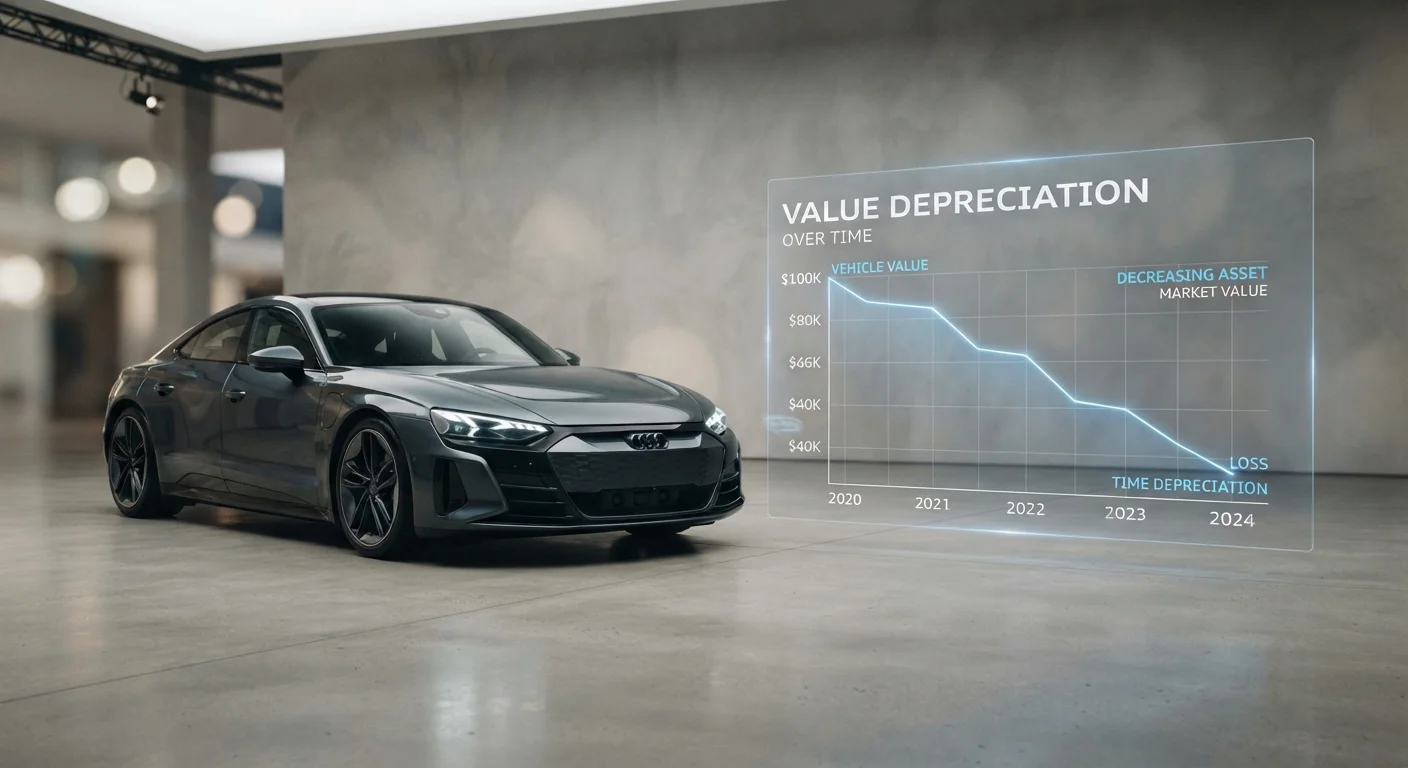
Photo: InsightsTurbo.com | Kickstart Your Knowledge Quest editorial
Key Takeaways
- A new car can lose 15-25% of its value in the first year alone.
- Depreciation is often the largest single cost of car ownership over a 3-5 year period.
- Some vehicle types and segments depreciate significantly faster than others.
- Buying a car that's 2-3 years old lets someone else absorb the steepest early depreciation.
- Resale value should be considered alongside purchase price when budgeting for a car.
What Depreciation Actually Means for Your Wallet
When you buy a car, you're not just paying for transportation - you're buying an asset that loses value every year. Depreciation is the financial term for that value loss, and for most drivers it's the single largest cost of ownership, often exceeding fuel or insurance over a three-to-five year ownership period.
Think of it this way: if you buy a car for $30,000 and sell it three years later for $18,000, you've spent $12,000 on depreciation alone - roughly $333 per month, regardless of how often you drove it. That cost is real even though it never shows up as a monthly bill.
Understanding this dynamic is especially important for first-time buyers, because the sticker price is only part of what a car will actually cost you. For a fuller picture of all the costs involved, see our guide on total cost of car ownership.
~20%
Average value lost in year one
Industry analysts generally estimate new vehicles lose between 15-25% of their purchase price within the first 12 months of ownership.
50-60%
Value lost by year five
Most conventional vehicles retain only 40-50% of their original purchase price after five years, according to widely cited automotive valuation research.
#1
Largest ownership cost over 3-5 years
For many drivers, depreciation outpaces fuel, insurance, and maintenance as the biggest total cost when ownership periods of three to five years are analyzed.
How the Depreciation Curve Works
Depreciation doesn't happen at a steady pace. The curve is steepest early in a car's life and gradually flattens over time. A new vehicle often loses the most value in its first 12 months - sometimes 15-25% of its purchase price - simply because it's no longer brand new. By years two and three, the annual loss typically settles into a slower rate.
After around five years, many vehicles have lost 50-60% of their original value. From that point forward, the rate of loss slows considerably, and older cars often stabilize at a residual floor - the base price a functional used vehicle commands in the market.
This curve has a practical implication: a car that's two or three years old has already absorbed the sharpest drop, but it still has years of reliable service ahead. This is one of the core arguments for buying used, which is explored in more depth in our new car vs. used car breakdown.
What Makes Some Cars Depreciate Faster Than Others
Not all vehicles lose value at the same rate, and understanding what drives those differences helps you make a more informed buying decision.
- Market demand: Vehicles with consistently high demand tend to hold their value longer. When buyers compete for available inventory, prices stay stronger.
- Reliability reputation: Models with well-documented reliability records often depreciate more slowly because there's a large pool of used buyers willing to pay for that track record.
- Fuel type: Shifts in fuel prices and policy can affect how quickly certain powertrains lose appeal. Electric vehicles, for example, have shown higher depreciation rates in some segments as battery technology and government incentives evolve rapidly.
- Mileage and condition: High mileage or visible wear accelerates value loss. A well-maintained vehicle with documented service history typically retains more value.
- Trim and options: Heavily optioned vehicles don't always recoup their extras at resale. Buyers in the used market tend to pay for the base utility, not every premium add-on.
Check Estimated Resale Value Before You Buy
How to Factor Depreciation Into Your Car Choice
When comparing vehicles, look beyond the purchase price and consider what the car might be worth in three to five years. Several free online tools publish historical depreciation data by vehicle segment, which can give you a ballpark sense of how fast different types of vehicles lose value.
If you're financing a purchase, pay particular attention to the pace of depreciation relative to your loan repayment schedule. If the car loses value faster than you're paying down the loan, you risk becoming underwater - meaning you owe more than the car is worth. This can cause complications if you need to sell early or if the car is totalled in an accident.
Where you buy also plays a role. Certified pre-owned vehicles from dealerships often come with documentation that supports value retention and can ease the resale process later. For a full comparison of buying options, see our article on private seller vs. dealership.
Depreciation is rarely the only deciding factor, but treating it as invisible until you try to sell is a mistake many first-time buyers make. Our guide to ownership costs new drivers rarely budget for covers how this fits alongside other expenses that catch people off guard.
“The cheapest car to own isn't necessarily the one with the lowest sticker price - it's the one that costs the least to buy, run, and eventually sell.”
— Cars & Driving Editorial Team, Automotive consumer education publication
Frequently Asked Questions
The content provided on our blog site traverses numerous categories, offering readers valuable and practical information. Readers can use the editorial team’s research and data to gain more insights into their topics of interest. However, they are requested not to treat the articles as conclusive. The website team cannot be held responsible for differences in data or inaccuracies found across other platforms. Please also note that the site might also miss out on various schemes and offers available that the readers may find more beneficial than the ones we cover.