
What Your Car's Service Schedule Is Actually Telling You

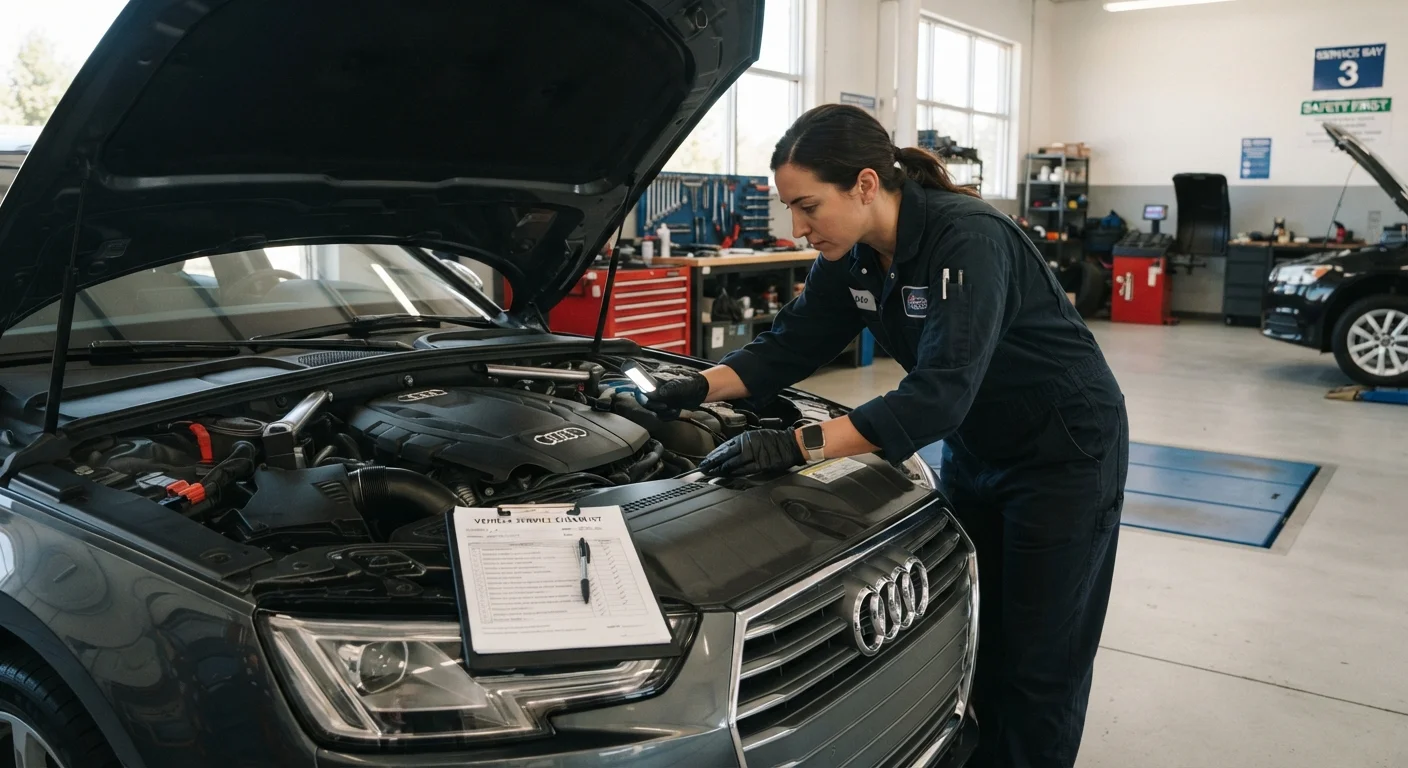
Photo: InsightsTurbo.com | Kickstart Your Knowledge Quest editorial
Key Takeaways
- Your owner's manual contains the official service schedule specific to your vehicle's make and model.
- Service milestones are typically organized by mileage (e.g., 5,000, 30,000, 60,000 miles) and cover progressively more components.
- Skipping service intervals can void warranty coverage and lead to significantly higher repair costs later.
- "Severe" driving conditions may require more frequent servicing than the standard schedule suggests.
- A service is not the same as a state inspection - each checks very different things.
Reading the Roadmap in Your Owner's Manual
Every new vehicle comes with a manufacturer-written service schedule tucked inside the owner's manual. For many new owners, it goes unread - but it is one of the most practical documents you have. The schedule lays out, milestone by milestone, exactly what your vehicle needs and when it needs it.
Service intervals are typically expressed in miles (e.g., every 5,000 or 7,500 miles) alongside a time trigger (e.g., every 6 or 12 months). The rule is straightforward: whichever threshold you hit first is when service is due. A driver who commutes 15,000 miles a year and one who drives 5,000 miles a year will both need certain fluid changes - just triggered by different factors.
If you are new to ownership and unsure where to start, our first-car buying hub covers the foundational responsibilities that come with owning a vehicle.
35%
Vehicles driven with overdue oil changes
Industry estimates suggest a significant proportion of vehicles on US roads are operating with oil past its recommended change interval, according to automotive aftermarket research.
$4,000+
Average engine repair cost from neglect
Engine repairs stemming from lubrication or maintenance neglect can cost well into the thousands, compared to routine service visits typically ranging from $50 to $300.
2x
Repair cost multiplier for deferred services
Automotive maintenance research consistently shows deferred maintenance leads to repair costs that are significantly higher than the original service would have been.
What Each Major Service Milestone Actually Covers
Service schedules are not one-size-fits-all, but most follow a recognizable structure of minor and major intervals:
- Every 5,000-10,000 miles: Oil and filter change, tyre rotation, fluid level checks, and a visual inspection of brakes and belts. This is your baseline, frequent visit.
- Around 30,000 miles: Air filter replacement, fuel system inspection, cabin air filter, and often a brake fluid check. This is where more thorough inspections begin.
- Around 60,000 miles: Spark plugs (on many engines), transmission fluid, coolant flush, and a detailed drivetrain inspection. These services address components with longer but finite lifespans.
- Around 90,000-100,000 miles: Timing belt or chain inspection (model-dependent), comprehensive fluid replacements, and suspension component checks. This milestone is often the most expensive - and the most consequential if skipped.
Not every vehicle follows this exact pattern. Diesel engines, hybrids, and electric vehicles have different service requirements. Always cross-reference with your specific manual rather than relying on generic guidance.
Why Deferred Maintenance Costs More Than It Saves
Skipping services can feel like saving money in the short term. In practice, it tends to work the other way. Components that should be replaced on schedule - like spark plugs or transmission fluid - degrade gradually and stress surrounding parts. A $15 cabin air filter left unchanged for 50,000 miles can reduce HVAC efficiency and force the blower motor to work harder than it should.
More seriously, missed services can affect your warranty. Most manufacturer warranties require documented evidence of adherence to the service schedule. If a covered component fails and service records show a pattern of missed intervals, a warranty claim can be denied.
Keep a Physical or Digital Service Log
The habit of keeping up with basic checks between services - fluid levels, tyre pressure, warning lights - also reduces the chance of arriving at a service appointment with a preventable problem already underway. See also the common early ownership mistakes that cost new drivers the most.
How to Stay on Top of Your Schedule
The simplest system is a calendar reminder set the moment you leave a service appointment. Note the mileage at service, add your expected monthly mileage, and set an alert for both the mileage trigger and the time trigger - whichever lands first.
Most modern vehicles also have an onboard maintenance reminder system that tracks intervals internally and alerts you via the dashboard. These systems are useful, but they may be calibrated to standard driving patterns. If your conditions qualify as "severe," treat manufacturer reminders as a floor rather than a ceiling.
When you do bring your vehicle in, ask the shop to stamp or digitally log your service record. This documentation matters for warranty claims and resale value. Knowing how to communicate clearly with a mechanic makes every service visit more productive.
“The owner's manual is the most underused document in most glove compartments. It contains everything the manufacturer knows about keeping that specific vehicle running well - and most drivers never open it.”
— John Nielsen, Former Managing Director of Automotive Engineering and Repair, AAA
Frequently Asked Questions
The content provided on our blog site traverses numerous categories, offering readers valuable and practical information. Readers can use the editorial team’s research and data to gain more insights into their topics of interest. However, they are requested not to treat the articles as conclusive. The website team cannot be held responsible for differences in data or inaccuracies found across other platforms. Please also note that the site might also miss out on various schemes and offers available that the readers may find more beneficial than the ones we cover.