
Car Ownership Basics

Keeping a Car in Good Shape Between Professional Services

Keeping a Car in Good Shape Between Professional Services

Photo: InsightsTurbo.com | Kickstart Your Knowledge Quest editorial

Simple checks any driver can do — fluid levels, tyre condition, lights, and wiper blades — to catch small problems before they become costly ones.

Key Takeaways

  • Checking fluid levels, tyres, lights, and wipers monthly takes under 15 minutes and costs nothing.
  • Catching small issues early — like low tyre pressure or a dim headlight — prevents bigger, more expensive repairs.
  • Your owner's manual is the most reliable guide for fluid specs, tyre pressures, and check intervals.
  • Between-service checks complement professional maintenance; they don't replace it.

Why Between-Service Checks Actually Matter

Professional services — whether a scheduled maintenance visit or an annual inspection — catch many problems, but they're not continuous. In the weeks and months between appointments, normal wear, temperature changes, and everyday driving all take a toll. A tyre slowly losing pressure or a wiper blade that's begun to streak won't fix itself before your next service date.

The checks covered here are straightforward enough for any driver, require no specialist tools beyond a tyre pressure gauge, and take less than 15 minutes in total. Think of them as the layer of care that sits between professional visits — not a replacement for them. To understand what those professional visits actually cover, see what your car's service schedule means.

“Preventive maintenance is not about spending money. It's about avoiding the much larger expense of fixing what could have been caught early with a five-minute check.”

— Cars & Driving Editorial Team, Automotive guidance editors

The Five Checks to Build Into Your Routine

Each of the following practices addresses a specific system that can deteriorate between services without triggering a dashboard warning. Work through them in sequence — fluid levels first, then tyres, lights, and wipers — and you'll have covered all the bases.

Your Owner's Manual Is Your Best Resource

Every check described here has vehicle-specific details — correct oil grade, tyre pressure figures, and fluid types all vary by make and model. Your owner's manual contains all of this information and is usually available as a free PDF download from the manufacturer's website if you don't have the printed copy. When in doubt, follow the manual over any general advice.
1

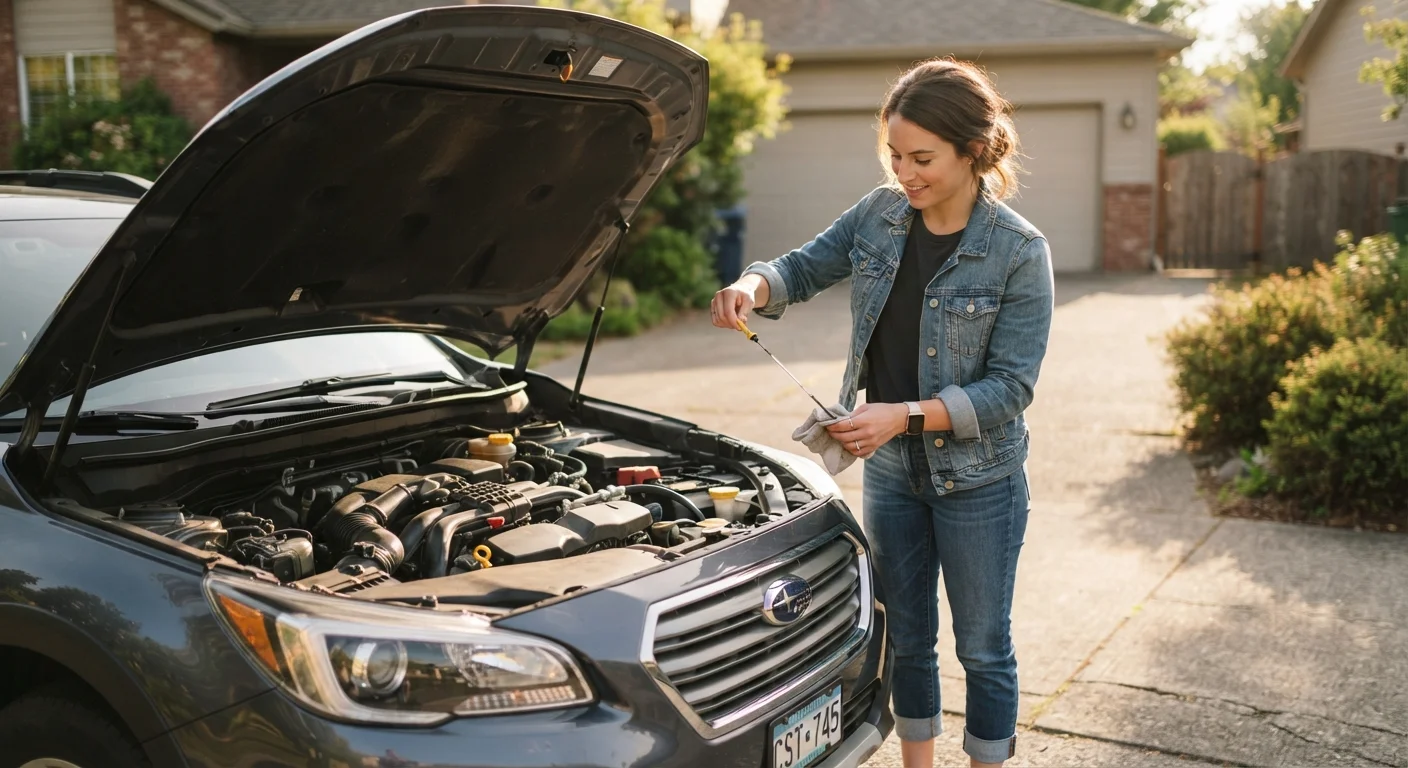
Check engine oil level and condition every two to four weeks.

Oil lubricates the engine's moving parts; running low — even briefly — can cause serious, expensive damage. Checking regularly also lets you spot whether the oil looks unusually dark or milky, which can signal a problem worth investigating.
Example: Pull the dipstick with the engine cold, wipe it clean, reinsert it fully, then pull it again. The oil level should sit between the two marks. If it's below the lower mark, top up with the grade specified in your owner's manual. For more on oil, see common oil myths debunked.
2

Inspect tyre pressure and tread depth at least once a month.

Under-inflated tyres wear unevenly, reduce fuel efficiency, and compromise handling — particularly in wet conditions. Tread depth directly affects your ability to stop safely; in the US, the legal minimum is 2/32 of an inch, though many safety experts recommend replacing tyres well before that point.
Example: Use an inexpensive tyre pressure gauge to check all four tyres (plus the spare if you carry one) when the tyres are cold. The correct pressure is on a sticker inside the driver's door jamb — not on the tyre sidewall, which shows the maximum. For a broader pre-trip check routine, see pre-drive vehicle checks.
3

Test all exterior lights — headlights, brake lights, turn signals, and reverse lights — monthly.

A faulty brake light is both a safety hazard and a ticketable offence. Bulbs fail without any dashboard warning on many older vehicles, so the only way to know is to check. A two-minute walk-around can catch this before another driver or a police officer does.
Example: Park near a wall and switch on headlights to check front and rear lights by reflection. Ask a friend to confirm brake lights and turn signals, or use a reflective surface or camera phone pointed at the rear. Most bulb replacements are straightforward, but if you're unsure, a garage can swap a bulb quickly and affordably.
4

Examine wiper blades every few months and replace when streaking begins.

Worn wiper blades leave smear patterns that seriously reduce visibility in rain — exactly when you need clear sightlines most. Rubber deteriorates faster in extreme heat or cold, so it's worth checking at the start of each season.
Example: Run the wipers on a wet windscreen and watch for streaking or skipping. If the blade leaves uncleared patches, it needs replacing. Wiper blades are sold by vehicle-specific size and typically clip on without tools; your manual or any auto parts counter can confirm the right size.
5

Monitor coolant, brake fluid, and windscreen washer fluid levels regularly.

Coolant prevents your engine from overheating; brake fluid is essential to braking performance; washer fluid keeps your windscreen clear — all three directly affect safety. Levels that drop quickly can indicate a leak that needs professional attention.
Example: With the engine fully cold, locate the translucent reservoirs under the hood — usually labelled with icons. Coolant and brake fluid should sit between the min and max markers. Never open the coolant reservoir cap when the engine is hot. If brake fluid is consistently low, have the system inspected by a qualified mechanic rather than simply topping up.

Start Today: Quick Wins for New Owners

If you've never done any of these checks before, the list can feel overwhelming. It isn't — but it does require building new habits. The following actions are things you can do right now, before your next drive, that will immediately reduce your exposure to avoidable problems.

high Right now, locate your owner's manual and find the tyre pressure specification for your vehicle — program it into your phone's notes so it's always accessible.
high Buy an inexpensive tyre pressure gauge and keep it in the glovebox so you have no excuse to skip the monthly tyre check.
medium Walk around your car tonight and switch on each light setting to confirm all bulbs are working — it takes two minutes.

Once these checks become routine, you'll also be better prepared when you do visit a garage. Knowing your vehicle's recent history makes it easier to ask informed questions — something our guide to dealing with mechanics covers in detail. And if you're still building your knowledge of what formal inspections cover, understanding the difference between an MOT and a service is a useful next read.

Cars & Driving Editorial Team

InsightsTurbo.com | Kickstart Your Knowledge Quest

Cars & Driving Editorial Team is the collective byline for our editorial team and contributor network. Articles published under this byline or an editorial pen name are researched, written, and reviewed according to our editorial standards for clarity, consistency, and independence before publication.

Buying Your First CarCar Ownership BasicsDriving Skills & Safety
View author profile

The content provided on our blog site traverses numerous categories, offering readers valuable and practical information. Readers can use the editorial team’s research and data to gain more insights into their topics of interest. However, they are requested not to treat the articles as conclusive. The website team cannot be held responsible for differences in data or inaccuracies found across other platforms. Please also note that the site might also miss out on various schemes and offers available that the readers may find more beneficial than the ones we cover.