
Stopping Distances Explained: Why Speed and Weather Change Everything

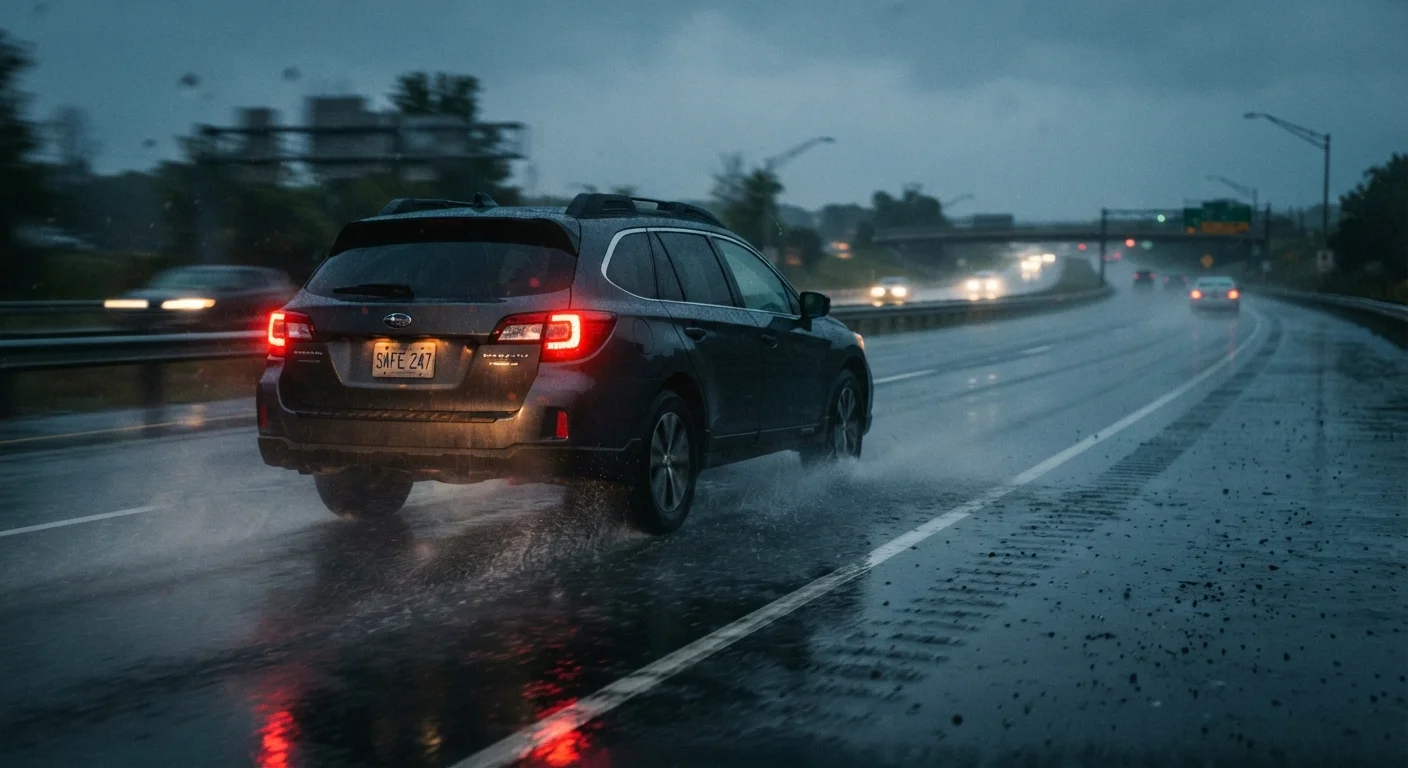
Photo: InsightsTurbo.com | Kickstart Your Knowledge Quest editorial
Key Takeaways
- Stopping distance has two parts: thinking distance and braking distance - both must be managed.
- Doubling your speed roughly quadruples your braking distance due to the physics of kinetic energy.
- Rain, ice, and worn tires can extend stopping distances by 50% to 300% or more.
- Fatigue and distraction lengthen thinking distance just as significantly as physical road conditions.
- Maintaining a larger following gap is the single most practical way to stay safe on any road.
The Two-Part Formula Every Driver Should Know
When most people think about stopping a car, they picture brakes doing all the work. In reality, stopping involves two distinct phases - and the first one begins before your foot ever touches the brake pedal.
Thinking distance is the distance your vehicle covers from the moment you perceive a hazard to the moment you physically begin braking. At 60 mph, your car travels roughly 66 feet in just half a second - a common average reaction time. Fatigue, phone use, or distraction can push that well past one second, adding dozens of additional feet before braking even starts.
Braking distance is what happens after the brakes engage. The car's kinetic energy - proportional to the square of its speed - must be converted to heat through friction between brake pads and rotors, and between tires and road. This is why speed has such a disproportionate effect: going from 30 mph to 60 mph doesn't double your braking distance, it roughly quadruples it.
Understanding both components is foundational to defensive driving - because managing your gap and speed is how you buy yourself time.
4×
Braking distance increase when doubling speed
Because kinetic energy scales with the square of velocity, doubling speed from 30 to 60 mph roughly quadruples braking distance, not merely doubles it.
~88 ft
Distance covered in 1 second at 60 mph
At 60 mph, a vehicle travels approximately 88 feet per second - illustrating how quickly thinking distance accumulates before braking even begins.
Up to 10×
Stopping distance increase on ice vs. dry pavement
Road safety research and government guidelines indicate that icy surfaces can increase stopping distances by up to ten times compared to dry pavement at the same speed.
How Weather Conditions Alter the Equation
Road surface and weather conditions affect the grip available between your tires and the pavement - technically referred to as the coefficient of friction. When that grip drops, braking distance increases even if you're traveling at exactly the same speed.
- Wet roads: Rain creates a film of water between the tire and road surface, reducing friction. Braking distances can increase by 50-100% compared to dry conditions. Aquaplaning - where tires ride on water rather than pavement - can eliminate braking effectiveness almost entirely at higher speeds.
- Ice and snow: Frozen surfaces reduce friction dramatically. Stopping distances on ice can be 10 times longer than on dry pavement at the same speed, making conservative speed and enormous following gaps essential.
- Loose gravel or debris: Unpacked surfaces reduce consistent tire contact, extending braking distance and making steering unpredictable during hard braking.
For a full breakdown of how to adjust your driving in each weather scenario, see our guide on safe driving in adverse conditions.
Double Your Gap Before the Rain Hits
Tire Condition: The Variable Drivers Often Overlook
Your brakes can only work with the grip your tires provide. Tire tread depth determines how effectively a tire channels water away from the contact patch on wet roads. As tread wears down, that water-clearing ability degrades - and braking distances increase as a result.
In the US, the legal minimum tread depth is 2/32 of an inch, measurable with a penny (if Lincoln's head is fully visible, tread is critically low). However, road safety research consistently indicates that meaningful grip loss begins before tires reach that legal minimum, particularly on wet pavement. Many safety experts recommend replacing tires at or before 4/32 inch for wet-weather driving.
Tire pressure also matters. Both underinflated and overinflated tires alter the contact patch shape, reducing the effective grip area during braking. Checking tire pressure monthly - and before long trips - is one of the simplest maintenance steps available to any driver.
Habits like tailgating and speeding compound tire condition problems: the less grip you have, the more dangerous an insufficient gap becomes.
Tread Depth and Legal Minimums
Practical Distance Management on Real Roads
Knowing the physics is useful - but translating it into driving behavior is what keeps you safe. A few concrete practices make the biggest difference:
- Use the 3-second rule in dry conditions: pick a fixed point and count the seconds between the car ahead passing it and you reaching it. Increase to 6 seconds in rain, and more on ice.
- Reduce speed before corners, not during them. Braking mid-corner reduces tire grip available for steering, which can cause understeer or oversteer. Slow before, accelerate through.
- Adjust following distance for road type. Rural roads at higher speeds require larger gaps than city streets. Urban and rural driving environments present different hazard profiles that affect how much buffer you need.
- Account for nighttime conditions. Reduced visibility at night means you may see a hazard later than you would in daylight, effectively compressing the time available to react. Night driving demands longer gaps for the same reason bad weather does.
Stopping distance is not an abstract concept - it's the physical margin between a near-miss and a collision. Every speed choice and every gap decision either widens or narrows that margin in real time.
Frequently Asked Questions
The content provided on our blog site traverses numerous categories, offering readers valuable and practical information. Readers can use the editorial team’s research and data to gain more insights into their topics of interest. However, they are requested not to treat the articles as conclusive. The website team cannot be held responsible for differences in data or inaccuracies found across other platforms. Please also note that the site might also miss out on various schemes and offers available that the readers may find more beneficial than the ones we cover.