
Whole Foods vs. Processed Foods: Understanding the Real Difference

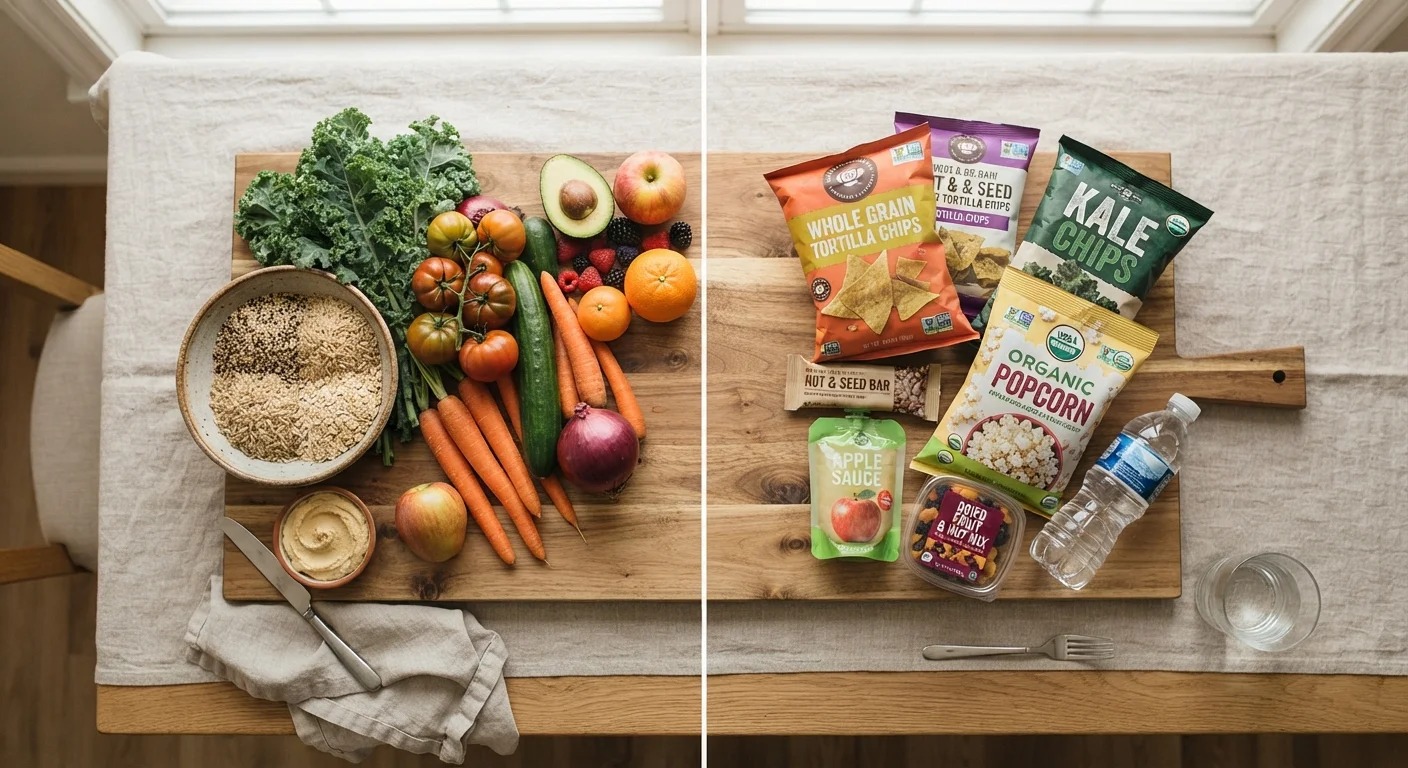
Photo: InsightsTurbo.com | Kickstart Your Knowledge Quest editorial
Key Takeaways
- Processing exists on a spectrum - canned beans and frozen vegetables are processed but still nutritious.
- Ultra-processed foods, not all processed foods, are most consistently linked to poorer health outcomes.
- Whole foods generally deliver more fiber, vitamins, and minerals with fewer additives.
- Reading ingredient lists helps identify how heavily a product has been altered.
- A balanced diet can include both whole and minimally processed foods without rigid rules.
What 'Whole' and 'Processed' Actually Mean
These two terms get used constantly in nutrition conversations, yet they're rarely defined with any precision. That ambiguity is where most of the confusion starts.
Whole foods are foods that have been minimally altered from their natural state. Think fresh fruit, raw nuts, dried legumes, whole grains like oats or brown rice, and plain meat or fish. They haven't had nutrients stripped away or artificial ingredients added. What you see is essentially what grew or lived.
Processed foods are any foods that have been changed from their original form before you consume them. By this definition, frozen spinach is processed. So is olive oil, pasteurized milk, canned tomatoes, and whole-grain bread. Processing is not inherently harmful - it's a vast category that includes preservation, cooking, fermentation, and fortification.
The distinction that matters most nutritionally is between minimally processed foods (frozen vegetables, plain yogurt, canned beans in water) and ultra-processed foods - products manufactured with ingredients rarely found in a home kitchen, such as modified starches, artificial flavors, emulsifiers, and high-fructose corn syrup. Researchers, including those behind the widely referenced NOVA food classification system, use this ultra-processed category to identify foods most associated with excess calorie intake and reduced diet quality.
| Criterion | Whole Foods | Processed Foods |
|---|---|---|
| Definition | Minimally altered from natural state | Any food changed before consumption |
| Examples | Fresh fruit, oats, raw nuts, eggs | Canned beans to packaged chips - wide range |
| Fiber content | Generally high | Varies; often lower in ultra-processed items |
| Added sugars & sodium | None by definition | Common in ultra-processed; rare in minimally processed |
| Nutrient density | Typically higher | Highly variable across the spectrum |
| Convenience | Requires more prep time | Often ready-to-eat or quick to prepare |
| Shelf life | Shorter for fresh items | Often longer due to preservation |
| Health associations | Consistently linked to better diet quality | Mixed - minimally processed is fine; ultra-processed has concerns |
Why Ultra-Processed Foods Deserve Closer Attention
Not all processing is equal, and that's the key insight most nutrition headlines miss. The concern isn't that your bread was baked - it's that some products are engineered specifically to override the natural satiety signals your body sends when you've eaten enough.
Ultra-processed foods tend to be lower in fiber and higher in added sugars, refined carbohydrates, and sodium. They're also typically designed for palatability in ways that can make it easy to eat beyond your body's energy needs. Research published in journals like The BMJ and Cell Metabolism has found associations between high ultra-processed food consumption and outcomes including weight gain and increased cardiovascular risk - though it's worth noting that this research is largely observational, meaning causation isn't definitively established.
57%
Share of U.S. calories from ultra-processed foods
A study published in BMJ Open estimated that ultra-processed foods accounted for roughly 57% of energy intake in U.S. adult diets.
4 categories
NOVA food classification groups
The NOVA system, developed by researchers at the University of São Paulo, classifies foods into four groups based on the extent and purpose of processing.
~10%
Added sugar limit recommended by dietary guidelines
The U.S. Dietary Guidelines for Americans suggest limiting added sugars to less than 10% of total daily calories.
Meanwhile, the concern about all processed food is often overstated. Pasteurized milk is processed. Canned salmon is processed. Frozen edamame is processed. These foods retain most of their original nutrition and contribute meaningfully to a healthy diet. The nuance matters because blanket fear of anything packaged can make eating feel unnecessarily complicated - particularly for young adults navigating grocery shopping independently for the first time.
To sharpen your own judgment, learn how to decode a nutrition label - the ingredient list, not just the front-of-package claims, tells you the most about how a food was made. Also worth exploring: how added sugars differ from natural sugars and where they show up most.
Fortification Is a Form of Processing Too
Building a Practical Approach
The goal isn't to eat nothing processed. It's to understand the spectrum well enough to make intentional choices rather than anxious ones.
A workable framework: anchor your diet around whole and minimally processed foods most of the time, and treat heavily processed products as occasional additions rather than daily staples. This approach aligns with guidance from major dietary health organizations, which emphasize food patterns over individual food rules.
Some practical starting points:
- Choose whole grains (oats, brown rice, quinoa) over refined grain products when you have a choice.
- Fill half your plate with vegetables and fruit in any form - fresh, frozen, or canned in water.
- Compare ingredient lists: a shorter list with recognizable ingredients generally signals less processing.
- Don't eliminate convenience foods that serve you - plain canned beans or frozen stir-fry vegetables are genuinely useful, nutritious options.
If you're curious about how protein sources factor into this picture, comparing plant-based and animal proteins is a natural next step in building a well-rounded understanding of what's on your plate.
This article is for general informational and educational purposes only and is not a substitute for professional medical or dietary advice. For personalized nutrition guidance, consult a registered dietitian or qualified healthcare provider.
The content provided on our blog site traverses numerous categories, offering readers valuable and practical information. Readers can use the editorial team’s research and data to gain more insights into their topics of interest. However, they are requested not to treat the articles as conclusive. The website team cannot be held responsible for differences in data or inaccuracies found across other platforms. Please also note that the site might also miss out on various schemes and offers available that the readers may find more beneficial than the ones we cover.