
Floating Floors vs. Glued-Down Floors: What the Difference Means for DIYers

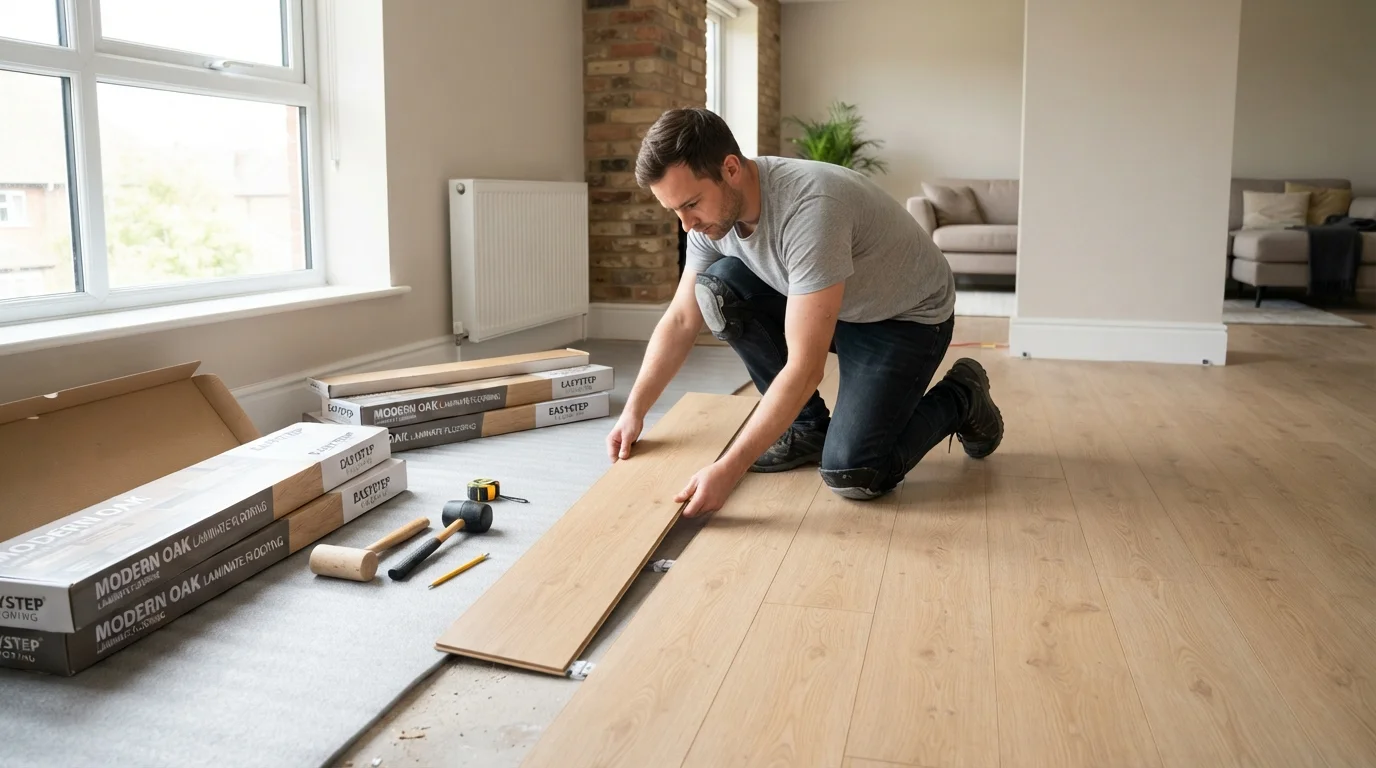
Photo: InsightsTurbo.com | Kickstart Your Knowledge Quest editorial
Key Takeaways
- Floating floors click or lock together without adhesive, making them easier to install and remove.
- Glued-down floors bond directly to the subfloor, creating a more stable but permanent surface.
- Renters should confirm with their landlord before installing any floor - even a floating one.
- Floating floors suit DIYers with basic tools; glued-down installs typically require more skill and preparation.
- Moisture levels and subfloor condition are key factors in choosing between the two methods.
What Actually Separates These Two Methods
The terms "floating" and "glued-down" describe how a floor attaches - or doesn't attach - to the subfloor beneath it. Understanding this distinction helps you decide what's realistic for your skill level, your living situation, and your budget.
Floating floors aren't fastened to the subfloor at all. Instead, the planks or tiles connect to each other using click-lock, tongue-and-groove, or similar interlocking systems. The assembled surface rests on an underlayment (a thin foam or cork layer) and essentially floats as one large, unified piece. Laminate, luxury vinyl plank (LVP), and engineered hardwood are the most common floating floor materials.
Glued-down floors use adhesive spread directly onto the subfloor. Each plank or tile is then pressed into the adhesive, bonding the material firmly in place. Solid hardwood, some engineered hardwood, and vinyl tile are frequently installed this way. The result is a floor that doesn't move, flex, or produce hollow sounds underfoot - but one that's very difficult to remove without damaging the subfloor.
| Criterion | Floating Floors | Glued-Down Floors |
|---|---|---|
| Attachment method | Planks interlock; no adhesive to subfloor | Adhesive bonds each plank to subfloor |
| DIY difficulty | Beginner-friendly | Intermediate to advanced |
| Tools required | Saw, mallet, spacers | Trowel, adhesive, floor roller, leveling compounds |
| Reversibility | Removable without subfloor damage | Removal often damages subfloor |
| Feel underfoot | Slight flex or hollow sound possible | Solid, quiet, no movement |
| Moisture sensitivity | Manages minor moisture via expansion gap | Requires thorough moisture barrier and prep |
| Suitable for renters | Often yes, with landlord approval | Rarely appropriate |
DIY Difficulty and What Tools You'll Need
Floating floors are generally considered the most accessible DIY flooring project available. Most systems require only a tape measure, a utility knife or saw for trimming planks, spacers to maintain the expansion gap around the room's perimeter, and a rubber mallet to seat the connections. Many manufacturers include beginner-friendly installation guides, and the click-lock mechanism provides immediate feedback - you'll hear and feel when a plank is properly seated.
Glued-down installation raises the difficulty considerably. You'll need a notched trowel to spread adhesive evenly, the correct adhesive type for your specific flooring material and subfloor, and good timing - most adhesives have an open working time before they set. Uneven adhesive application causes lippage (where plank edges don't sit flush), which is both a tripping hazard and an aesthetic problem. Subfloor prep is also more demanding: any dips or humps greater than about 3/16 inch over 10 feet typically need to be leveled before gluing begins.
For a broader look at when DIY makes sense versus calling in help, see our guide on DIY vs. hiring a tradesperson.
3/16"
Max subfloor variation before leveling is needed
Most flooring manufacturers specify this tolerance over a 10-foot span as the standard threshold for acceptable subfloor flatness.
~30 min
Typical adhesive open working time
Most flooring adhesives have a limited window between application and setting, requiring paced, section-by-section installation.
Renters: Read This Before You Install Anything
Even though floating floors are removable in theory, removable does not mean automatically allowed. Most leases include clauses about alterations to the property, and flooring - even temporary - often falls under that category. Before purchasing a single plank, review your lease carefully and get written permission from your landlord if there's any ambiguity.
Reading your lease thoroughly before making any changes is always the right first step. Some landlords welcome tenant-funded improvements; others will charge for restoration if you didn't get prior approval. The distinction between what's legally yours to modify and what isn't is explored in more depth in our article on which home improvements renters can actually make.
Always Check Local Building Codes
Glued-down floors are almost never appropriate for rental situations. Removing adhesive-bonded flooring typically damages or destroys the subfloor, which could result in significant repair costs being charged against your security deposit.
Performance, Durability, and Long-Term Feel
Floating floors have a characteristic give or slight flex underfoot - particularly over uneven subfloors - because they aren't rigidly attached. This can also create a hollow sound when walked on, which some people find noticeable. A quality underlayment reduces both effects and adds modest insulation and sound dampening. In rooms that see heavy furniture or rolling loads (like office chairs), floating floors can shift slightly over time if not properly maintained at the perimeter expansion gaps.
Glued-down floors, when properly installed, feel solid and quiet underfoot. Because each plank is anchored individually, there's no whole-surface movement, and the rigid connection handles heavy furniture and high foot traffic better over the long term. However, if moisture gets under a glued floor and the bond fails, repairs are labor-intensive and often require replacing entire sections.
When budgeting for either project, consider installation materials as a variable cost alongside the flooring itself. Understanding fixed vs. variable expenses can help you plan realistically for a project where adhesive, underlayment, and tool rental all add to the base material cost.
The content provided on our blog site traverses numerous categories, offering readers valuable and practical information. Readers can use the editorial team’s research and data to gain more insights into their topics of interest. However, they are requested not to treat the articles as conclusive. The website team cannot be held responsible for differences in data or inaccuracies found across other platforms. Please also note that the site might also miss out on various schemes and offers available that the readers may find more beneficial than the ones we cover.