
Making a Small Room Feel Larger Without Demolishing a Wall

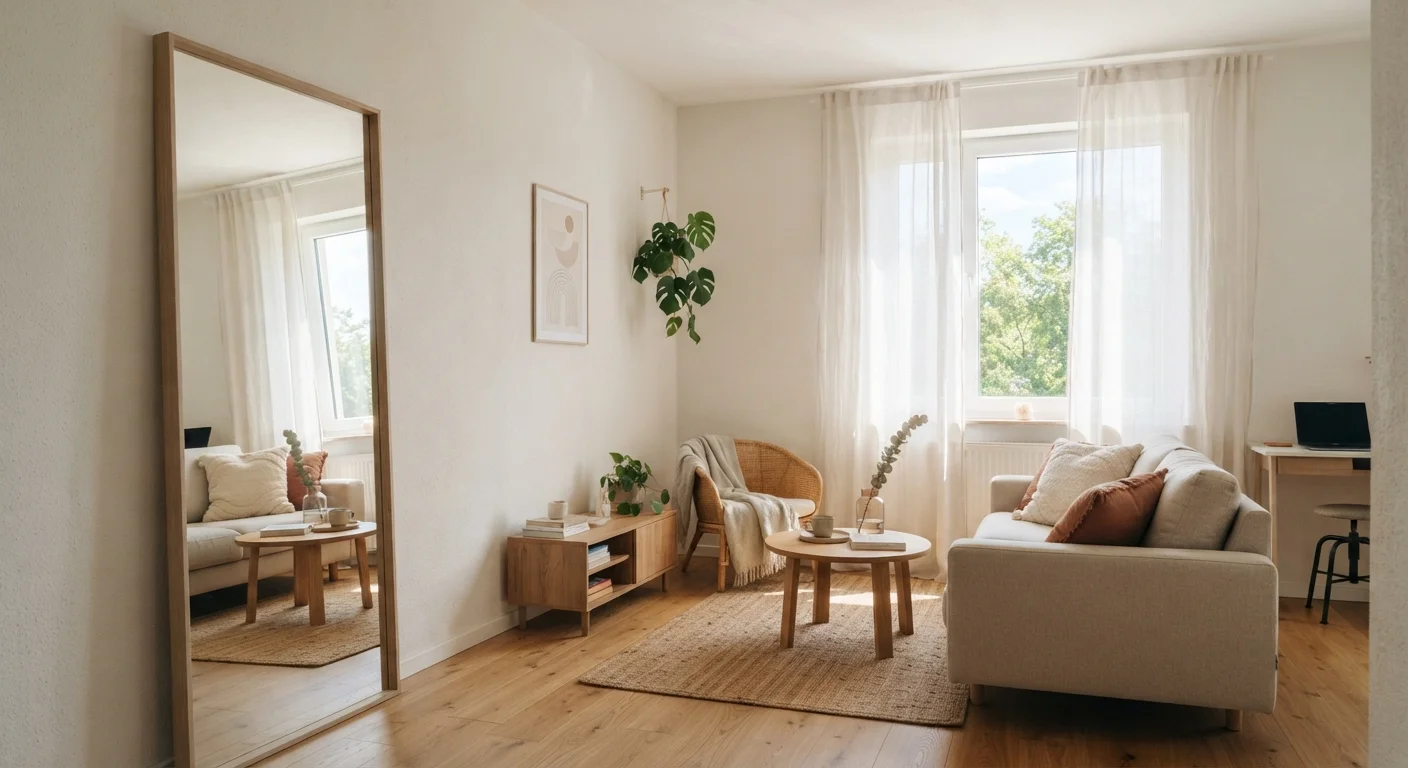
Photo: InsightsTurbo.com | Kickstart Your Knowledge Quest editorial
Key Takeaways
- Light wall colors and strategic mirror placement can visually double the perceived size of a small room.
- Keeping furniture legs visible and choosing appropriately scaled pieces prevents a room from feeling crowded.
- Vertical storage and ceiling-height curtains draw the eye upward, making low ceilings feel taller.
- Reducing visual clutter through concealed storage has an outsized effect on how spacious a room feels.
- Layered lighting eliminates dark corners that make rooms feel smaller than they actually are.
Why Small Rooms Feel Cramped - and What You Can Actually Change
A room feels small for a handful of reasons: too much furniture, too little light, walls that visually close in, or storage that spills onto every surface. The good news is that none of those problems require structural work to fix. Layout, color, lighting, and storage decisions all shape perception in measurable ways - and most of them are completely renter-friendly.
Before diving into specific strategies, it helps to understand your room's actual dimensions. If you haven't already measured your space carefully, our guide on room measurements and why they matter walks you through the process and explains how to use those numbers when planning furniture placement. Getting this right upfront prevents the most common mistake: buying pieces that are simply too large for the space.
The tips below work individually, but combining several of them produces results that genuinely surprise people - no demolition required.
Choose a light, consistent color palette
Wall color has one of the most immediate effects on how a room reads. Light, muted tones - soft whites, warm creams, pale grays, and gentle greiges - reflect natural and artificial light rather than absorbing it, which makes walls appear to recede. Rooms where the wall, trim, and ceiling share a similar tone tend to feel more cohesive and larger than rooms with sharp contrasts on every surface.
If you want some variation, keep it tonal: a slightly darker shade on one accent wall can add depth without boxing the room in. Avoid very dark colors on all four walls in already small spaces - they can feel dramatic in large rooms but cave-like in small ones.
Muted, consistent tones make walls appear to recede and rooms feel noticeably more open.
Use mirrors to borrow light and depth
A well-placed mirror is one of the most effective tools for making a small room feel larger. Positioned opposite a window, a large mirror reflects natural light back into the room and creates the impression of a second window. Even in rooms without much natural light, mirrors bounce artificial light around in ways that eliminate the flat, dim quality that makes spaces feel enclosed.
Lean a full-length mirror against a wall rather than hanging it low - height matters. Groupings of smaller mirrors can work too, but a single large piece typically reads as more spacious than many small ones competing for visual attention.
A large mirror placed opposite a window can effectively double the perceived light in a room.
Scale furniture to the room, not to your wish list
Oversized furniture is the most common reason small rooms feel cramped. A sofa that seats five in a room meant for two, or a king bed jammed against every wall, leaves no breathing room for the eye or the body. Choose pieces proportionate to your space - a loveseat instead of a full sofa, a queen rather than a king, a compact dining table that seats four instead of six.
Furniture with exposed legs also helps enormously. Pieces that sit on legs rather than flush to the floor reveal more of the floor surface, which visually expands the room. Sofas and chairs with visible legs, open-base coffee tables, and slender bed frames all contribute to this effect. For more guidance on arranging furniture in compact living spaces, the principles of traffic flow and negative space are worth understanding before you buy anything.
Furniture with exposed legs reveals more floor, making any room feel noticeably more open.
Hang curtains high and wide
Window treatments are a detail many people overlook, but they have an outsized impact on how tall and wide a room feels. Hanging curtain rods as close to the ceiling as possible - rather than just above the window frame - draws the eye upward and creates the impression of taller ceilings. Extending the rod several inches beyond the window frame on each side makes the window itself look wider and lets in more light when the curtains are open.
Choose curtains in a color close to your wall tone for a seamless, expansive look. Very patterned or heavily contrasting drapes can visually chop up the wall and make rooms feel busier and smaller.
Ceiling-height curtain rods create the illusion of taller walls with almost no effort or cost.
Layer your lighting to eliminate dark corners
Overhead lighting alone creates flat illumination that tends to make rooms feel smaller and more cave-like. Layering ambient, task, and accent lighting - floor lamps, table lamps, wall-mounted plug-in sconces - distributes light throughout the room and eliminates the shadowed corners that visually shrink a space.
For renters who can't rewire anything, this is completely achievable without touching the electrical system. Our guide on lighting an apartment well without rewiring covers plug-in options that give you the layered effect without a landlord conversation. For a broader explanation of how lighting types work together, see the lighting decisions that change how every room feels.
Layered lighting from multiple sources eliminates dark corners and makes any room feel more expansive.
Store more, display less
Visual clutter - items on counters, surfaces stacked with objects, cords trailing across the floor - is one of the fastest ways to make a room feel smaller than it is. Concealed storage keeps the eye from having to process dozens of individual objects and allows it to rest on clean surfaces instead.
This doesn't mean getting rid of everything you own. It means choosing storage that hides rather than displays: closed cabinets over open shelving where possible, ottomans with interior storage, bed frames with built-in drawers. If you're weighing open versus closed storage options, our comparison of open shelving and closed cabinets covers the trade-offs honestly. And for tight spaces specifically, storage approaches for small spaces covers vertical and multi-use solutions in depth.
Concealed storage removes visual clutter that makes a room feel busier and smaller than it truly is.
Use vertical space deliberately
Most people treat storage and decoration as something that happens at eye level and below. In a small room, the space above eye level is valuable real estate. Tall bookshelves that run close to the ceiling, wall-mounted shelving positioned high, and artwork hung at or above eye level all pull attention upward - which makes ceilings feel higher and gives the room a sense of vertical scale it otherwise lacks.
Keeping the floor as clear as possible amplifies this effect. The more floor you can see, the larger the room reads. Floating shelves and wall-mounted storage contribute to this without occupying any floor footprint at all.
Tall shelving and high-hung artwork draw the eye upward, making low ceilings feel genuinely taller.
Putting It All Together
The strategies above work because they address how we perceive space rather than how much of it physically exists. Scale, light, reflection, and visual continuity all play roles in whether a room feels generous or suffocating. Start with one or two changes - often lighting and decluttering alone make a dramatic difference - and layer others in over time.
Start with one change and observe
If your small room is a living area specifically, our article on setting up a small living room that actually functions goes deeper on layout strategies for seating and flow. And for anyone dealing with a storage crunch, storage approaches that actually work in small spaces covers vertical, under-bed, and multi-use furniture options in detail.
The content provided on our blog site traverses numerous categories, offering readers valuable and practical information. Readers can use the editorial team’s research and data to gain more insights into their topics of interest. However, they are requested not to treat the articles as conclusive. The website team cannot be held responsible for differences in data or inaccuracies found across other platforms. Please also note that the site might also miss out on various schemes and offers available that the readers may find more beneficial than the ones we cover.