
Storage in Small Spaces: Approaches That Actually Work

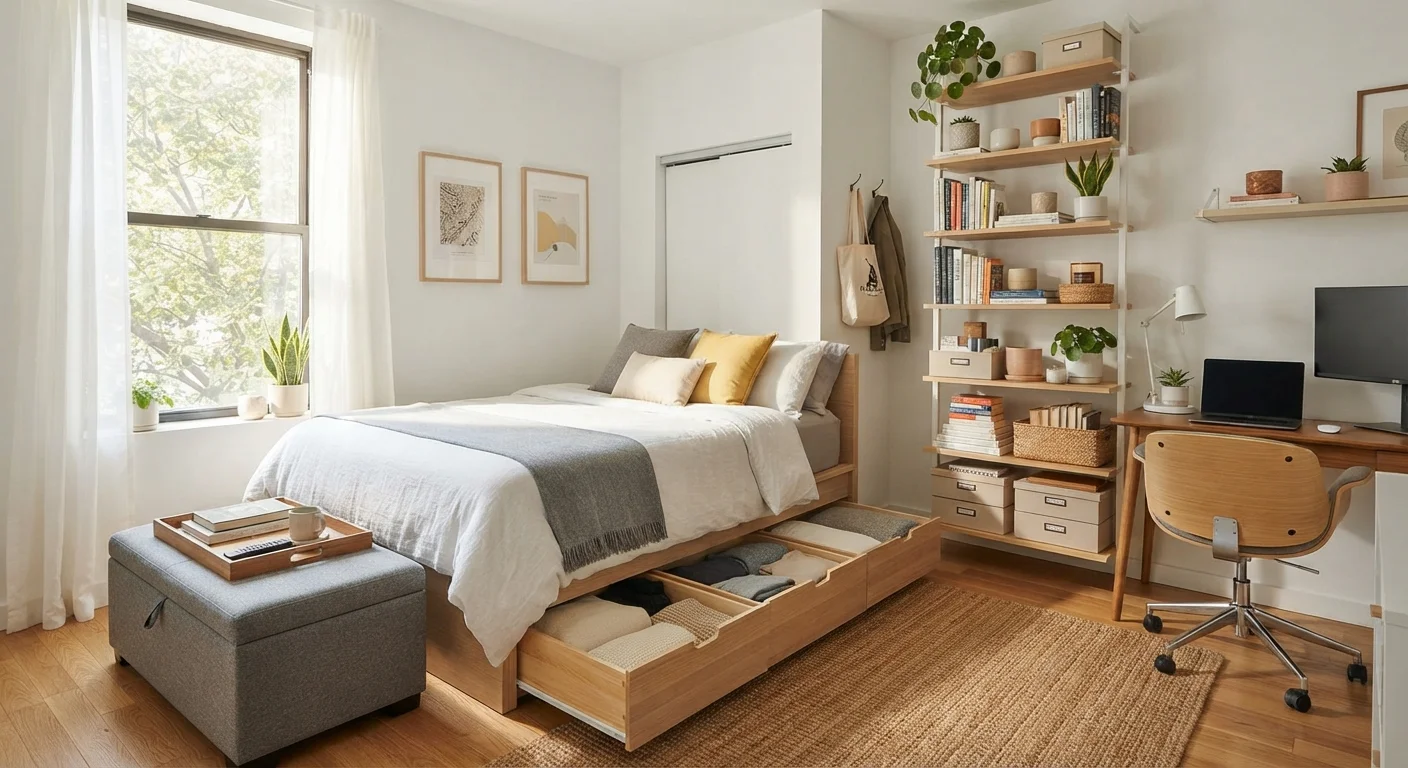
Photo: InsightsTurbo.com | Kickstart Your Knowledge Quest editorial
Key Takeaways
- Vertical storage uses wall height most renters already have but rarely exploit.
- Under-bed storage works best when paired with a bed frame that has clearance of at least 7 inches.
- Multi-use furniture earns its floor footprint by serving two or more functions simultaneously.
- Door and wall-mounted organizers add storage without consuming any floor space at all.
- The right strategy depends on your room layout, lease restrictions, and what you actually need to store.
Why Small-Space Storage Requires a Strategy
Setting up a first apartment or small home often reveals an uncomfortable truth: the floor plan leaves almost no room for the stuff everyday life requires. Before buying bins and baskets at random, it helps to treat storage as a design problem with measurable constraints. Start by knowing your square footage and ceiling height - details covered in our room measurements guide.
Small-space storage generally falls into four approaches: vertical storage, under-bed solutions, multi-use furniture, and door or wall-mounted organizers. Each trades off differently on cost, installation effort, flexibility, and capacity. Understanding those trade-offs is what separates a room that feels tight from one that actually functions.
| Vertical Storage | Under-Bed Storage | Multi-Use Furniture | Door/Wall Organizers | |
|---|---|---|---|---|
| Floor space used | Small footprint | None additional | Medium footprint | None |
| Installation required | Minimal (anti-tip strap) | None | Assembly required | Minimal to none |
| Storage capacity | High | Medium | Medium | Low to medium |
| Renter-friendly | Yes | Yes | Yes | Yes |
| Upfront cost | Low to medium | Low | Medium to high | Low |
| Best for | Books, décor, pantry items | Seasonal items, bedding | Living/sleeping rooms | Kitchens, bathrooms, entryways |
Vertical Storage: Reaching for the Ceiling
Most rooms extend 8-10 feet from floor to ceiling, yet the top half of that space is almost always empty. Freestanding bookcases, ladder shelves, and stackable cube units all exploit this unused vertical real estate without requiring permanent installation - a major plus for renters.
The practical limit is reachability: items stored above shoulder height should be things you access infrequently (seasonal gear, spare linens). Keep everyday items at eye level or below. Tall shelving units should be anchored to a wall stud with an anti-tip strap - a simple safety measure that matters especially in earthquake-prone regions or homes with children.
Use Consistent Bins for a Calmer Look
If open shelving feels visually chaotic, our open shelving vs. closed cabinets comparison walks through how to decide between the two styles.
Under-Bed Storage: The Overlooked Square Footage
The space beneath a bed can hold a surprising amount - typically enough for off-season clothing, extra bedding, shoes, or luggage - without using a single additional square foot of floor space. Flat rolling bins, vacuum-compression bags, and purpose-built drawers are the main tools here.
The key variable is bed clearance. Standard bed frames vary widely; measure the gap from floor to the underside of the bed frame before buying any storage container. Bins labeled as "under-bed" still vary in height from about 4 to 7 inches. If your current frame sits too low, bed risers can increase clearance, though check weight limits before using them.
Don't Store Anything You'll Need Frequently
Multi-Use Furniture: Earning Every Square Foot
When floor space is the constraint, furniture that does more than one job is worth the higher upfront cost. Storage ottomans double as seating and a coffee table surface. Bed frames with built-in drawers eliminate the need for a separate dresser. Sofa beds serve studio apartments that need to function as both living room and bedroom.
Before committing, consider the trade-offs of flat-pack furniture, since many dual-purpose pieces ship in flat-pack format and require careful assembly to hold up over time. Also confirm that any piece you're considering will actually fit through your door and hallway - a detail that catches many first-time buyers off guard.
For room-level layout ideas that incorporate storage furniture without making a space feel cramped, see our guide on setting up a small living room.
Door and Wall-Mounted Organizers: Zero Floor Footprint
Over-the-door organizers - for shoes, pantry items, cleaning supplies, or bathroom essentials - are among the most renter-friendly solutions available because they require no drilling. Command strips and adhesive hooks have improved significantly and can support light-to-medium loads on most painted surfaces without damaging walls, though always check your lease and follow manufacturer weight guidelines before mounting anything.
Wall-mounted pegboards in kitchens or home offices can hold tools, utensils, or supplies in a way that's customizable and visually intentional rather than cluttered. If you share your space with roommates, navigating shared spaces requires coordination on where each person's storage territory begins and ends.
Storage choices also affect how a room feels visually. For advice on making tight rooms appear more open, see our piece on making a small room feel larger.
The content provided on our blog site traverses numerous categories, offering readers valuable and practical information. Readers can use the editorial team’s research and data to gain more insights into their topics of interest. However, they are requested not to treat the articles as conclusive. The website team cannot be held responsible for differences in data or inaccuracies found across other platforms. Please also note that the site might also miss out on various schemes and offers available that the readers may find more beneficial than the ones we cover.