
Kitchen Essentials for Someone Cooking in Their Own Space for the First Time

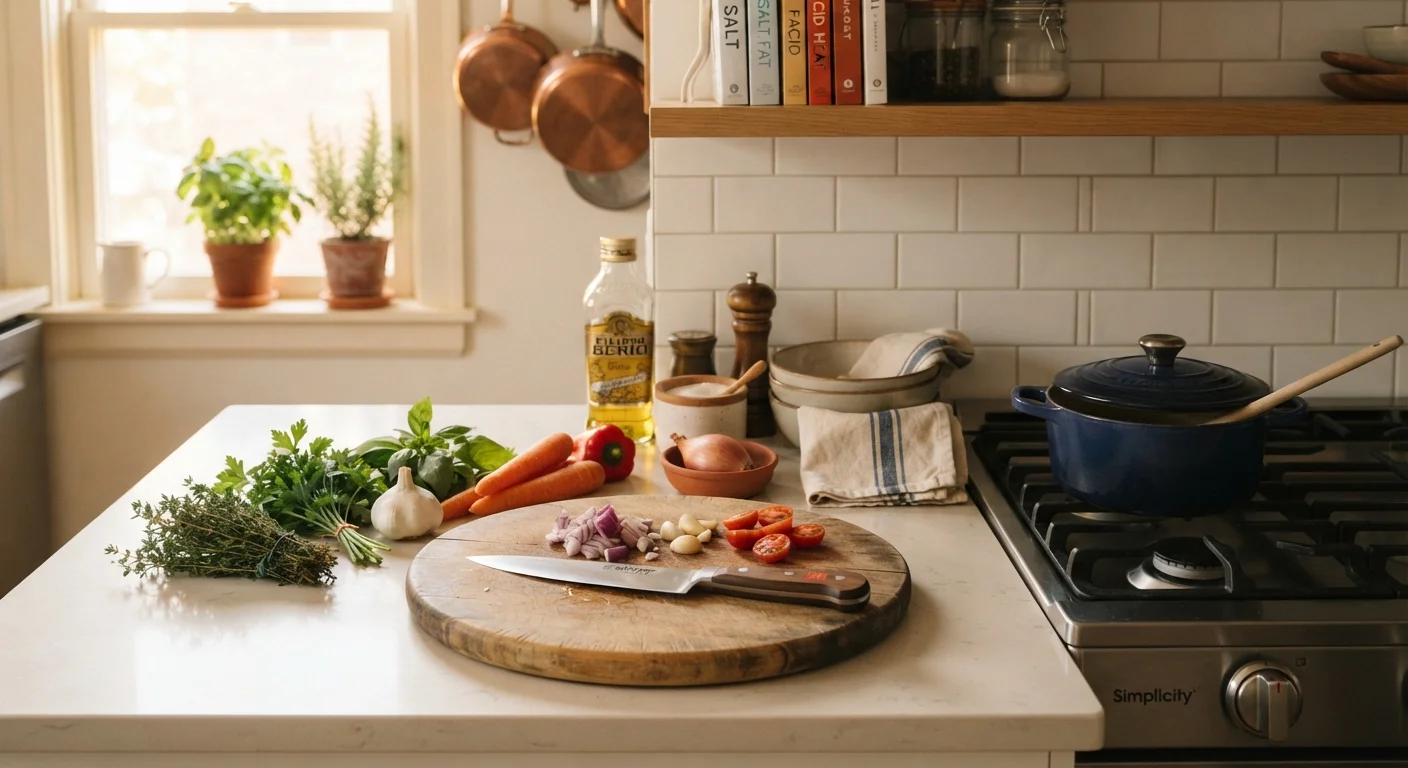
Photo: InsightsTurbo.com | Kickstart Your Knowledge Quest editorial
What You Actually Need (and What You Don't)
Setting up a kitchen for the first time can feel overwhelming when you're staring at walls of gadgets at the store. The good news: most great home cooking happens with a small set of reliable tools. Before buying anything, know that a functional kitchen does not require a full knife block, a countertop appliance collection, or matching cookware sets.
| Minimum cookware pieces needed | 3-4 |
| Most-used knife | 8-inch chef's knife |
| Pantry staples to start with | ~15-20 items |
| Cutting board material to avoid | Glass (dulls knives) |
| Key safety tool for meat | Instant-read thermometer (USDA recommends cooking to safe internal temperatures) |
If you're still setting up other rooms too, the complete first-home roadmap can help you prioritize spending across your entire space - not just the kitchen.
Start with this principle: buy for the meals you'll actually cook in the next few months, not for hypothetical dinner parties. Gaps are easy to fill later once you know what you're reaching for and what you're not.
Core Cookware
Three or four pieces of cookware handle the vast majority of everyday meals:
- 10- or 12-inch skillet - for sautéing vegetables, cooking eggs, searing proteins, and pan sauces. A stainless steel or cast iron option lasts for years with basic care.
- 2- to 3-quart saucepan with lid - for grains, pasta, soups, and sauces. The lid matters more than you'd expect.
- Large pot (6-8 quarts) - for boiling pasta, batch cooking, and soups. You won't use it every day, but when you need it, nothing substitutes.
- Sheet pan (half-sheet size) - for roasting vegetables, baking, and anything oven-finished. Sturdy aluminum versions hold up well.
Skip specialty pans - a wok, a crepe pan, a Dutch oven - until you know you'll use them regularly.
Essential Hand Tools
The right small tools make prep faster and safer:
- Chef's knife (8-inch) - a single, well-made chef's knife handles chopping, slicing, and mincing. Keep it sharp with a honing rod used regularly.
- Paring knife - for smaller, more precise tasks like peeling and trimming.
- Cutting board - wood or plastic, large enough that food doesn't fall off the edge. Avoid glass boards, which dull knives quickly.
- Wooden spoon and silicone spatula - for stirring, folding, and scraping pans without scratching them.
- Tongs - more useful than they look; essential for flipping, lifting, and tossing.
- Colander - for draining pasta and rinsing produce.
- Box grater - for cheese, citrus zest, and vegetables.
- Instant-read thermometer - removes guesswork from cooking meat safely to proper internal temperatures.
Sauté
Cooking food quickly in a small amount of oil or fat over relatively high heat, stirring or tossing frequently. Most everyday stove-top cooking falls into this category.
Honing rod
A long metal or ceramic rod used to realign the edge of a knife blade between sharpenings. Regular honing keeps a knife performing well without needing professional sharpening as often.
Half-sheet pan
A standard rimmed baking sheet measuring roughly 18 by 13 inches. The most common size found in home kitchens, suitable for roasting and baking.
Aromatics
Ingredients like onions, garlic, celery, and carrots that form a flavor base when cooked. They appear in nearly every cuisine worldwide and are the foundation of countless recipes.
Colander
A bowl-shaped kitchen tool with small holes or slots, used to drain liquids from food - most commonly pasta or rinsed produce.
Pantry Staples Worth Keeping Stocked
A stocked pantry makes it possible to cook a decent meal even when you haven't planned ahead. These are the ingredients that pull a lot of weight:
- Oils and fats
- A neutral oil (like canola or vegetable) for high-heat cooking, and olive oil for dressings and finishing.
- Acids
- White wine vinegar or apple cider vinegar, and canned or fresh citrus. Acid brightens almost any dish.
- Aromatics
- Onions, garlic, and dried spices (at minimum: salt, black pepper, cumin, paprika, red pepper flakes, and dried oregano).
- Shelf-stable proteins and grains
- Canned beans, canned fish, dried lentils, rice, and pasta cover a wide range of quick meals.
- Sauces and condiments
- Soy sauce, hot sauce, and Dijon mustard each add depth with almost no prep effort.
Cooking from your pantry is also a natural complement to growing your own herbs and produce - the beginner's guide to starting a garden is a useful next read if you're curious about fresh ingredients.
What to Skip (For Now)
Certain items are heavily marketed to new cooks but rarely earn their counter space in the early months:
- Single-use gadgets (avocado slicers, cherry pitters, egg separators) - a knife and your hands do all of this.
- Large countertop appliances before you know your cooking style - these take up significant space.
- Full knife sets - most home cooks use two or three knives consistently; the rest sit unused.
The first apartment setup checklist is also worth reviewing alongside this - it covers the non-kitchen basics that are easy to overlook when you're focused on cooking supplies.
A Note on Buying Used or Secondhand
The content provided on our blog site traverses numerous categories, offering readers valuable and practical information. Readers can use the editorial team’s research and data to gain more insights into their topics of interest. However, they are requested not to treat the articles as conclusive. The website team cannot be held responsible for differences in data or inaccuracies found across other platforms. Please also note that the site might also miss out on various schemes and offers available that the readers may find more beneficial than the ones we cover.