
Credit Essentials

Why Your Credit Score Dropped — And What You Can Do About It

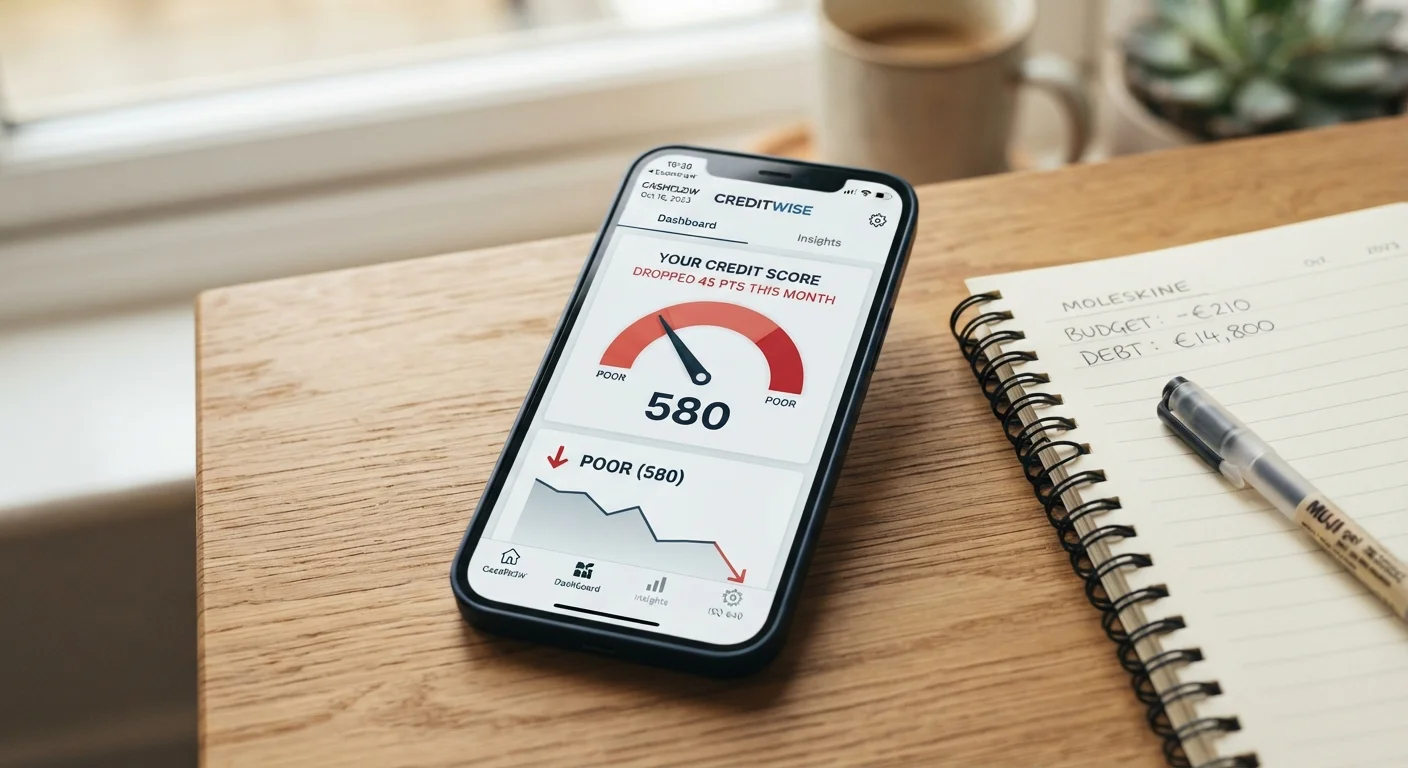
Why Your Credit Score Dropped — And What You Can Do About It

Photo: InsightsTurbo.com | Kickstart Your Knowledge Quest editorial

A sudden dip in your score can be alarming. This guide explains the most common causes and how to address each one.

Key Takeaways

  • A single missed payment can meaningfully lower your credit score, sometimes within 30 days.
  • High credit utilization — using too much of your available limit — is one of the fastest score killers.
  • Hard inquiries from new credit applications temporarily reduce your score by a small amount.
  • Closing old accounts can shorten your credit history and raise your utilization ratio simultaneously.
  • Most score drops are reversible with consistent, on-time payments and reduced balances over time.

Why Credit Scores Drop — And Why It's Usually Fixable

Seeing your credit score fall without an obvious reason is one of the more unsettling experiences of early financial life. The good news: credit scores are not permanent grades. They're dynamic numbers that respond to your behavior, which means what caused a drop can usually be identified and addressed.

Before diving into specific mistakes, it helps to understand what your score actually measures. If you need a refresher, Credit Scores Decoded walks through exactly what the number represents and how it's calculated. The short version: your score reflects how reliably you've managed credit over time — and any change in that pattern can move the number.

Check Your Credit Report First

Before assuming you made a financial mistake, pull your free credit report from AnnualCreditReport.com and scan for errors, fraudulent accounts, or inaccurate late payment records. Mistakes on credit reports are more common than most people realize. Disputing an error with the reporting bureau could restore your score without you changing any financial behavior at all.

The Most Common Mistakes That Cause Score Drops

Most credit score drops trace back to one of a handful of predictable behaviors. Understanding not just what the mistakes are, but why they happen and how to course-correct, is the fastest path back to a healthy score.

1

Missing a payment — even by a few days past the 30-day mark.

Why it happens: Many people assume a late payment only matters after 60 or 90 days, or confuse the due date with the reporting date. Once a payment is 30 days past due, lenders can legally report it to the credit bureaus.
How to avoid: Set up autopay for at least the minimum payment on every account. If you missed a payment recently, pay it as soon as possible — accounts delinquent for fewer than 30 days are typically not yet reported, so acting fast can prevent the hit entirely.
2

Letting your credit utilization ratio spike above 30% of your available limit.

Why it happens: Charging a large purchase or carrying a balance month-to-month without realizing how much of the available limit is being used is a common pattern. Utilization is recalculated every billing cycle based on your statement balance.
How to avoid: Track your balances relative to each card's limit, not just your total spending. Paying down balances before the statement closing date — not just the due date — can lower the utilization figure that gets reported to bureaus. See how utilization quietly moves your score for a deeper breakdown.
3

Applying for several new credit accounts in a short period.

Why it happens: Rate shopping or applying for multiple store cards during a single season feels harmless, but each application typically triggers a hard inquiry. Multiple hard inquiries in a short window signal potential financial stress to scoring models.
How to avoid: Space out credit applications and only apply when you genuinely need new credit. For mortgage or auto loan rate-shopping, most scoring models treat multiple inquiries within a 14–45 day window as a single inquiry — but this exception does not apply to credit cards.
4

Closing an old credit card account you no longer use.

Why it happens: Closing unused cards feels tidy and responsible, but it reduces your total available credit (raising utilization) and can shorten your average account age — both of which negatively affect your score.
How to avoid: Unless the card carries a high annual fee you can't justify, consider keeping older accounts open with a small recurring charge and autopay. This preserves your credit history length and available limit. Learn more about the five factors shaping your score to understand why account age matters.
5

Ignoring a collection account or letting a small debt go to collections unnoticed.

Why it happens: Old gym memberships, medical co-pays, or forgotten utility bills can quietly be sold to collection agencies. A collection account appearing on your report causes a significant score drop even if the original amount was small.
How to avoid: Review your credit report at least once a year for unfamiliar collection entries. If a legitimate debt appears, contact the collector to discuss a pay-for-delete arrangement or simply pay it — newer scoring models reduce the impact of paid collections more than older versions did.

Score Drops Can Signal Identity Theft

If your score dropped sharply and you don't recognize any accounts or inquiries on your credit report, act quickly. Unfamiliar accounts could mean someone opened credit in your name. Contact each credit bureau to place a fraud alert and consider filing a report with the Federal Trade Commission at IdentityTheft.gov.

How to Start Rebuilding After a Drop

Once you've identified the cause of your score drop, recovery is largely a matter of consistency. There's no shortcut — but there is a clear path. Start by making every future payment on time, which addresses the most heavily weighted factor in your score. Then focus on reducing any high balances.

If your score dropped because of an error, file a dispute directly with the credit bureau that reported the inaccuracy. Bureaus are legally required to investigate disputes, typically within 30 days. You can also review the difference between your credit report and credit score to understand which document to review and where errors actually live.

Finally, check where your score falls on the spectrum of common ranges — common credit score ranges explained can help you set a realistic target and understand what improving even one tier could mean for loan rates and rental applications.

This article is for general informational and educational purposes only and does not constitute personalized financial or legal advice. For guidance specific to your situation, consider consulting a licensed financial professional.

Money Basics Editorial Team

InsightsTurbo.com | Kickstart Your Knowledge Quest

Money Basics Editorial Team is the collective byline for our editorial team and contributor network. Articles published under this byline or an editorial pen name are researched, written, and reviewed according to our editorial standards for clarity, consistency, and independence before publication.

Budgeting BasicsSaving & DebtCredit Essentials
View author profile

The content provided on our blog site traverses numerous categories, offering readers valuable and practical information. Readers can use the editorial team’s research and data to gain more insights into their topics of interest. However, they are requested not to treat the articles as conclusive. The website team cannot be held responsible for differences in data or inaccuracies found across other platforms. Please also note that the site might also miss out on various schemes and offers available that the readers may find more beneficial than the ones we cover.