
Good Debt vs. Bad Debt: A Distinction That Actually Matters

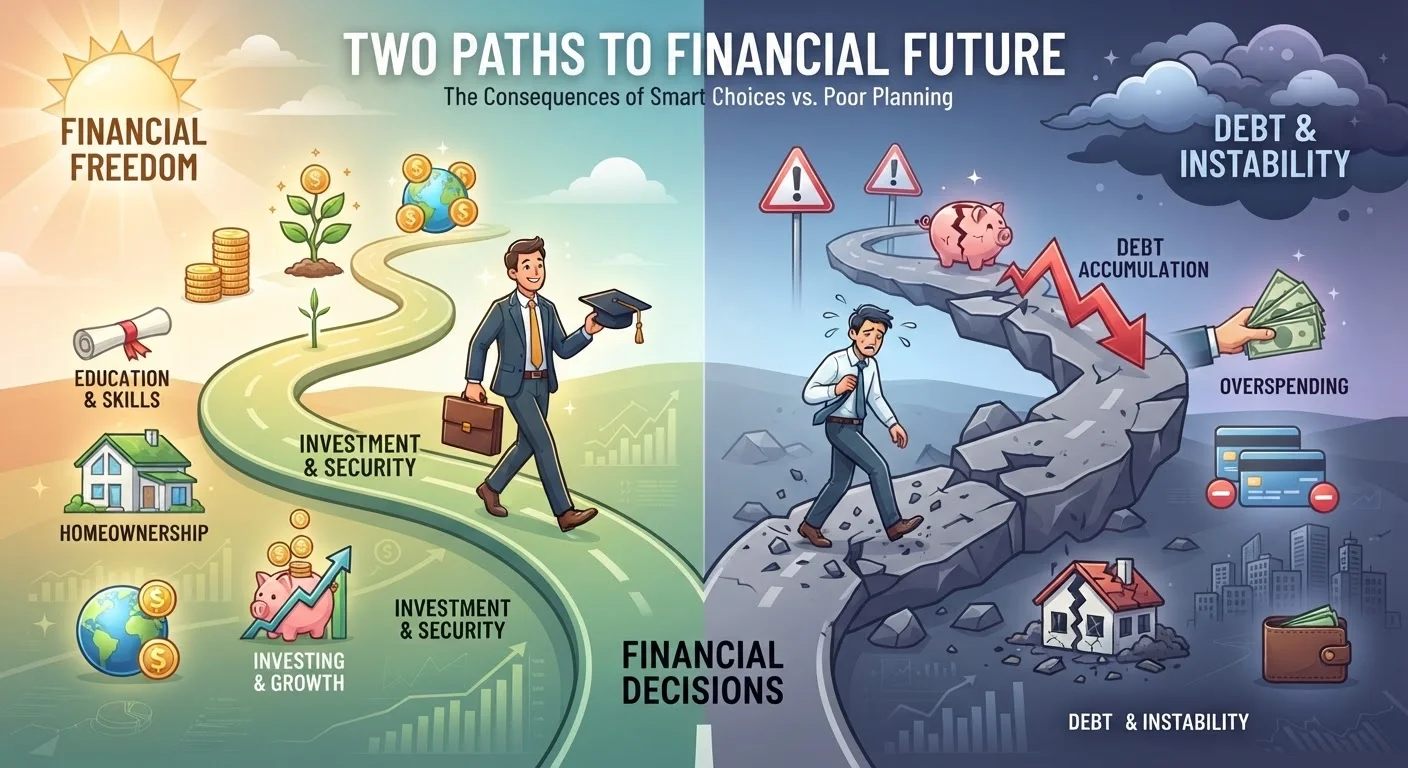
Photo: InsightsTurbo.com | Kickstart Your Knowledge Quest editorial
Key Takeaways
- Good debt typically funds assets or opportunities that increase in value or boost earning power.
- Bad debt usually finances depreciating goods at high interest rates, costing more than the item is worth.
- Interest rate is one of the clearest signals separating debt worth carrying from debt worth eliminating quickly.
- Even 'good' debt becomes harmful if payments exceed what your income can comfortably support.
- The good-vs-bad framework is a starting point, not a rigid rule — context always matters.
What the Good Debt vs. Bad Debt Framework Actually Means
The idea that debt can be "good" or "bad" is one of the most widely repeated concepts in personal finance — and also one of the most misunderstood. It doesn't mean some debt is consequence-free or that borrowing is inherently noble. It means that debt functions differently depending on what it's financing and at what cost.
Financial educators generally define good debt as borrowing that funds something likely to grow in value or generate income that exceeds the cost of the loan. A mortgage on a home, a student loan for a degree with strong job prospects, or a business loan used to launch a profitable venture are common examples. The borrowed money works as a lever — it gets you access to something that pays off over time.
Bad debt, by contrast, typically funds things that lose value immediately or that cost far more than their worth due to high interest. Credit card balances carried month to month on everyday purchases, high-APR personal loans for non-essential items, and payday loans are frequently cited examples. You're paying a premium — sometimes a steep one — for something that generates no future return.
Before diving deeper, it helps to be grounded in the terminology. If terms like APR, principal, or amortization feel unfamiliar, this plain-language debt glossary can bring you up to speed quickly.
| Criterion | Good Debt | Bad Debt |
|---|---|---|
| Typical purpose | Education, housing, business | Consumables, depreciating goods |
| Interest rate | Generally lower | Often high or very high |
| Asset value over time | Appreciates or generates income | Depreciates or produces no return |
| Net worth impact | Can increase net worth if managed well | Typically reduces net worth |
| Common examples | Mortgage, student loan, business loan | Payday loans, high-APR credit cards |
| Risk level | Moderate if proportionate to income | High due to compounding costs |
Why Interest Rate Is the Clearest Dividing Line
Interest rate isn't the only variable that matters, but it's the most telling. A lower interest rate means the cost of borrowing stays manageable relative to what you gain. A high rate — especially on something that doesn't appreciate — means you can end up paying significantly more than the original purchase price with nothing durable to show for it.
Consider two borrowers: one takes out a federal student loan at a fixed rate to complete a nursing degree. Another carries a revolving credit card balance at 24% APR on dining and streaming subscriptions. The nurse's loan, while real debt with real monthly obligations, funds an asset — a credential — that increases earning potential. The credit card balance compounds against the borrower with no asset to offset it.
20%+
Average credit card APR in the U.S.
The Federal Reserve tracks average credit card interest rates, which have exceeded 20% in recent reporting periods — making revolving balances among the costliest forms of consumer debt.
~43M
Americans with federal student loan debt
According to Federal Student Aid data, tens of millions of borrowers carry federal student loans — illustrating how common 'good debt' instruments are in everyday financial life.
This doesn't mean low-interest debt is automatically wise. A mortgage you can't realistically afford or a business loan for an unviable idea can still become financially damaging. The framework is a mental starting point, not a green light. As a general principle, though, carrying low-interest debt on appreciating assets while aggressively paying down high-interest debt on depreciating or consumable items is a defensible financial strategy.
For a closer look at how to sequence your priorities when both savings and debt are in play, see why high-interest debt often comes before long-term savings goals.
When 'Good' Debt Goes Wrong — and What to Watch For
Even debt that starts out well-intentioned can become a problem. Student loans are a frequent example: borrowing to fund a degree that pays off is rational, but borrowing more than your expected salary in the first year of your field is a risk worth examining carefully. The "good debt" label doesn't override the math.
Similarly, mortgages are typically considered good debt — but only when the payment is proportionate to income and the home is in a market with reasonable stability. Buying at the peak of a heated market with a payment that strains your budget blurs the line considerably.
There are also habits that quietly make any debt worse. Certain financial decisions extend repayment timelines by months or years — things like making only minimum payments, ignoring refinancing opportunities, or taking on new debt before resolving existing balances.
One productive reframe: rather than asking "is this debt good or bad?" ask "does the value I'm getting exceed the total cost of borrowing, and can I manage the payments without sacrificing financial stability?" That question tends to surface the right answer more reliably than any label. And if you find yourself wondering whether misconceptions are shaping how you feel about your debt, common myths about debt are worth examining too.
This article is for general educational purposes only and does not constitute personalized financial or legal advice. Consult a qualified financial professional for guidance specific to your situation.
The content provided on our blog site traverses numerous categories, offering readers valuable and practical information. Readers can use the editorial team’s research and data to gain more insights into their topics of interest. However, they are requested not to treat the articles as conclusive. The website team cannot be held responsible for differences in data or inaccuracies found across other platforms. Please also note that the site might also miss out on various schemes and offers available that the readers may find more beneficial than the ones we cover.