
Indoor vs. Outdoor Cats: Understanding the Real Trade-Offs

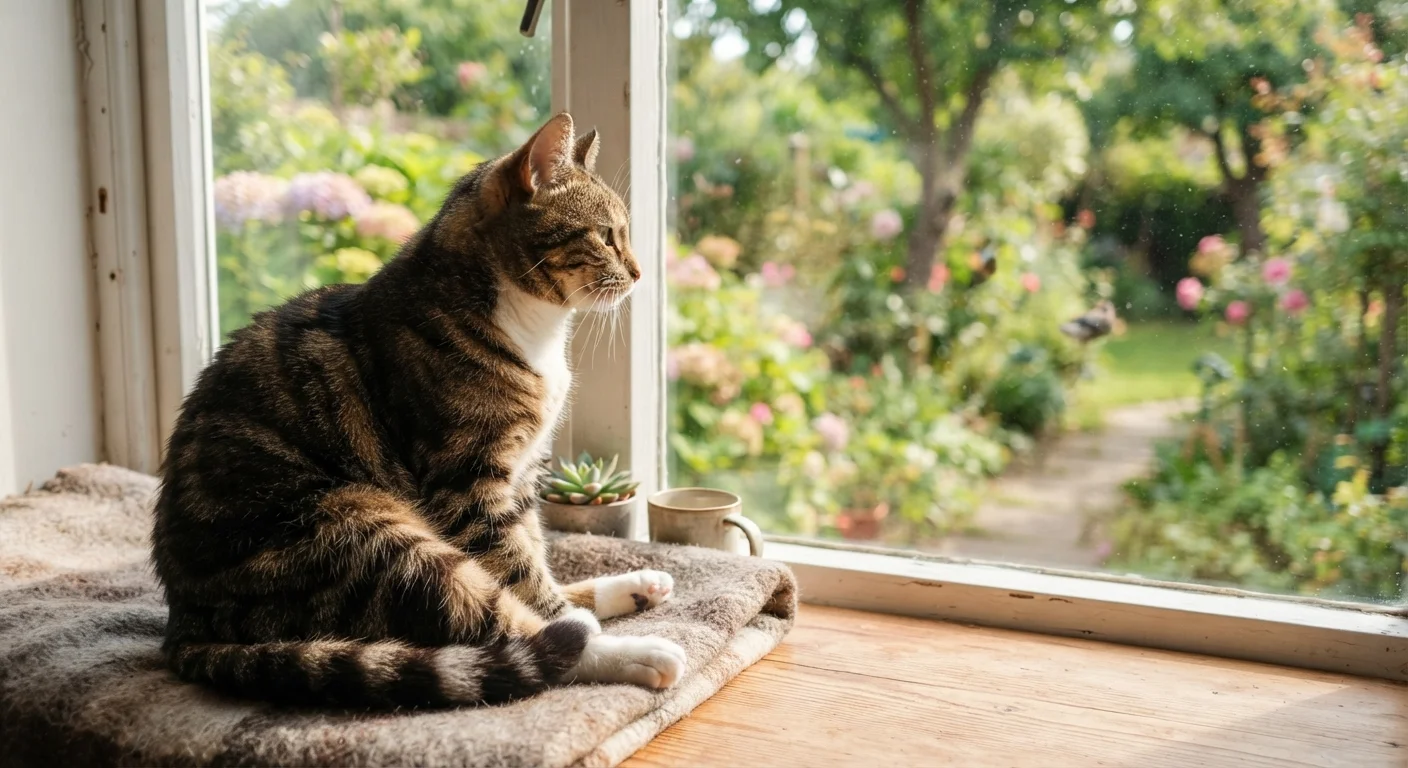
Photo: InsightsTurbo.com | Kickstart Your Knowledge Quest editorial
Key Takeaways
- Indoor cats typically live significantly longer than cats with outdoor access, largely due to reduced exposure to trauma and disease.
- Outdoor cats experience richer environmental stimulation but face real dangers including traffic, predators, and infectious illness.
- Indoor cats require deliberate enrichment to stay mentally and physically healthy — boredom is a genuine welfare concern.
- Your cat's personality, history, and your local environment all matter when making this decision.
- Supervised outdoor time or enclosed catios can offer a meaningful middle ground for many households.
The Lifespan Gap Is Real — Here's Why
One of the most cited differences between indoor and outdoor cats is average lifespan. Indoor cats commonly live into their mid-to-late teens, while free-roaming outdoor cats have significantly shorter average lifespans — some estimates suggest outdoor cats live roughly half as long, though exact figures vary based on location and individual circumstances.
The gap is driven by predictable hazards. Outdoor cats face vehicle traffic, territorial fights with other cats, predators (coyotes in particular are a documented risk across many US regions), accidental poisoning from yard chemicals or rodent bait, and far higher rates of infectious disease transmission. Feline leukemia virus (FeLV) and feline immunodeficiency virus (FIV) spread through cat-to-cat contact — a risk that is essentially eliminated in a single-cat indoor household.
10–15 yrs
Typical indoor cat lifespan
The American Veterinary Medical Association notes indoor cats generally live significantly longer than their outdoor counterparts due to reduced exposure to trauma and disease.
~1.3–4B
Birds killed by outdoor cats annually in the US
A widely cited study published in Nature Communications estimated free-ranging domestic cats kill between 1.3 and 4 billion birds in the United States each year.
If you're a first-time owner making this call before bringing a cat home, this lifespan context is worth sitting with. It doesn't make outdoor living categorically wrong, but it reframes it as a choice with genuine trade-offs rather than a default.
What Indoor Cats Actually Need to Thrive
Keeping a cat indoors protects them from external hazards, but it creates an obligation: you become responsible for meeting needs that an outdoor environment would otherwise fulfill. Boredom, inactivity, and under-stimulation are real welfare concerns for indoor-only cats, and they can surface as destructive behavior, overgrooming, or stress-related health issues.
A well-designed indoor environment should include vertical space (cat trees, shelves), scratching surfaces, interactive play sessions, and opportunities for window watching. Puzzle feeders and food-dispensing toys can replicate some of the cognitive demand that hunting provides outdoors. See our guide to keeping a solo cat mentally stimulated for evidence-informed approaches that go beyond the basics.
Indoor Cats Still Need Annual Vet Visits
It's also worth knowing that indoor cats are not inherently low-maintenance. They still need regular veterinary care, appropriate nutrition — our comparison of wet vs. dry food covers what the research actually shows — and attentive monitoring since illness can progress without the physical activity that outdoor cats naturally get.
Side-by-Side: Key Differences at a Glance
The contrast between these two lifestyles isn't just about risk tolerance — it touches on behavior, veterinary costs, environmental impact, and owner responsibility.
| Criterion | Indoor Cats | Outdoor Cats |
|---|---|---|
| Average lifespan | 12–18+ years (typical range) | Significantly shorter on average |
| Infectious disease risk | Low (especially single-cat homes) | Higher — FeLV, FIV, parasites |
| Physical hazard exposure | Minimal | Traffic, predators, toxins |
| Environmental enrichment | Owner-provided, requires effort | Natural and abundant |
| Exercise level | Variable — depends on enrichment | Generally higher |
| Wildlife impact | None | Documented predation on birds and small mammals |
| Vet monitoring ease | Easier — controlled environment | Harder — injuries may go unnoticed |
One factor many owners underestimate is the environmental impact of outdoor cats. Domestic cats are highly effective hunters, and free-roaming cats contribute meaningfully to the reduction of local bird and small mammal populations. This doesn't make outdoor cats bad companions, but it's a consideration worth acknowledging honestly.
The Middle Path: Supervised and Enclosed Outdoor Access
The indoor/outdoor framing is increasingly seen as a false binary. Many cat owners find that structured outdoor access — through enclosed catios, leash and harness training, or supervised yard time — captures much of the enrichment benefit while reducing the most serious risks.
Catios (enclosed outdoor enclosures attached to a window or door) have become more accessible in recent years and range from simple window boxes to elaborate multi-level garden structures. Leash training is achievable for many cats, especially those introduced to a harness as kittens, though some adult cats adapt well too. Patience is essential — forcing a harness on a resistant cat creates stress rather than enrichment.
If you're just getting started with a new cat, the first 72 hours at home matter a great deal in shaping how comfortable your cat becomes with new experiences — including outdoor exposure later on. Early positive association with exploration makes structured outdoor time more feasible down the road.
This article is for general informational purposes only and does not constitute veterinary advice. Consult a licensed veterinarian for guidance specific to your cat's health and circumstances.
The content provided on our blog site traverses numerous categories, offering readers valuable and practical information. Readers can use the editorial team’s research and data to gain more insights into their topics of interest. However, they are requested not to treat the articles as conclusive. The website team cannot be held responsible for differences in data or inaccuracies found across other platforms. Please also note that the site might also miss out on various schemes and offers available that the readers may find more beneficial than the ones we cover.