
Cat Owner Guide

Keeping an Only Cat Mentally Stimulated

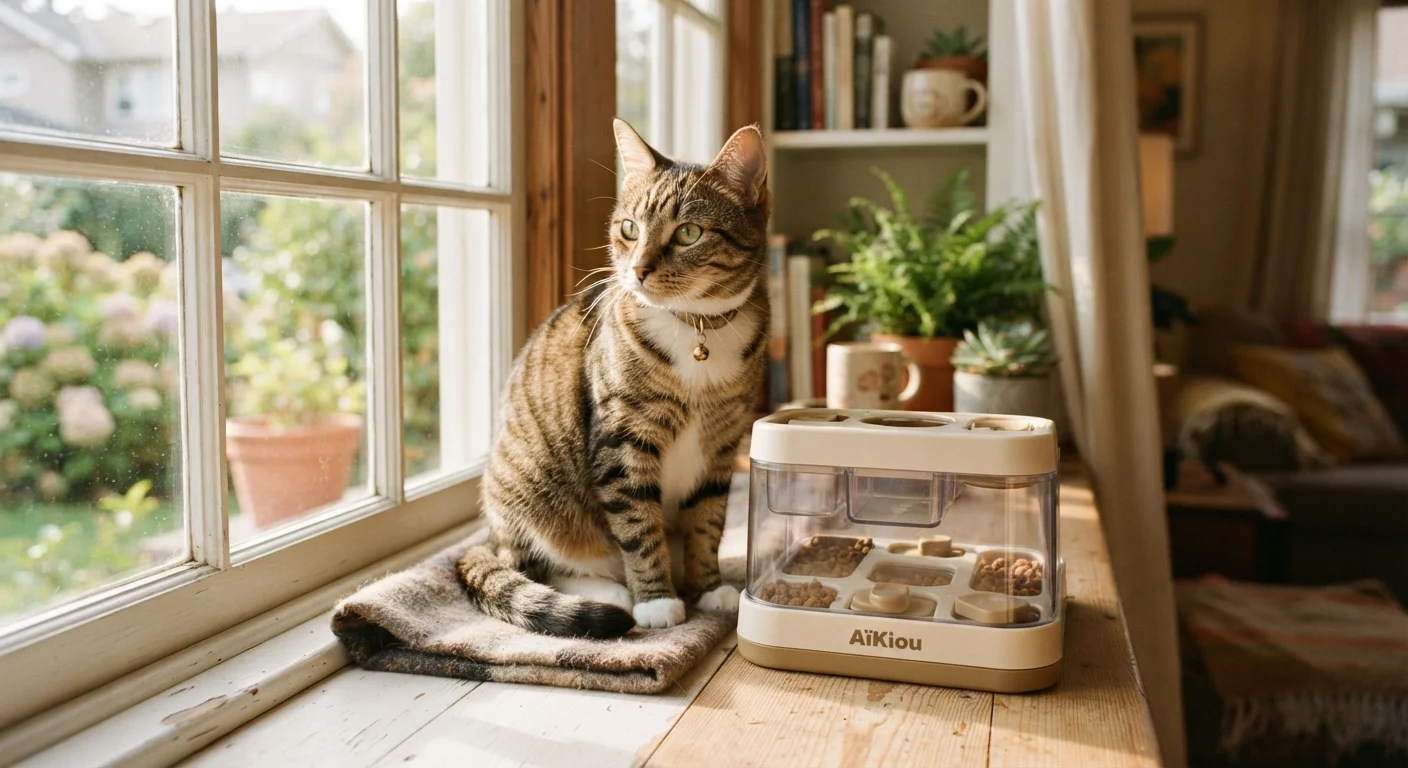
Keeping an Only Cat Mentally Stimulated

Photo: InsightsTurbo.com | Kickstart Your Knowledge Quest editorial

Single-cat households can lead to boredom and stress. These evidence-informed approaches help solo cats stay engaged and behaviourally healthy.

Key Takeaways

  • Solo cats are at higher risk of boredom-related stress without structured daily enrichment.
  • Interactive play, puzzle feeders, and vertical space are among the most effective stimulation tools.
  • Rotating toys and varying routines helps prevent habituation and keeps cats engaged.
  • Behavioral changes like over-grooming or aggression can signal under-stimulation — not just illness.

Why Only Cats Need Active Mental Engagement

Cats living without feline housemates miss out on a natural source of stimulation: each other. In multi-cat homes, cats chase, groom, and interact spontaneously throughout the day. A solo cat's environment doesn't provide that by default — and gaps in stimulation can quietly accumulate into stress.

Under-stimulated cats don't always broadcast distress obviously. Instead, behavioral signs tend to emerge gradually: excessive sleeping during hours they'd normally be active, redirected aggression toward owners, compulsive grooming, or destructive scratching. These aren't personality quirks — they're often behavioral responses to an insufficiently enriched environment. If you're noticing concerning changes, our guide to cat health symptoms worth watching can help you distinguish enrichment issues from medical ones.

The good news is that mental stimulation for solo cats is achievable, low-cost, and doesn't require a second cat — though that remains an option worth understanding. See our article on getting a second cat if you're considering it.

Enrichment Needs Vary by Cat

Age, health, and individual personality all influence how much stimulation a cat needs and tolerates. Kittens and young adults generally require more active engagement, while senior cats may prefer calmer enrichment like gentle foraging or observation perches. If your cat seems consistently withdrawn or uninterested despite enrichment efforts, a veterinary check-up is a reasonable next step — lethargy can have medical causes.

Proven Practices for Keeping a Solo Cat Engaged

The following approaches are grounded in feline behavioral research and veterinary enrichment guidance. They work best when layered together rather than applied in isolation.

1

Schedule two structured interactive play sessions every day

Cats are natural predators whose instinct to stalk, chase, and catch prey doesn't disappear indoors. Without outlets, that drive can manifest as frustration. Structured play using wand toys or laser pointers — ideally ending with a physical 'catch' — satisfies the predatory sequence and burns mental energy more effectively than passive toy access.
Example: A 10-minute wand toy session in the morning before work and another in the evening after dinner mimics the natural burst-and-rest rhythm of a hunting cat.
2

Use puzzle feeders or food-dispensing toys for at least one meal daily

Eating from a bowl takes cats seconds. In the wild, hunting a meal requires sustained effort and problem-solving. Puzzle feeders extend mealtimes, force cognitive engagement, and give cats a sense of earned reward — all of which contribute to behavioral wellbeing.
Example: Dividing your cat's dry portion across a simple maze feeder or even a muffin tin covered with tennis balls adds foraging complexity without extra cost.
3

Create accessible vertical space and window perches

Height gives cats a sense of safety and territory ownership — both psychologically important for solo animals who can't share social reassurance with another cat. Perches near windows also provide passive environmental enrichment through visual stimulation from birds, squirrels, and passing activity.
Example: A cat tree near a window, or a cleared shelf with a blanket, can become a favored observation post that occupies a cat for hours without any direct human involvement.
4

Rotate available toys on a weekly cycle rather than leaving all toys out at once

Cats habituate quickly to static stimuli — a toy that was exciting on Monday is often ignored by Friday. Rotating toys reintroduces novelty, which is a core driver of exploratory behavior. Storing most toys away and swapping them weekly costs nothing but keeps the environment feeling fresh.
Example: Keeping three rotating 'toy sets' in separate bags and introducing a new set each week gives even familiar toys renewed appeal.
5

Introduce scent enrichment as a low-effort daily stimulus

A cat's sense of smell is far more developed than a human's and serves as a primary channel for information about their world. Novel, safe scents — from herbs like valerian or silvervine, or from paper bags that have held groceries — engage olfactory exploration that doesn't require direct human participation.
Example: Rubbing a small amount of dried silvervine (a well-researched alternative to catnip, effective in cats who don't respond to catnip) on a cardboard scratcher provides a burst of stimulated sniffing and rubbing behavior.
6

Provide at least one dedicated scratching outlet per main living area

Scratching is both physically necessary for claw maintenance and behaviorally important for scent marking and stress relief. Without adequate scratching surfaces, cats redirect to furniture — a frustration source for owners that can create negative interactions and reduce positive engagement with the cat.
Example: Placing a tall sisal post near the cat's sleeping area (where cats commonly scratch after waking) satisfies this need in a predictable, acceptable location.

Building a Quick-Start Enrichment Routine

You don't need to overhaul your home or buy expensive equipment to start making a difference today. A few targeted changes in how you structure your cat's day can meaningfully reduce boredom.

medium Place a cardboard box or paper bag on the floor today — novel hiding and exploration spaces cost nothing and engage immediate curiosity.
low Move your cat's food bowl to a different room or position for the next meal to introduce low-level novelty into their daily routine.
high Set a 10-minute phone timer and commit to an uninterrupted wand-toy session this evening — consistency from day one builds behavioral health.
medium Pull out a toy that's been unused for three or more weeks and reintroduce it — to your cat, it may register as entirely new.

If you're still setting up your space, our article on what the first 72 hours with a new cat look like covers how to introduce enrichment from day one. And if your cat spends all their time indoors, understanding the indoor vs. outdoor trade-offs can help you think through whether supervised outdoor access might be part of the picture.

~40%

Indoor cats showing signs of boredom or stress

Behavioral studies in applied animal behavior research suggest a substantial proportion of indoor-only cats display stress-related behaviors linked to environmental deficiency.

Improvement in activity levels with puzzle feeders

Research published in feline behavioral science journals has found that food-dispensing toys can meaningfully increase daily activity in sedentary indoor cats.

Pets & Animals Editorial Team

InsightsTurbo.com | Kickstart Your Knowledge Quest

Pets & Animals Editorial Team is the collective byline for our editorial team and contributor network. Articles published under this byline or an editorial pen name are researched, written, and reviewed according to our editorial standards for clarity, consistency, and independence before publication.

Dog Care BasicsCat Owner GuideSmall Pets 101
View author profile

The content provided on our blog site traverses numerous categories, offering readers valuable and practical information. Readers can use the editorial team’s research and data to gain more insights into their topics of interest. However, they are requested not to treat the articles as conclusive. The website team cannot be held responsible for differences in data or inaccuracies found across other platforms. Please also note that the site might also miss out on various schemes and offers available that the readers may find more beneficial than the ones we cover.