
Bringing Your First Cat Home: What the First 72 Hours Actually Look Like

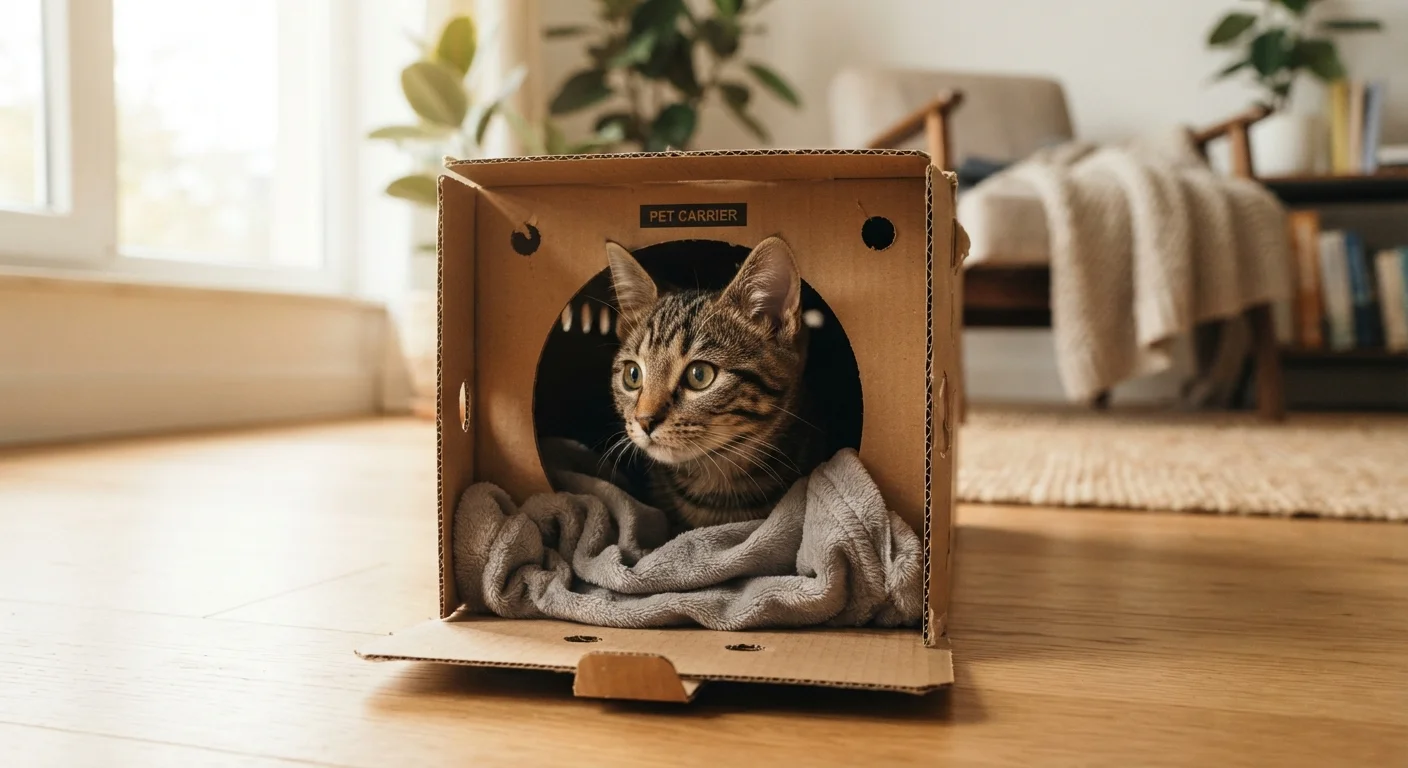
Photo: InsightsTurbo.com | Kickstart Your Knowledge Quest editorial
Key Takeaways
- Most cats need 24–72 hours of quiet, low-pressure time before they begin exploring on their own.
- Confining your cat to one room initially makes the environment feel manageable, not restrictive.
- Hiding is a normal stress response — forcing interaction slows the adjustment process.
- Establishing a consistent feeding and play schedule from day one builds trust quickly.
- Behavioral changes like skipping meals or avoiding the litter box for over 24 hours warrant a vet call.
Before the Car Door Opens
The 72-hour clock starts before your cat ever enters the car. What you have ready — and how the space is set up — directly shapes how quickly your cat settles. If you haven't already done a room-by-room safety check, see our guide to cat-proofing your home before pickup day.
Practically speaking, you need a base room ready before arrival: a quiet, low-traffic space containing the litter box, water, food, a few hiding spots (a cardboard box works fine), and something that smells like you. Keep this room separate from any other pets. Close doors. Pull the blinds if outside noise is an issue. The goal is manageable, not stimulating.
Base room
A single, small room used to confine a new cat during the initial adjustment period. It gives the cat a manageable territory before expanding to the full home.
Stress hiding
A normal feline response to an unfamiliar environment where a cat retreats to a concealed spot for safety. It typically decreases on its own as the cat adjusts.
Territorial mapping
The process by which cats familiarize themselves with a new space by sniffing, marking, and slowly exploring every corner. This is instinctive and takes time.
Scent continuity
Using familiar smells — like a worn shirt or a blanket from the shelter — to ease a cat's transition into a new environment by reducing sensory shock.
Bring a carrier lined with a familiar-smelling item — an old t-shirt you've worn is genuinely useful here, not just a nice idea. If the shelter gave you a blanket the cat was using, bring that too. Scent continuity reduces the shock of a new environment.
Hours 1–24: The Quiet Introduction
Open the carrier in the base room and step back. Let your cat decide when to come out. This can take minutes or hours — both are normal. Resist the urge to coax, follow, or photograph excessively. Observation is fine; pressure is not.
Your cat will likely do one of the following:
- Hide immediately — under the bed, behind furniture, inside the carrier itself. This is the most common response and is not a sign something is wrong.
- Explore cautiously — low body posture, slow movement, pausing frequently. Let them map the room on their own terms.
- Vocalize — some cats meow or cry in the first hours. Respond calmly and quietly but don't crowd them.
Keep the room quiet. Limit visitors. Inform anyone in your household that this day is for the cat, not for meet-and-greets. If you have a dog or other pets, they stay out of the base room entirely for now — for a comparison of how this differs from canine arrivals, see our article on bringing a dog home for the first time.
Let Silence Do the Work
Hours 24–48: Reading the Room
By the second day, you'll start getting clearer signals. Most cats will have eaten at least a small amount, used the litter box, and ventured out of their hiding spot during quiet periods — often at night when the house is still. This is progress, even if you didn't witness it.
Check the litter box for use. Check the food bowl. These two things tell you more about how your cat is coping than anything visible behavior-wise.
If your cat is beginning to show curiosity — sniffing toward the door, watching you move around the room, staying in open view — you can try sitting on the floor and letting them approach. Extend a finger for them to sniff. Don't reach over their head; that's threatening. Keep sessions short and let the cat break contact first.
Don't Pull a Cat Out of Hiding
Some cats remain hidden through this entire period. As long as they're eating, drinking, and using the litter box, this falls within normal range. Forcing them out from hiding — even gently — tends to backfire and extend the adjustment timeline.
Hours 48–72: Building the First Routine
By day three, the goal shifts from pure survival mode to the beginning of structure. Cats are highly routine-oriented animals, and establishing consistent patterns now pays off for months.
Start feeding at the same times each day. Introduce a short, low-key play session — a wand toy dragged slowly across the floor requires the cat to engage physically without requiring closeness to you. Interactive play is one of the fastest trust-builders there is, partly because it gives the cat a reason to come out and feel confident rather than just cautious.
If your cat seems ready, you can begin gradually expanding their territory — cracking the door open and letting them choose whether to explore beyond the base room. Don't rush this. A week in one room is not unusual for more anxious cats. For ideas on keeping a solo cat mentally engaged long-term, our piece on keeping an only cat mentally stimulated is worth bookmarking for later.
By the end of 72 hours, you should have a loose daily pattern forming: feeding times, a play window, and quiet periods where the cat rests without interruption. That structure is the foundation everything else builds on.
Warning Signs Worth Watching
Not everything that looks worrying in the first 72 hours is an emergency, but some things are. Knowing the difference matters.
Monitor and call your vet if you notice:
- No food or water consumed in more than 24 hours
- No litter box use in 24 hours (urinary blockages in particular can become life-threatening quickly)
- Labored or open-mouth breathing
- Repeated vomiting or obvious physical distress
- Significant eye or nasal discharge
For a broader reference on what symptoms warrant same-day attention versus watchful waiting, see our guide on common cat health symptoms you shouldn't wait out.
Hiding, reduced appetite on day one, and startling at sounds are not warning signs — they're stress responses. The distinction is physical: lethargy combined with not eating or eliminating is different from a cat that is simply keeping to themselves.
Schedule a wellness vet visit within the first week regardless of how things appear. A baseline exam is valuable even when your cat seems perfectly fine, and it establishes a relationship with a vet before you ever need one urgently. For everything that comes after these first few days, our complete first-timer's reference covers behavior, health, diet, and more in depth.
This article is for general informational purposes only and is not a substitute for veterinary advice. If you have concerns about your cat's health, consult a licensed veterinarian.
Frequently Asked Questions
The content provided on our blog site traverses numerous categories, offering readers valuable and practical information. Readers can use the editorial team’s research and data to gain more insights into their topics of interest. However, they are requested not to treat the articles as conclusive. The website team cannot be held responsible for differences in data or inaccuracies found across other platforms. Please also note that the site might also miss out on various schemes and offers available that the readers may find more beneficial than the ones we cover.