
Dog Food Labels Decoded: What All Those Terms Really Mean

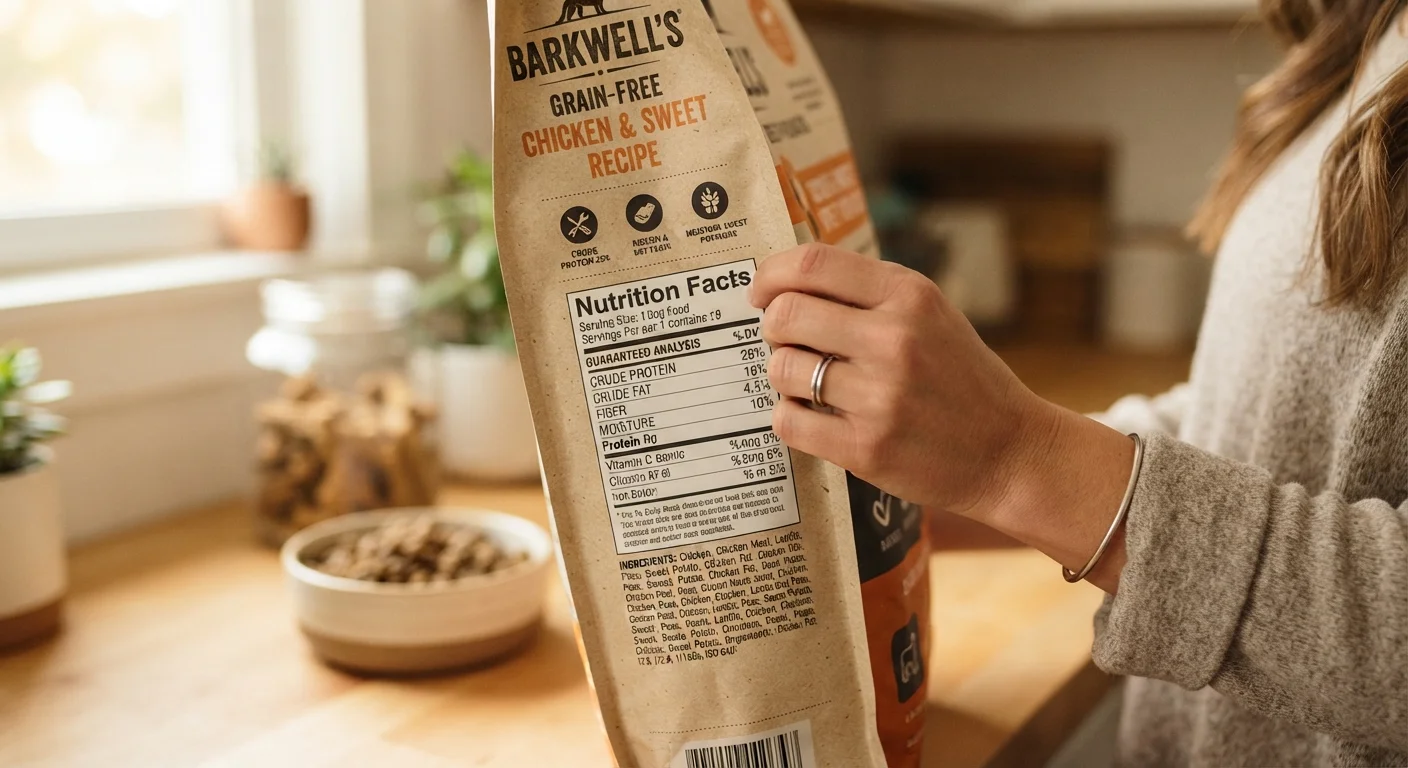
Photo: InsightsTurbo.com | Kickstart Your Knowledge Quest editorial
Key Takeaways
- "Complete and balanced" is a regulated AAFCO term — it means the food meets defined nutritional standards for dogs.
- Terms like "premium," "gourmet," and "holistic" have no legal definitions in pet food labeling.
- Ingredients are listed by weight before processing, so meat listed first doesn't always mean the most protein by volume.
- "Grain-free" is not the same as "low-carbohydrate" — many grain-free foods substitute legumes or potatoes.
- "Human-grade" has a specific legal meaning; most dog foods labeled this way must meet strict manufacturing standards.
- Your veterinarian is the best resource for matching a food's label claims to your specific dog's needs.
The Terms That Actually Have Rules Behind Them
Not everything on a dog food bag carries equal weight. Some phrases are tightly regulated; others are pure marketing. Understanding which is which is the first step to reading labels with confidence.
"Complete and Balanced" is the most important regulated phrase on any dog food. It means the product has either been formulated to meet AAFCO nutrient profiles, or passed a feeding trial proving it supports a dog's health at a specific life stage. If a bag doesn't say this, it shouldn't be your dog's sole food source.
"Natural" has an AAFCO definition — ingredients derived from plant, animal, or mined sources without synthetic chemical alteration — but it doesn't mean unprocessed or superior. A heavily heat-processed food can still qualify.
"Human-grade" is a legally meaningful term when used correctly. For a food to claim this, every ingredient and the manufacturing facility must meet standards for human food. It's a higher bar than most commercial pet food — but it isn't automatically the best choice for every dog.
AAFCO vs. FDA: Who Regulates What
Marketing Words That Mean Very Little
Some of the most prominent words on dog food packaging have no regulatory definition in the U.S. pet food industry. That includes: premium, holistic, gourmet, artisanal, and ancestral. Any manufacturer can use these terms without meeting any specific standard.
This doesn't mean every product using these words is bad — it means you can't use them to compare quality. Instead, look past the front-of-bag claims to the Nutritional Adequacy Statement and ingredient list on the back or side panel.
For a useful comparison of how marketing language differs from regulated claims in human food labeling, see our guide to reading nutrition labels.
Flip the Bag Before You Decide
Decoding the Ingredient List
Ingredients are listed in descending order by weight before cooking. This matters because raw chicken is roughly 70% water. After processing, its contribution shrinks considerably. A "chicken meal" listed third — which is already dehydrated — may actually deliver more protein than fresh chicken listed first.
Named protein sources are more transparent than generic ones. "Salmon" or "deboned turkey" tells you more than "meat" or "poultry." The same logic applies to by-products: "chicken by-product meal" is more traceable than "animal by-product meal."
Carbohydrate sources matter too, especially if your dog has sensitivities. "Grain-free" foods often substitute peas, lentils, chickpeas, or potatoes — all of which are still carbohydrates. They aren't inherently worse, but the substitution is worth knowing. Once you understand ingredients, it's easier to compare formats — our article on dry kibble vs. wet food walks through how those choices affect nutrition in practice.
40+
U.S. states that have adopted AAFCO model regulations
AAFCO reports that the majority of U.S. states reference its model regulations when establishing pet food labeling requirements.
~70%
Water content in fresh raw meat by weight
This is why fresh meat listed first on an ingredient label can be misleading — its weight drops dramatically after the moisture is cooked out during processing.
2
AAFCO methods for proving nutritional adequacy
A food can qualify as "complete and balanced" either by formulation against AAFCO nutrient profiles or by passing standardized AAFCO feeding trials with live animals.
The Nutritional Adequacy Statement: The Most Useful Line on the Label
Buried in small print, usually on the side or back panel, is the Nutritional Adequacy Statement — arguably the most important line on any dog food label. It tells you two things: whether the food is complete and balanced, and which life stage it's designed for.
Life stage categories include: growth (puppies), adult maintenance, all life stages, and sometimes senior (though "senior" isn't an AAFCO-regulated category). Feeding the wrong life-stage food over time can create nutritional imbalances — particularly concerning for puppies who need higher levels of calcium, phosphorus, and certain proteins.
If the statement reads "intended for intermittent or supplemental feeding only," that food is not nutritionally complete. It should be used as a topper or treat, not a daily meal. This is one of the clearest signals on any label, and it's often overlooked.
This article is for informational purposes only and does not constitute veterinary or nutritional advice. Consult a licensed veterinarian for guidance tailored to your dog's individual health needs.
Frequently Asked Questions
The content provided on our blog site traverses numerous categories, offering readers valuable and practical information. Readers can use the editorial team’s research and data to gain more insights into their topics of interest. However, they are requested not to treat the articles as conclusive. The website team cannot be held responsible for differences in data or inaccuracies found across other platforms. Please also note that the site might also miss out on various schemes and offers available that the readers may find more beneficial than the ones we cover.