
Dry Kibble vs Wet Food: Which Feeding Approach Suits Your Dog?

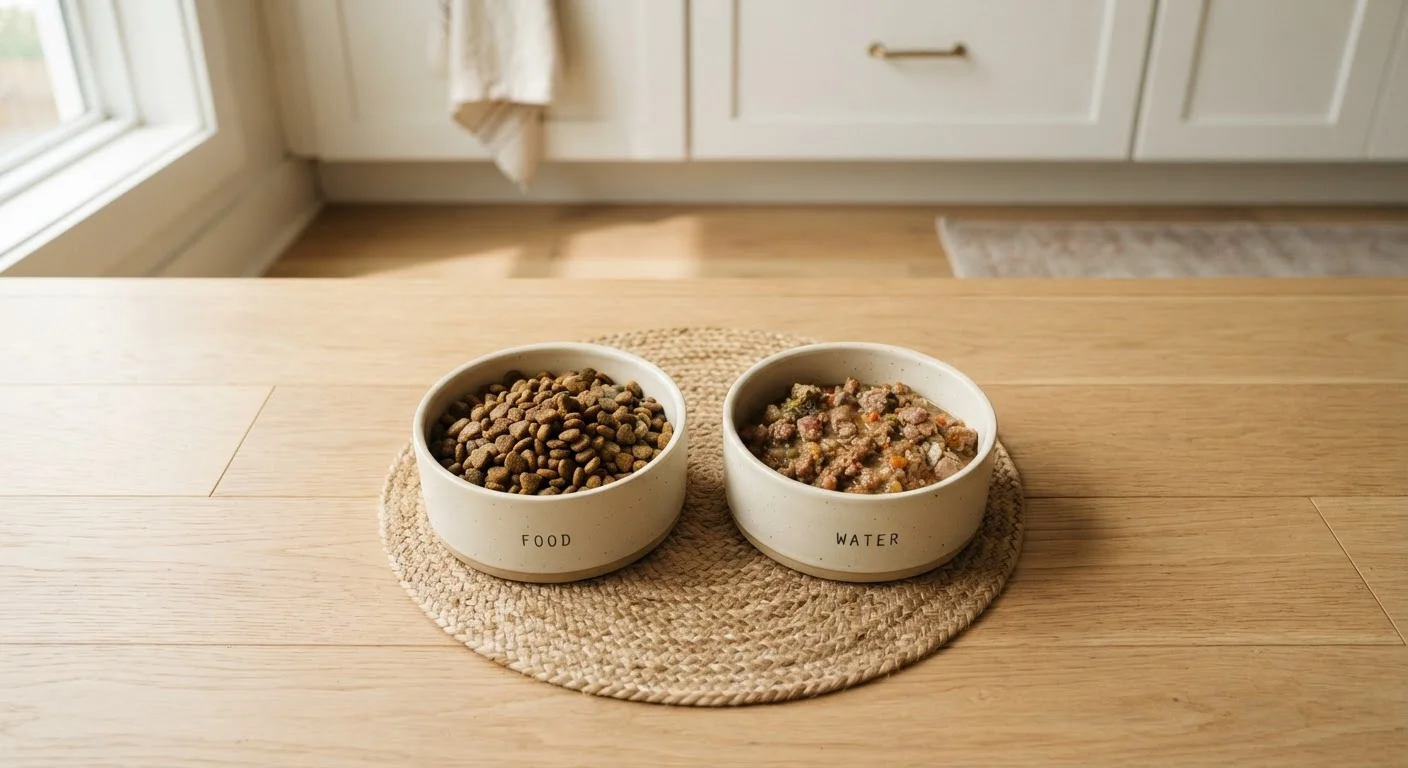
Photo: InsightsTurbo.com | Kickstart Your Knowledge Quest editorial
Key Takeaways
- Dry kibble is generally more affordable and easier to store than wet food.
- Wet food provides significantly more moisture, which supports urinary tract and kidney health.
- Neither format is universally superior — the right choice depends on your dog's age, health, and preferences.
- Many vets recommend a mixed feeding approach to balance benefits from both formats.
- Always consult your veterinarian before making significant changes to your dog's diet.
What's Actually in Each Format?
Before comparing benefits, it helps to understand what separates these two food types at a foundational level.
Dry kibble is processed at high heat and pressure, removing most moisture — finished products typically contain only 8–12% water. This process allows manufacturers to pack in dense calories and nutrients, and the resulting shelf life can stretch to a year or more when stored properly. Kibble usually contains a blend of protein sources, grains or grain alternatives, fats, vitamins, and minerals.
Wet food is cooked and sealed in cans or pouches with much of its natural moisture preserved — most wet formulas are 70–78% water. This gives wet food a softer texture and richer smell. Wet food often contains higher proportions of meat protein relative to carbohydrates, though this varies widely by formula and price point.
Both formats can be nutritionally complete when they meet the AAFCO (Association of American Feed Control Officials) nutritional adequacy standards — look for the AAFCO statement on the label, which confirms a food is formulated for your dog's life stage.
| Criterion | Dry Kibble | Wet Dog Food |
|---|---|---|
| Moisture content | 8–12% | 70–78% |
| Average cost | Lower per serving | Higher per serving |
| Shelf life (opened) | Weeks (sealed bag) | 1–2 days (refrigerated) |
| Dental benefit | Mild plaque reduction | Minimal |
| Palatability | Moderate | Generally higher |
| Calorie density | Higher per gram | Lower per gram |
| Ease of portioning | Very easy | Moderate |
| Best for | Most healthy adult dogs | Seniors, picky eaters, low drinkers |
Dental Health, Digestion, and Hydration
These three factors often drive veterinary recommendations more than calorie content alone.
Dental Health
Chewing dry kibble creates a mild abrasive effect on tooth surfaces that can help slow plaque and tartar accumulation. However, it's worth noting that kibble alone isn't a substitute for regular teeth brushing or professional dental cleanings. Wet food, being soft, provides no meaningful mechanical cleaning benefit. Dogs on an exclusively wet diet may need more attentive dental care routines.
Hydration
Dogs fed dry kibble exclusively must rely on their water bowl for all hydration. Some dogs — particularly those prone to urinary tract issues or kidney concerns — benefit significantly from the added moisture in wet food. If your dog is a light drinker, incorporating wet food can be a practical way to quietly increase daily fluid intake.
Digestion
Both formats are generally digestible for healthy dogs. Some dogs with sensitive stomachs tolerate one format better than the other, though this is individual. If your dog has recurring digestive issues, speak with a vet rather than switching foods speculatively.
When to Involve Your Vet
Cost, Convenience, and Practicality
For most first-time owners, the day-to-day practicalities matter just as much as nutrition. If you're preparing for a dog's arrival, feeding costs are worth factoring into your monthly budget early.
Dry kibble is almost always the more affordable option. Bulk bags bring the per-serving cost down considerably, and opened bags stay fresh for weeks when sealed and stored in a cool, dry place. Measuring portions is straightforward with a scoop.
Wet food costs more per calorie and per serving. Opened cans must be refrigerated and used within a day or two, which adds a layer of logistics. Pouches are more convenient but typically cost even more per gram. For larger dogs, wet food as a sole diet can become expensive quickly.
A mixed feeding approach — kibble as the base with wet food added as a topper — is a popular middle ground. It keeps costs manageable while adding palatability and moisture. It also gives owners flexibility to adjust ratios based on appetite or health needs.
Portion control matters regardless of format. Overfeeding is one of the most common issues vets see, and managing your dog's weight has long-term consequences for joint health, organ function, and lifespan. Always follow feeding guidelines adjusted for your dog's actual activity level.
Making the Right Call for Your Dog
There is no single right answer — the best feeding format is the one that fits your dog's health needs, your budget, and your lifestyle consistently. Most healthy adult dogs do well on quality dry kibble. Puppies, seniors, dogs recovering from illness, and picky eaters may benefit from wet food or a combination.
If you're unsure where to start, your veterinarian is the right first stop. They can assess your dog's body condition score, flag any health considerations, and help you identify an appropriate feeding plan. Many experienced owners wish they'd leaned on their vet earlier rather than piecing together advice from multiple sources.
Cats, for comparison, face a somewhat different nutritional calculus — if you're a multi-pet household, see what veterinary nutrition research says about wet vs. dry food for cats.
This article is for general informational purposes only and does not constitute veterinary or nutritional advice. Always consult a licensed veterinarian before making significant changes to your dog's diet.
The content provided on our blog site traverses numerous categories, offering readers valuable and practical information. Readers can use the editorial team’s research and data to gain more insights into their topics of interest. However, they are requested not to treat the articles as conclusive. The website team cannot be held responsible for differences in data or inaccuracies found across other platforms. Please also note that the site might also miss out on various schemes and offers available that the readers may find more beneficial than the ones we cover.