
Signs Your Dog May Need a Vet — and Signs That Can Wait

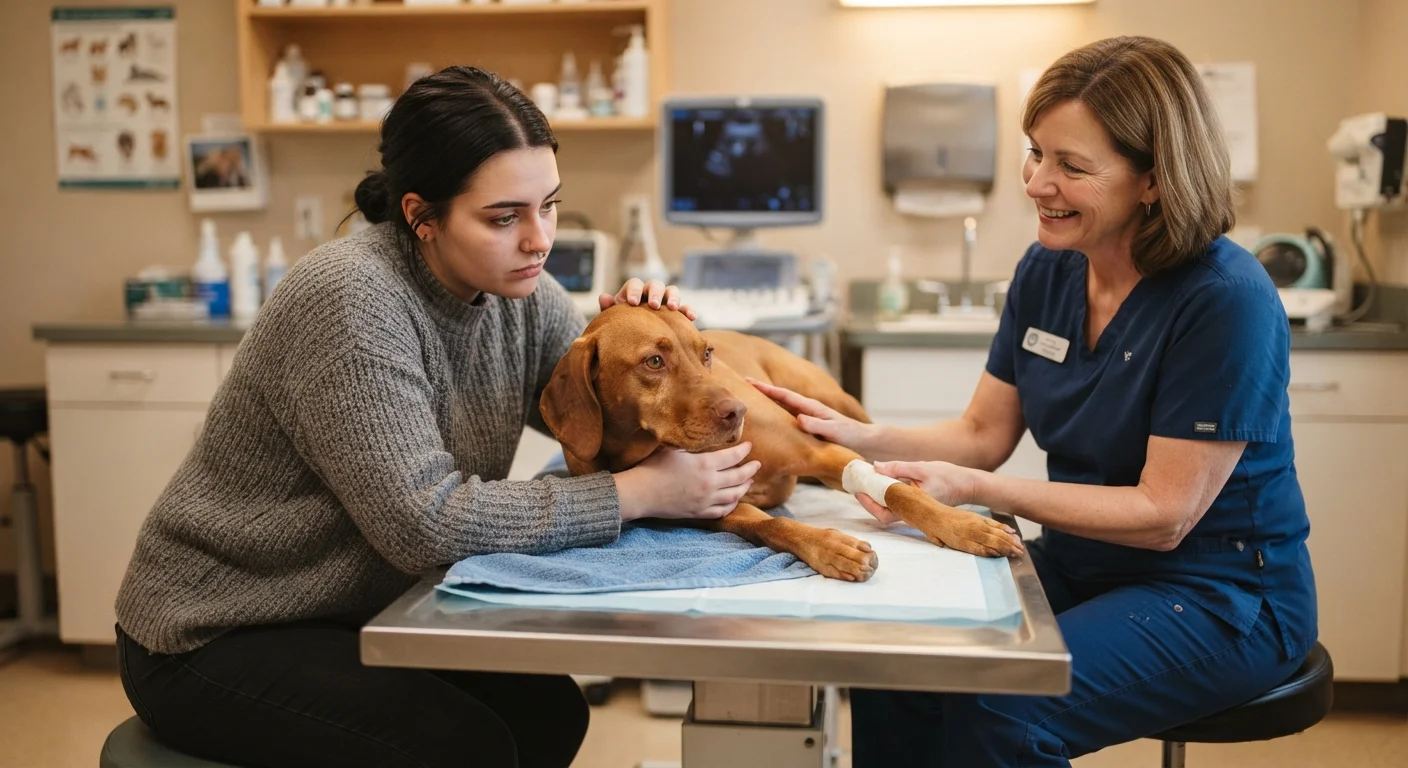
Photo: InsightsTurbo.com | Kickstart Your Knowledge Quest editorial
Why This Distinction Matters for New Owners
When you're new to dog ownership, almost every unfamiliar symptom can feel alarming. But not every sneeze warrants an emergency visit, and not every subtle change should be dismissed. The challenge is developing a reliable mental framework for telling the two apart.
This reference guide is designed as a quick lookup tool — something you can return to whenever your dog is acting off and you're not sure what to do next. It covers symptoms that need same-day or emergency care, and symptoms that are typically safe to monitor at home for 24–48 hours before deciding.
This article is general information only and is not a substitute for veterinary advice. When in doubt, always contact your vet directly.
| Emergency contact | Keep your vet's number and a local emergency clinic's number saved in your phone |
| Safe monitoring window | 24–48 hours for mild, isolated symptoms with no worsening |
| Always immediate: gum color | Pale, blue, white, or grey gums = call a vet now |
| GDV risk breeds | Large, deep-chested breeds (e.g., Great Danes, Standard Poodles) are at higher statistical risk |
| Phone triage | Most vet clinics will help you assess urgency over the phone before you drive in |
Symptoms That Need Immediate Veterinary Attention
The following signs warrant a call to your vet or an emergency animal clinic right away. Do not wait to see if they improve.
- Difficulty breathing — labored breathing, open-mouth panting at rest, blue or grey gums
- Collapse or sudden weakness — inability to stand, unresponsiveness, or severe disorientation
- Suspected poisoning — exposure to known toxins (chocolate, xylitol, certain plants, medications), combined with vomiting, tremors, or lethargy
- Bloated, hard, or distended abdomen — especially in larger breeds; can indicate gastric dilatation-volvulus (GDV), a life-threatening emergency
- Seizures — any seizure lasting more than two minutes, or multiple seizures in a short time
- Uncontrolled bleeding — wounds that don't stop bleeding after gentle pressure applied for five minutes
- Suspected broken bones or severe trauma — after a road accident, fall, or attack
- Eye injuries or sudden vision changes — including cloudiness, squinting, or visible damage to the eye
- Straining to urinate with no output — particularly in male dogs; can signal a urinary blockage
GDV (Gastric Dilatation-Volvulus)
A life-threatening condition where the stomach fills with gas and twists on itself. It requires emergency surgery and is most common in large, deep-chested breeds. Early signs include a swollen abdomen, unproductive retching, and distress.
Triage
The process of assessing how urgent a medical situation is and prioritizing care accordingly. In pet health, phone triage with your vet can help you decide whether to come in immediately or monitor at home.
Baseline
Your dog's normal, healthy state — including typical energy levels, appetite, stool consistency, and behavior. Knowing your dog's baseline makes it much easier to notice when something is genuinely off.
Anal glands
Small scent glands located on either side of a dog's anus. They can become impacted or infected, causing scooting, licking, or discomfort. A vet or groomer can express them as part of routine care.
Urinary blockage
A condition where urine cannot pass through the urethra, often due to a stone or plug. It is painful and potentially fatal if untreated. Straining to urinate with little or no output is a red-flag symptom.
Symptoms Worth Monitoring — But Not Automatically an Emergency
These signs are worth tracking closely. If they persist beyond 24–48 hours, worsen, or are accompanied by any of the emergency symptoms above, contact your vet.
- One or two episodes of vomiting or loose stool — common after dietary changes or scavenging; monitor for blood, frequency, or lethargy
- Mild limping — if your dog is still bearing weight and otherwise acting normally, rest and observation for a day is reasonable
- Reduced appetite for one day — dogs occasionally skip meals; concern grows if it extends beyond 48 hours or is paired with lethargy
- Occasional sneezing or mild eye discharge — often environmental; persistent or worsening warrants attention
- Ear scratching without other symptoms — worth a vet check at your next routine appointment if ongoing, but rarely an emergency
- Scooting on the floor — often related to anal glands and can be addressed at a routine vet or grooming visit
If you're ever genuinely unsure, calling your vet's office for a phone consultation is always a reasonable first step — most clinics are happy to help you triage. For broader context on caring for a new dog, see our first-time dog owner guide.
Building Confident Judgment Over Time
Knowing your dog's baseline is the most underrated skill in pet health. When you know what's normal for your individual dog — their typical energy level, eating habits, stool consistency, and sleep patterns — deviations become much easier to spot and evaluate accurately.
Regular vet checkups aren't just for sick dogs. Annual or semi-annual wellness visits help establish that baseline on record, keep vaccinations current, and give you a relationship with a vet you trust before a crisis hits. See our overview of vet schedules and preventive care for what routine care typically involves.
Body condition is another thing worth paying attention to over time. Weight changes — in either direction — can be early indicators of health issues. Our article on maintaining a healthy weight for your dog explains how vets assess body condition and why it matters for long-term health.
This article is for general informational purposes only and does not constitute veterinary advice. Always consult a licensed veterinarian for guidance specific to your dog's health.
The content provided on our blog site traverses numerous categories, offering readers valuable and practical information. Readers can use the editorial team’s research and data to gain more insights into their topics of interest. However, they are requested not to treat the articles as conclusive. The website team cannot be held responsible for differences in data or inaccuracies found across other platforms. Please also note that the site might also miss out on various schemes and offers available that the readers may find more beneficial than the ones we cover.