
Living Out of a Carry-On: The Trade-Offs Nobody Talks About

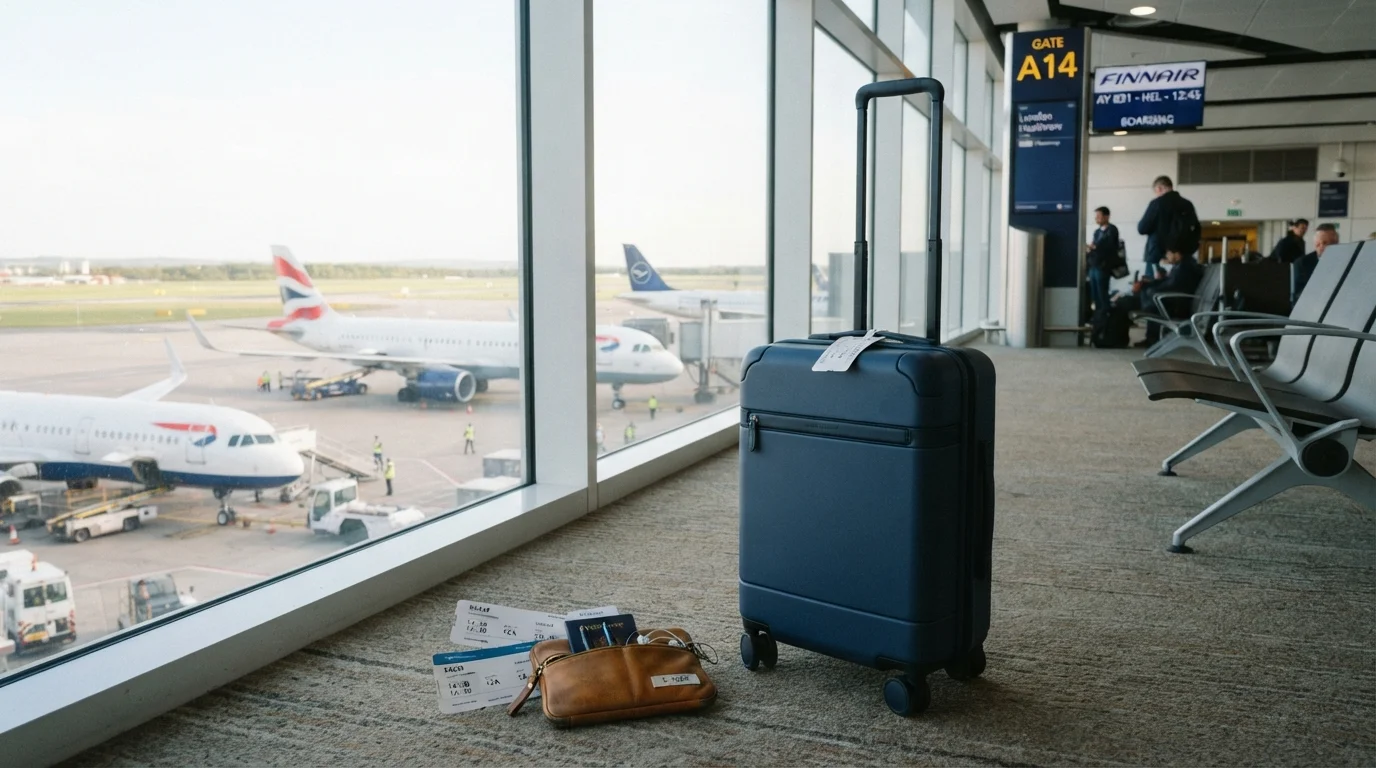
Photo: InsightsTurbo.com | Kickstart Your Knowledge Quest editorial
Key Takeaways
- Carry-on-only travel eliminates checked bag fees and baggage claim wait times entirely.
- Packing into a single small bag forces meaningful trade-offs in clothing variety and gear.
- Trip length, destination climate, and activity type heavily influence whether one bag is realistic.
- Liquid and prohibited item restrictions are stricter when you have no checked luggage option.
- Many travelers find the freedom worth the constraints — but it requires honest self-assessment first.
No checked bag fees saves meaningful money
Domestic checked bag fees commonly run $35–$45 per bag each way, meaning a round trip can cost $70–$90 extra. Over several trips a year, carry-on-only travel adds up to real savings.
Skip baggage claim and board faster
Bypassing the baggage carousel cuts 20–40 minutes off your arrival routine and eliminates the anxiety of waiting to see if your bag made the connection.
Reduced risk of lost or delayed luggage
When your bag stays with you in the cabin, airlines can't misroute it. Lost luggage is a genuine disruption that carry-on travel largely sidesteps.
Forces intentional, efficient packing habits
The constraint of limited space encourages travelers to build versatile capsule wardrobes and think critically about what they actually use — a skill that carries over to future trips.
Greater mobility on arrival
Navigating cobblestone streets, metro stairs, or crowded hostels with a single lightweight bag is significantly easier than hauling a 50-pound checked suitcase across unfamiliar cities.
Strict liquid rules limit toiletry options
TSA's 3-1-1 rule caps liquids at 3.4 oz per container in a single quart-sized bag. Specialty skincare, full-size shampoos, and liquid medications require workarounds or advance planning.
Limited wardrobe for longer or varied trips
Multi-climate itineraries, formal events, or outdoor adventure gear rarely fit comfortably into a standard carry-on. You'll make compromises or pack less than feels comfortable.
Overhead bin space isn't guaranteed
On full flights — especially regional jets with smaller bins — gate agents can require you to check your carry-on at the last moment, undermining the entire strategy and sometimes incurring fees.
Souvenir shopping becomes complicated
Buying anything bulky or breakable means either shipping it home, checking a bag on the return, or leaving it behind — all of which add friction to an otherwise seamless system.
Size restrictions vary by airline and region
Budget carriers in Europe and elsewhere apply carry-on dimensions and weight limits that are stricter than US domestic norms, meaning a bag that's legal on one leg may cost extra on another.
The Real Appeal of One-Bag Travel
The carry-on-only movement isn't just a travel trend — it's a response to a genuine frustration. Checked bag fees, carousel waits, and the creeping dread of a lost suitcase have pushed a lot of travelers toward radical simplicity. And for many trips, it genuinely works.
The mobility advantage alone is significant. Arriving in a new city and walking straight out of the terminal — no waiting, no trolley hunting, no negotiating luggage through a crowded subway car — changes the texture of travel in a meaningful way. For smart travel habits that make every trip smoother, packing light sits near the top of most experienced travelers' lists.
No checked bag fees saves meaningful money
Domestic checked bag fees commonly run $35–$45 per bag each way, meaning a round trip can cost $70–$90 extra. Over several trips a year, carry-on-only travel adds up to real savings.
Skip baggage claim and board faster
Bypassing the baggage carousel cuts 20–40 minutes off your arrival routine and eliminates the anxiety of waiting to see if your bag made the connection.
Reduced risk of lost or delayed luggage
When your bag stays with you in the cabin, airlines can't misroute it. Lost luggage is a genuine disruption that carry-on travel largely sidesteps.
Forces intentional, efficient packing habits
The constraint of limited space encourages travelers to build versatile capsule wardrobes and think critically about what they actually use — a skill that carries over to future trips.
Greater mobility on arrival
Navigating cobblestone streets, metro stairs, or crowded hostels with a single lightweight bag is significantly easier than hauling a 50-pound checked suitcase across unfamiliar cities.
Where the Constraints Start to Bite
The limitations of carry-on-only travel tend to surface around day four or five of a trip, or the moment your itinerary shifts unexpectedly. Packing for one climate is manageable; packing for two in the same bag is genuinely hard.
Liquid restrictions are the most underestimated friction point. TSA's 3-1-1 rule is firm, and it shapes every toiletry decision you make. Travelers with specific skincare routines, prescription liquids, or a preference for full-size products will feel this constraint acutely. If you're curious how experienced minimalist packers navigate this, structured packing systems offer a useful starting framework.
Strict liquid rules limit toiletry options
TSA's 3-1-1 rule caps liquids at 3.4 oz per container in a single quart-sized bag. Specialty skincare, full-size shampoos, and liquid medications require workarounds or advance planning.
Limited wardrobe for longer or varied trips
Multi-climate itineraries, formal events, or outdoor adventure gear rarely fit comfortably into a standard carry-on. You'll make compromises or pack less than feels comfortable.
Overhead bin space isn't guaranteed
On full flights — especially regional jets with smaller bins — gate agents can require you to check your carry-on at the last moment, undermining the entire strategy and sometimes incurring fees.
Souvenir shopping becomes complicated
Buying anything bulky or breakable means either shipping it home, checking a bag on the return, or leaving it behind — all of which add friction to an otherwise seamless system.
Size restrictions vary by airline and region
Budget carriers in Europe and elsewhere apply carry-on dimensions and weight limits that are stricter than US domestic norms, meaning a bag that's legal on one leg may cost extra on another.
Overhead bin availability is also out of your control. On full regional flights, gate agents routinely require passengers to check bags at no charge — but sometimes fees apply depending on the fare class and timing.
When to Reconsider the One-Bag Rule
Carry-on-only isn't the right call for every trip, and that's worth saying plainly. A two-week itinerary spanning beach towns and mountain hiking, or a trip anchored around a formal wedding, pushes against the limits of a single 22-inch bag without real sacrifice.
Airline Rules Vary — Always Verify
The honest question isn't "can I fit this in a carry-on?" but "will I enjoy the trip more with fewer things or more things?" Those are different calculations for different travelers. Weighing minimalist versus scenario-ready packing is a worthwhile exercise before any complex itinerary.
Consider your destination's seasonal context too — a colder climate or rainy shoulder season means bulkier layers that eat up bag space fast. Understanding off-season travel realities can help you anticipate what gear you'll actually need before you commit to a packing strategy.
20–40 min
Time saved skipping baggage claim
Industry estimates and traveler reports consistently cite this range for typical domestic and short-haul international arrivals.
$70–$90
Typical round-trip checked bag cost
Based on common US domestic airline fee schedules for a single checked bag, subject to change by carrier and fare class.
The content provided on our blog site traverses numerous categories, offering readers valuable and practical information. Readers can use the editorial team’s research and data to gain more insights into their topics of interest. However, they are requested not to treat the articles as conclusive. The website team cannot be held responsible for differences in data or inaccuracies found across other platforms. Please also note that the site might also miss out on various schemes and offers available that the readers may find more beneficial than the ones we cover.