
Trip Planning

Destination Research That Goes Beyond the Top Ten Lists

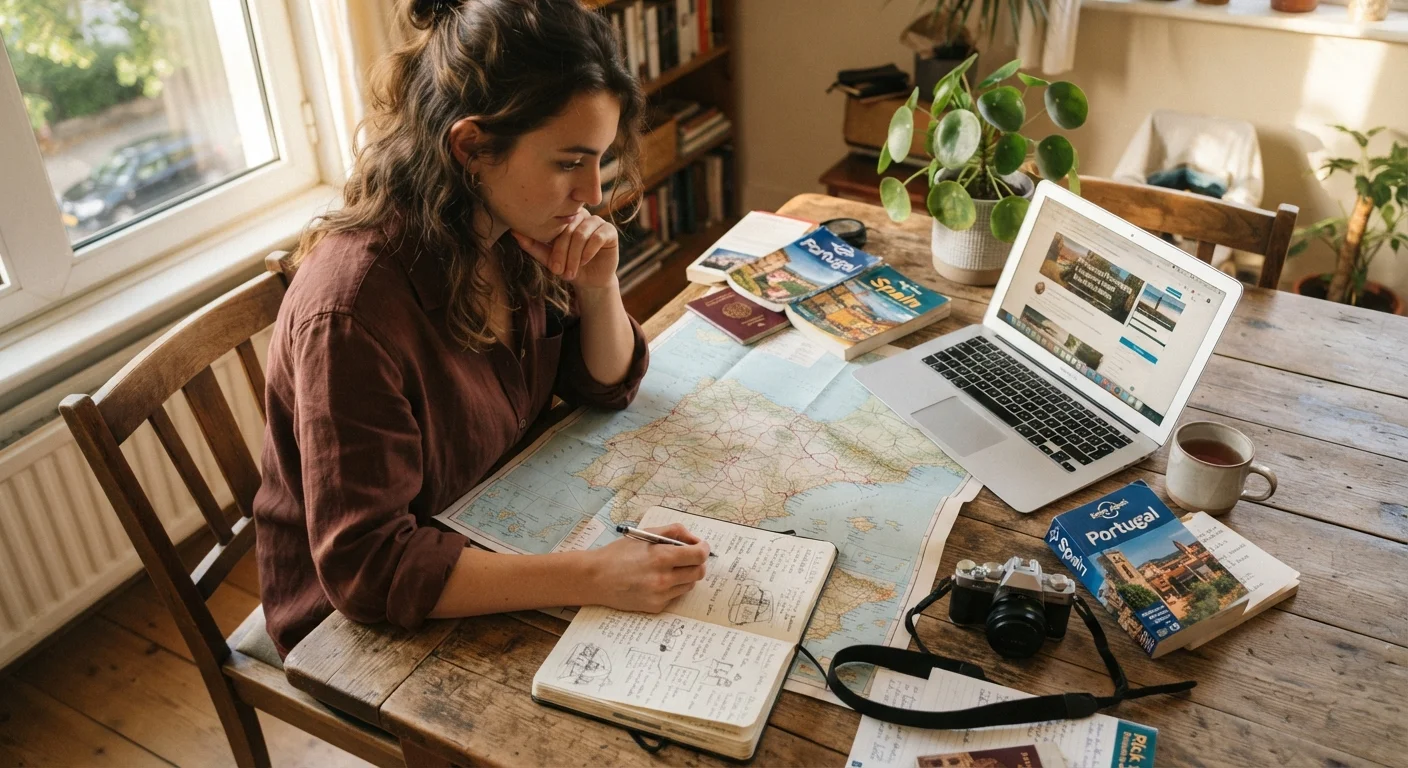
Destination Research That Goes Beyond the Top Ten Lists

Photo: InsightsTurbo.com | Kickstart Your Knowledge Quest editorial

Surface-level destination guides miss the detail that makes trips smoother. Here are more reliable research methods for understanding a place before you go.

Key Takeaways

  • Top-ten lists reveal what's popular but rarely explain what a destination actually feels like day to day.
  • Government travel pages, local news archives, and community forums surface context that curated guides omit.
  • Cross-referencing multiple source types — not just travel blogs — produces a more accurate picture of any place.
  • Understanding seasonality, infrastructure, and crowd patterns before you book saves significant time and money.
  • Researching overtourism signals helps you make more ethical and enjoyable travel choices.

Why Top-Ten Lists Aren't Enough

Most destination research starts the same way: a quick search surfaces a listicle of unmissable sights, a few stock photos, and a handful of vague superlatives. That content is fine for inspiration, but it tends to flatten real places into highlight reels. You end up knowing that a city has "vibrant street food" without knowing whether the neighborhood you'll actually be staying in has a working ATM or reliable transit access.

The goal of deeper research isn't to become a destination expert — it's to close the gap between expectation and reality. That gap is where most trip friction lives: the restaurant that closed, the visa requirement nobody mentioned, the festival that books out accommodations six months early. Good research makes those surprises far less likely.

If you're starting from scratch, the full trip-planning framework walks through the whole process end to end. This guide focuses specifically on sourcing and evaluating destination information more critically.

Better Sources for Genuine Destination Insight

Moving beyond curated travel content doesn't require hours of digging — it just requires looking in different places. Here are the source types that consistently surface more useful, honest information:

1

Read local English-language news sources for your destination

Travel publications describe destinations as visitors see them; local journalism reveals how residents actually live there. Infrastructure problems, political tensions, seasonal flooding, or popular events rarely make it into glossy travel guides but show up in regional reporting.
Example: Before a trip to a coastal city, searching its name alongside 'flooding' or 'transit strike' in a news aggregator can surface patterns that would have been invisible from a travel blog.
2

Cross-check official government travel pages for entry and safety information

Visa rules, vaccination requirements, and safety advisories change more frequently than most travel articles are updated. Official government sources — such as travel.state.gov for US citizens — reflect current conditions and carry official weight.
Example: A traveler heading to Southeast Asia might discover on the State Department site that their destination requires proof of onward travel, a detail most travel blogs don't flag.
3

Consult destination-specific communities and forums

Expat forums, regional subreddits, and Facebook groups for specific destinations host people who live there or visit regularly. Their advice is granular, current, and often refreshingly candid about what doesn't work.
Example: A quick forum search for 'neighborhoods to avoid' or 'getting from airport to city center' in a specific destination typically yields more specific and practical answers than any travel article.
4

Map the destination's seasonal rhythm before setting dates

Weather, crowd levels, local holidays, and price peaks are tightly linked to the calendar. Visiting during a national holiday can mean packed transport and closed businesses; visiting during shoulder season can mean better conditions and fewer people.
Example: A traveler researching the American Southwest benefits from knowing that summer heat in places like Death Valley can hit dangerous levels, fundamentally reshaping which parks are viable.
5

Look for crowd and capacity signals when researching popular sites

Some destinations and attractions have timed entry, strict capacity limits, or reservation systems that require advance booking — sometimes months out. Discovering this late can mean missing the sites that motivated the trip in the first place.
Example: Several US national parks now require timed-entry reservations during peak season; the lesser-visited parks often offer comparable landscapes without the logistical pressure.
6

Assess safety context with a structured framework, not just gut feel

Safety research done casually often leads to either unnecessary avoidance or blind spots. A structured approach — government advisories, recent local news, and firsthand community reports — gives a more accurate picture than headlines alone.
Example: The destination safety assessment framework walks through how to layer government data with local context to reach a grounded judgment.

A Note on Source Currency

Travel conditions — visa rules, entry requirements, operating hours, safety advisories — can shift with little notice. Even recently published articles may reflect outdated information. Always verify time-sensitive details directly with official government sources and destination operators before finalizing plans. This is especially important for international travel, where requirements vary significantly by passport and nationality.

Once you've assessed a destination thoroughly, you may also want to consider how your travel style shapes the experience. The city break versus slow travel comparison outlines how pace affects what you'll actually see and absorb.

Quick Actions You Can Take Right Now

Research quality compounds over time, but you can make meaningful progress in an afternoon. Start with these moves before you commit to any booking:

high Open the US State Department's travel page (travel.state.gov) and look up your destination — note any advisories, visa requirements, or entry conditions listed there.
high Search for a subreddit or Facebook group dedicated to your destination and read the last 30 days of posts to get a current, on-the-ground pulse.
medium Pull up a weather and climate chart for your destination by month and confirm your travel dates align with your preferred conditions — not just off-peak pricing.
high Search your destination name plus 'entry requirements' in a news aggregator to catch any recently changed rules that static travel guides might not yet reflect.
medium Identify the two or three sites or experiences central to your trip and check whether they require advance reservations — book or add to a calendar immediately if so.

72%

Travelers who encounter a planning surprise mid-trip

According to travel industry surveys cited by the World Travel & Tourism Council, the majority of travelers report at least one significant logistical surprise that could have been identified through pre-trip research.

3–6 months

Advance booking window for high-demand park entries

Several US National Park timed-entry systems, including those managed by Recreation.gov, open reservation windows three to six months ahead of peak season dates.

Putting It All Together Before You Book

The goal isn't to over-research — it's to reach a confident baseline. That means understanding the destination's general character, knowing your logistical constraints, and having a clear sense of any safety or entry considerations that need to be verified through official sources.

For destinations that are more remote or unfamiliar, additional pre-trip groundwork pays off. The pre-trip readiness checklist covers entry requirements, health prep, connectivity, and emergency planning in practical detail.

It's also worth factoring in crowd dynamics. Understanding what overtourism actually means helps you choose timing and neighborhoods that make for a better experience — for you and for the communities you're visiting. And if your destination hunt is still open, the Destinations Guide is a solid place to explore options by region and character.

Build a Simple Research Document

Rather than keeping dozens of browser tabs open, consolidate what you find into a single shared document organized by category: entry requirements, accommodation areas, seasonal notes, and community-sourced tips. This makes gaps obvious and gives travel companions a shared reference point. Even a basic outline catches contradictions between sources that are easy to miss when research is scattered.

Travel & Trips Editorial Team

InsightsTurbo.com | Kickstart Your Knowledge Quest

Travel & Trips Editorial Team is the collective byline for our editorial team and contributor network. Articles published under this byline or an editorial pen name are researched, written, and reviewed according to our editorial standards for clarity, consistency, and independence before publication.

Trip PlanningDestinations GuideTravel Tips
View author profile

The content provided on our blog site traverses numerous categories, offering readers valuable and practical information. Readers can use the editorial team’s research and data to gain more insights into their topics of interest. However, they are requested not to treat the articles as conclusive. The website team cannot be held responsible for differences in data or inaccuracies found across other platforms. Please also note that the site might also miss out on various schemes and offers available that the readers may find more beneficial than the ones we cover.