
Urban Roads vs. Rural Roads: The Hidden Differences in Risk

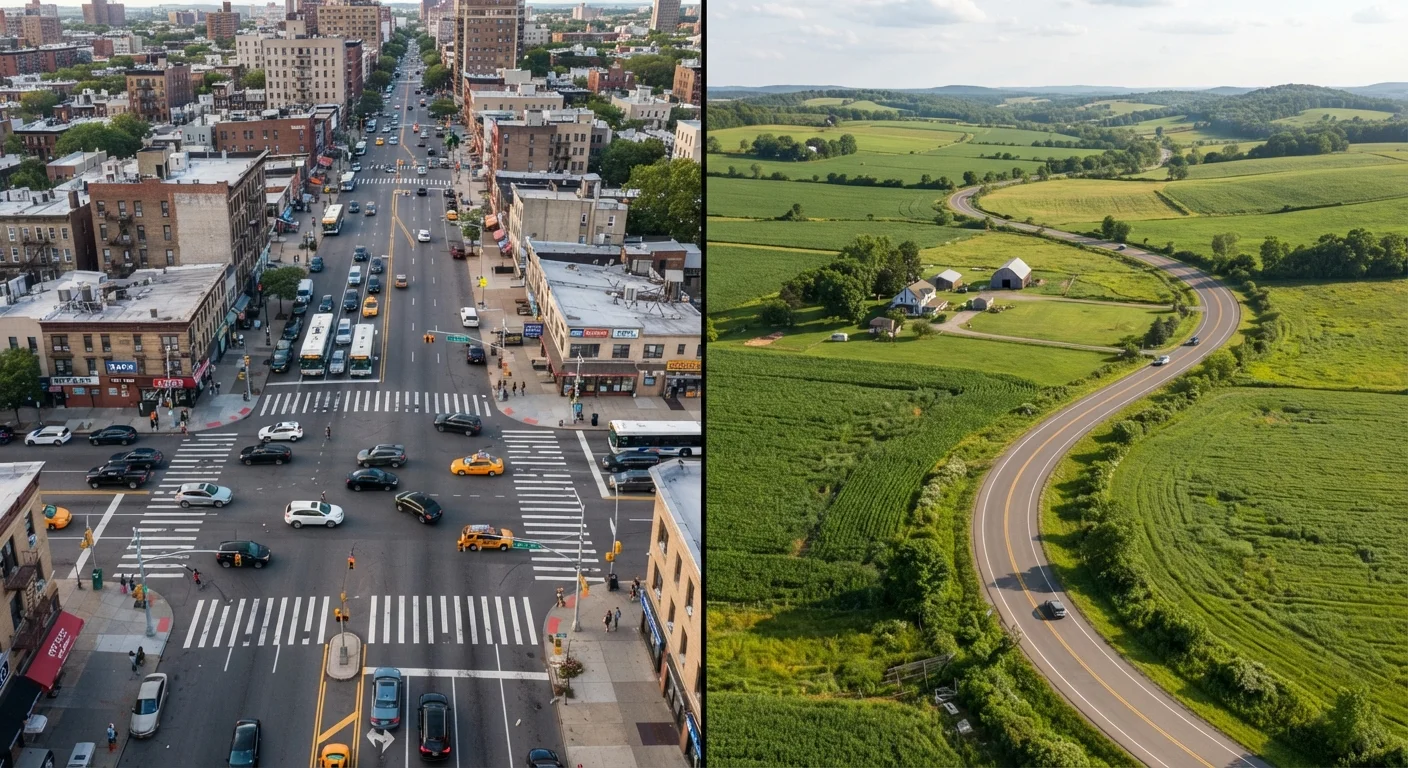
Photo: InsightsTurbo.com | Kickstart Your Knowledge Quest editorial
Key Takeaways
- Rural roads account for a disproportionately high share of fatal crashes despite carrying less traffic than urban roads.
- Urban driving hazards include pedestrians, cyclists, frequent stops, and complex intersections.
- Rural roads pose risks from higher speeds, limited lighting, wildlife, and delayed emergency response times.
- Adapting your scanning habits and speed choices to the environment is essential for both settings.
- New drivers should consciously shift their mental approach when transitioning between road types.
Why the Road Type You're On Changes Everything
Most new drivers learn the basics in one familiar environment - typically suburban streets - and assume the same instincts will carry over everywhere. They often don't. Urban and rural roads are fundamentally different ecosystems, each with its own hazard profile, speed dynamics, and consequences when things go wrong.
Understanding these differences isn't just an academic exercise. According to the National Highway Traffic Safety Administration (NHTSA), rural roads consistently account for a disproportionate share of traffic fatalities in the US despite carrying a smaller proportion of total vehicle miles traveled. Meanwhile, urban roads generate far more non-fatal crashes due to sheer traffic density and pedestrian interaction. Knowing which type of danger you're facing - and adjusting accordingly - is one of the most practical safety skills you can develop.
| Urban Roads | Rural Roads | |
|---|---|---|
| Typical speed range | 15-45 mph | 45-70 mph |
| Primary hazard type | Pedestrians, cyclists, intersections | Blind bends, wildlife, surface variation |
| Crash frequency | Higher - more incidents overall | Lower frequency, higher fatality rate |
| Lighting availability | Generally well-lit at night | Often unlit; headlights critical |
| Emergency response time | Typically faster | Can be significantly delayed |
| Key scanning habit | Close-range, high-frequency checks | Long-range, anticipating bends and verges |
The Urban Road Environment
City and suburban driving is defined by density and unpredictability. Pedestrians step off curbs without warning, cyclists filter between lanes, rideshare vehicles double-park, and intersections can change status in seconds. The pace feels fast even at low speeds because the volume of decisions per mile is extremely high.
Key urban hazards to anticipate
- Pedestrian and cyclist conflict zones: Crosswalks, bike lanes, and unmarked crossing points create constant interaction. Scan for movement on sidewalks - especially near parked vehicles that can obscure someone stepping out.
- Intersection complexity: Multi-phase signals, protected left turns, and pedestrian crossing phases all require you to track more than just the traffic light color. Watch for vehicles running late yellows from cross-streets.
- Door zones: Parked cars present a real risk. Drivers and passengers opening doors without checking traffic is one of the most common urban collision causes.
- Stop-and-go fatigue: Constant deceleration and acceleration increases the risk of rear-end collisions. Maintain enough following distance to stop safely even when the car in front brakes sharply.
For a broader look at the habits that make urban driving more dangerous, see tailgating and speeding risks.
Urban Tip: Build a Pre-Intersection Routine
The Rural Road Environment
Rural roads feel open and forgiving - that feeling is deceptive. The combination of higher posted speeds, narrow lanes, limited lighting, reduced road markings, and long distances from emergency services creates a more severe consequence environment than city streets. A mistake that might cause a fender-bender in a parking lot can become a fatal event on a 55 mph country road.
Key rural hazards to anticipate
- Blind bends and crests: Rural roads frequently lack sight lines that match the speed limit. An oncoming vehicle, a stopped tractor, or debris around a bend gives you very little reaction time.
- Wildlife and livestock: Animal crossings are genuinely unpredictable, particularly at dawn and dusk. In rural states, deer strikes are among the most common animal-related incidents.
- Road surface variation: Gravel, loose chippings, uneven pavement edges, and unmarked dips are common. Grip levels can change rapidly - especially after rain. See our guide to driving in adverse conditions for surface-specific techniques.
- Speed complacency: Sparse traffic and open views can lead drivers to underestimate how fast they're going. Regular glances at the speedometer help counteract this.
- Delayed emergency response: If a crash occurs in a remote area, help may take significantly longer to arrive. This raises the stakes of every risk you take.
To sharpen how you read the road in either environment, hazard anticipation techniques are a learnable skill worth practising deliberately.
Don't Let Open Roads Breed Complacency
Adapting Your Driving Across Environments
The most important shift is mental: when you change road types, consciously recalibrate. Urban driving rewards high situational awareness at close range - scanning doorways, sidewalks, and the car immediately ahead. Rural driving rewards longer-range hazard scanning - reading bends, watching field edges for animal movement, and maintaining appropriate speed for sight-distance rather than just the posted limit.
Practical transitions to practise
- Reset your following distance: Higher rural speeds require much greater stopping distances. The two-second rule used in town may need to become three or four seconds on a 55 mph rural road.
- Adjust your scanning pattern: In urban areas, check mirrors frequently and scan intersections early. On rural roads, extend your gaze further down the road and watch verges for movement.
- Manage speed actively: Don't just match the flow - choose a speed appropriate to visibility. This is especially important at night when rural roads become significantly more hazardous.
- Use passing cautiously: Overtaking on rural two-lane roads is a high-risk manoeuvre. Only pass when you have a clear sight line of several hundred yards and a confirmed safe gap.
Building confidence across both environments - including higher-speed roads - is covered in our motorway driving introduction.
The content provided on our blog site traverses numerous categories, offering readers valuable and practical information. Readers can use the editorial team’s research and data to gain more insights into their topics of interest. However, they are requested not to treat the articles as conclusive. The website team cannot be held responsible for differences in data or inaccuracies found across other platforms. Please also note that the site might also miss out on various schemes and offers available that the readers may find more beneficial than the ones we cover.