
Building a Balanced Plate Without Following a Strict Diet

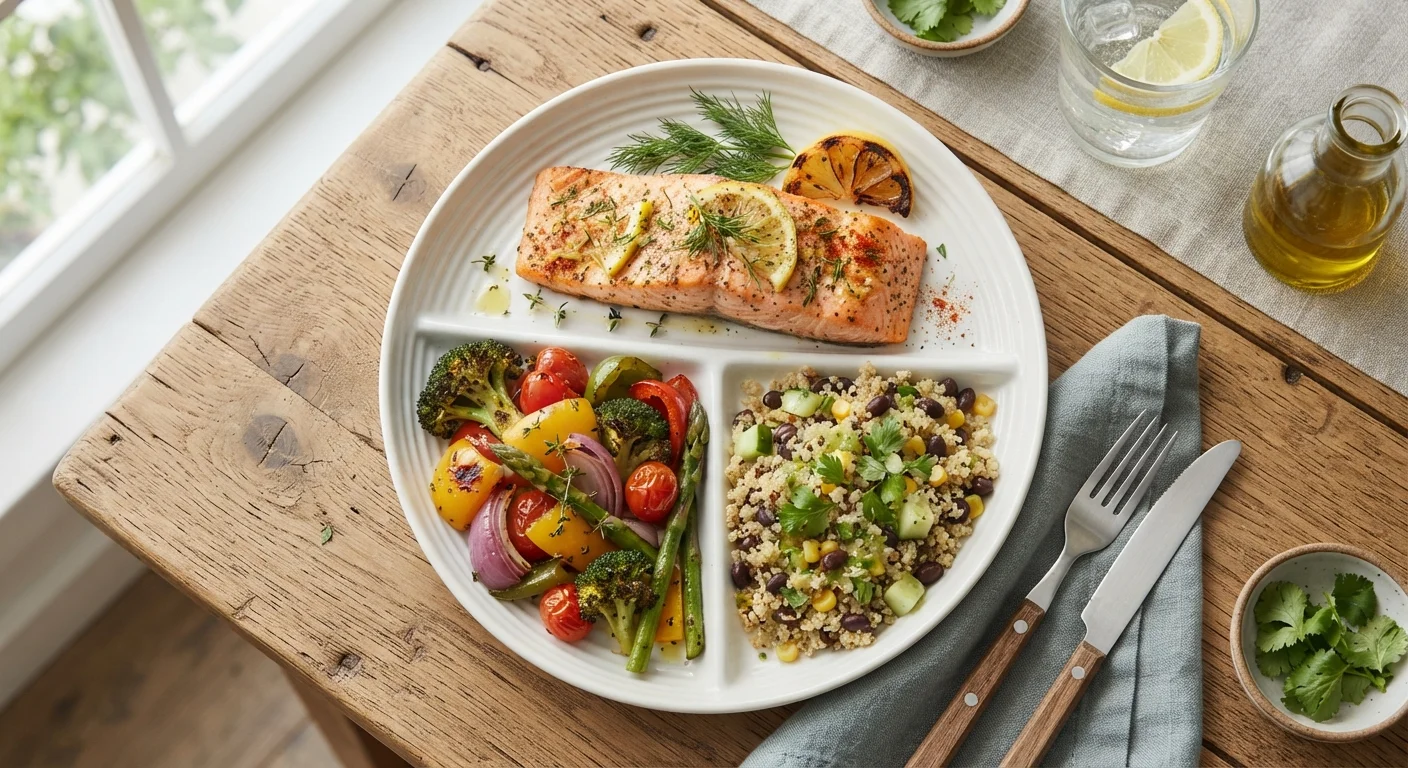
Photo: InsightsTurbo.com | Kickstart Your Knowledge Quest editorial
Key Takeaways
- Half your plate filled with vegetables and fruit covers most of your fiber and micronutrient needs.
- Pairing protein with complex carbohydrates helps sustain energy levels between meals.
- You don't need a strict diet - a simple visual framework is enough to guide balanced eating.
- Healthy fats support satiety and help your body absorb fat-soluble vitamins.
- Small, repeatable habits at each meal matter more than occasional perfect eating.
Why a Framework Beats a Strict Diet
Strict diet plans often fail not because people lack willpower, but because they require perfect conditions: specific ingredients, exact portions, and no room for real life. A flexible plate-building framework works differently - it gives you a repeatable structure that adapts to what's available, affordable, and realistic on any given day.
If you're new to thinking about food more intentionally, our nutrition fundamentals guide is a solid starting point before diving into the steps below. And if you've already explored some diet advice online and felt overwhelmed, you're not alone - the patterns that quietly undermine good intentions are well-documented. See common traps that derail healthy eating for what to watch for.
What you will need
The plate method used here is grounded in broadly accepted nutritional guidance - not a proprietary program or trend. It works at home, at a dining hall, or at a restaurant, without requiring calorie counting or meal prepping in advance.
Putting It All Together at Each Meal
Following the steps above at each meal creates a consistent rhythm without requiring you to think about nutrition in the abstract. After a few weeks of practice, you'll likely notice that meals built this way tend to leave you feeling more satisfied and more energized than unbalanced ones - not because of any single food, but because the combination of fiber, protein, fat, and complex carbs works together to regulate digestion and blood sugar response.
Fill half your plate with vegetables or fruit
This is the foundation of every balanced meal. Non-starchy vegetables - like leafy greens, broccoli, bell peppers, tomatoes, and cucumbers - are high in fiber and micronutrients while being low in calorie density. If you want to understand why volume matters as much as calorie count, see our article on calorie density and food volume.
Aim for variety across the week rather than the same vegetable every day. Fruit counts here too - it adds natural sweetness and additional nutrients alongside your vegetables.
Add a palm-sized portion of protein
Protein supports muscle maintenance, keeps you fuller longer, and plays a role in dozens of body functions. Aim for a portion roughly the size of your palm. Options include eggs, fish, poultry, beans, lentils, tofu, tempeh, or low-fat dairy.
Both plant-based and animal sources have distinct trade-offs - our guide on plant-based vs. animal protein explains what each type offers nutritionally so you can mix and match with confidence.
Add a cupped-handful of complex carbohydrates
Carbohydrates are your body's primary energy source - the goal is choosing ones that provide fiber and nutrients alongside that energy. Think whole grains like brown rice, quinoa, oats, or whole-wheat bread; starchy vegetables like sweet potato or corn also fit here.
A cupped hand is a practical rough guide to portion size. Complex carbs digest more slowly than refined ones, helping to prevent the energy dip that often follows a high-sugar or heavily processed meal.
Include a small amount of healthy fat
Dietary fat supports the absorption of fat-soluble vitamins (A, D, E, and K), contributes to satiety, and is essential for cell function. A thumb-sized portion of a fat source is a reasonable guide: a drizzle of olive oil, a small handful of nuts or seeds, a quarter of an avocado, or a tablespoon of nut butter.
You don't need to add fat as a separate ingredient to every meal - it's often already present in protein sources like eggs or oily fish. The goal is awareness, not addition.
Check your plate before eating
Before you sit down, take a quick visual scan. Does at least half the plate look like plants? Is there a protein source? Are the grains or starchy foods taking up roughly a quarter of the plate? If something is dramatically off-balance - an entire plate of pasta with no vegetables, for instance - it only takes one small adjustment to bring it closer to balance.
This isn't about perfection. It's a habit of noticing. Over time, this check becomes automatic and you'll find yourself building more balanced plates without thinking about it. For a structured way to evaluate your overall eating patterns, try our eating habits checklist.
For a deeper look at how to read the labels on packaged foods you're incorporating, our guide to reading nutrition labels removes the guesswork. And if you want these habits to carry over to your grocery runs, weekly grocery habits that support healthy eating offers simple routines that complement this plate-building approach.
This article is for general informational and educational purposes only and is not a substitute for advice from a qualified healthcare professional or registered dietitian. Individual nutritional needs vary - if you have specific health concerns or conditions, please consult a professional before making significant changes to your diet.
The content provided on our blog site traverses numerous categories, offering readers valuable and practical information. Readers can use the editorial team’s research and data to gain more insights into their topics of interest. However, they are requested not to treat the articles as conclusive. The website team cannot be held responsible for differences in data or inaccuracies found across other platforms. Please also note that the site might also miss out on various schemes and offers available that the readers may find more beneficial than the ones we cover.