
Soil, Compost, and Potting Mix: What the Labels Actually Mean

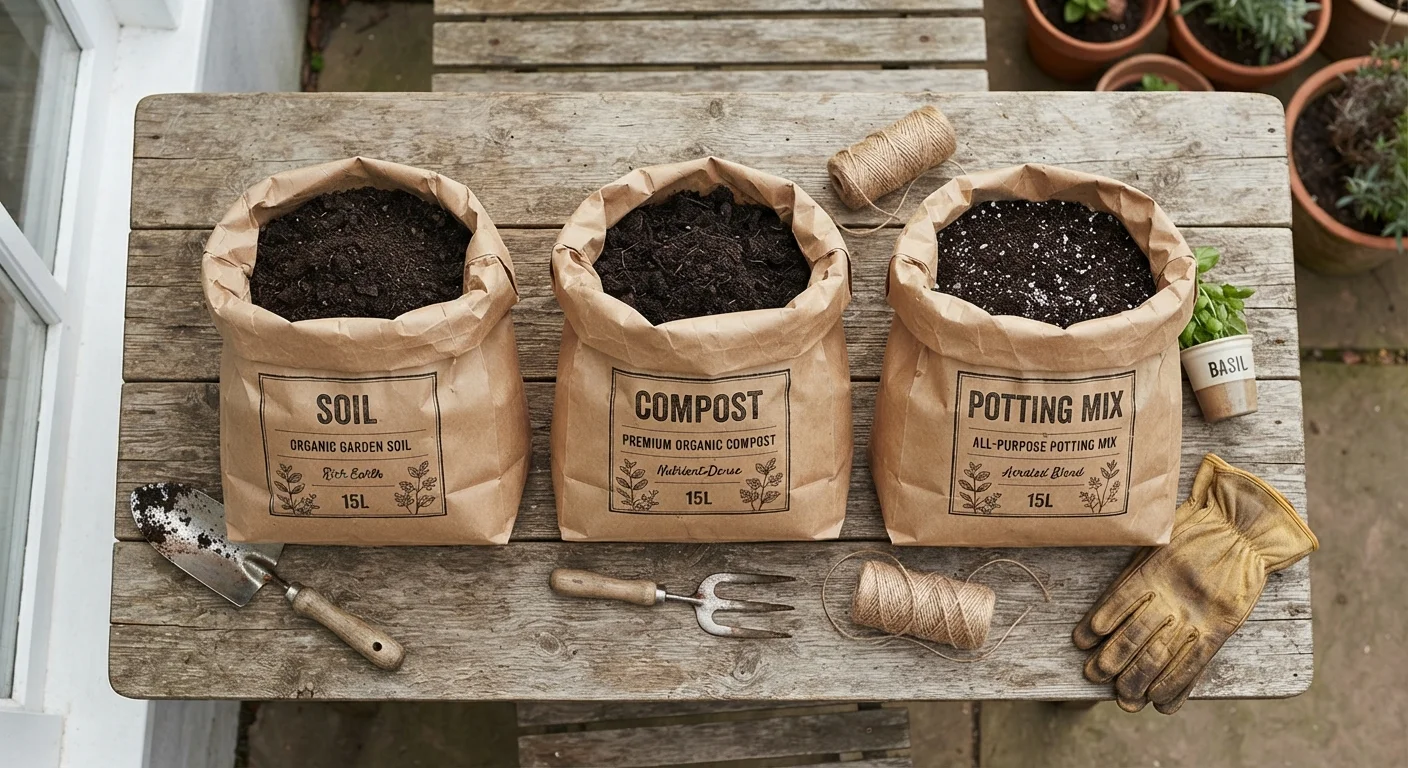
Photo: InsightsTurbo.com | Kickstart Your Knowledge Quest editorial
Why These Three Products Get Confused
Walk into any garden centre and you'll find bags labeled "garden soil," "compost," and "potting mix" sitting side by side, sometimes shelved as if they're interchangeable. They're not. Using the wrong one - say, filling a container with pure garden soil - can stunt your plants or kill them outright. Understanding what each product actually contains is one of the most practical things a new grower can do before spending a dollar.
The confusion is partly a labelling problem: manufacturers don't always follow strict definitions, and some products blend ingredients in ways that blur the categories. This reference breaks down what each term generally means, what it's designed to do, and when to reach for it.
| Garden Soil Best Use | In-ground beds and raised bed frames |
| Compost Best Use | Soil amendment and fertility booster |
| Potting Mix Best Use | Containers, pots, and planters |
| Can You Use Garden Soil in Pots? | Generally no - it compacts and limits root oxygen |
| Is Compost a Stand-Alone Growing Medium? | No - it's an amendment mixed into soil or potting mix |
| Does Potting Mix Contain Real Soil? | Usually not - it's a soilless engineered blend |
Garden Soil: The Foundation Layer
Garden soil is mineral-based growing medium - essentially processed or amended natural soil intended for use in the ground or raised beds. It's denser and heavier than potting mix, which is exactly what in-ground plants need: weight provides stability, and the mineral content supports long-term structure.
Most bagged garden soil has been screened to remove rocks and large debris, and many products include some organic matter like bark or compost to improve drainage. However, it compacts readily in containers, cutting off oxygen to roots. If you're setting up a raised bed, see our guide to raised beds vs. ground planting for how soil choice fits into that decision.
Use garden soil when: you're amending an in-ground bed, filling a raised bed frame, or topdressing existing lawn or garden areas.
Avoid it when: filling pots, window boxes, or any container - it will compact and drain poorly.
Garden Soil
A mineral-based growing medium, typically screened and amended, intended for use directly in the ground or in raised beds. Heavier and denser than potting mix.
Compost
Fully decomposed organic matter used to enrich and improve soil structure. It is an amendment added to growing media, not a stand-alone planting medium.
Potting Mix
A lightweight, soilless blend engineered for use in containers. Designed to drain freely and provide aeration for roots in an enclosed space.
Soil Amendment
Any material mixed into existing soil to improve its structure, drainage, fertility, or microbial activity. Compost, perlite, and sand are common examples.
Perlite
Expanded volcanic glass granules added to potting mixes to improve drainage and prevent compaction. Appears as small white or grey specks in the mix.
Coco Coir
A fibrous material made from coconut husks, often used in potting mixes as a sustainable alternative to peat moss for moisture retention.
Compost: The Soil Amendment, Not a Growing Medium
Compost is decomposed organic matter - food scraps, yard waste, and other biodegradable material broken down by microbes into a nutrient-rich, crumbly material. The key thing to understand: compost is an amendment, not a stand-alone growing medium. Plants don't generally grow directly in pure compost; it's added to soil or potting mix to improve fertility, water retention, and microbial activity.
Bagged compost at garden centres typically comes from composted plant material, manure, food waste, or some combination. Quality varies considerably. A well-made compost is dark, earthy-smelling, and uniform. If a bag smells like ammonia or has large uncomposted chunks, the process wasn't complete.
Thinking about making your own? Our article on composting at home gives an honest assessment of what it takes.
Use compost when: enriching garden beds before planting, mixing into potting blends, or topdressing established beds each season.
How much: A common general guideline is to work 2-3 inches of compost into the top several inches of garden soil, though your specific situation may call for more or less.
Labels Aren't Standardized
Potting Mix: Engineered for Containers
Potting mix (sometimes called potting soil, though it typically contains little or no actual soil) is specifically engineered to perform well inside containers. It's lightweight, drains quickly, and stays loose enough to allow oxygen to reach roots - all things that dense garden soil cannot do reliably in a pot.
Typical ingredients include peat moss or coco coir for moisture retention, perlite or vermiculite for drainage and aeration, and often some composted bark or slow-release fertilizer. Because containers don't have a surrounding ecosystem to replenish nutrients, many potting mixes include added fertilizers to give plants a head start.
If you're growing on a balcony or patio, potting mix is your go-to. Our container gardening starting point covers how to combine the right mix with the right containers for small-space growing.
Use potting mix when: filling any container, hanging basket, window box, or raised planter with limited drainage pathways.
Watch out for: specialty blends marketed for orchids, cacti, or seed-starting - these are formulated differently and aren't interchangeable with general-purpose potting mix.
2-3 inches
Typical compost layer added to garden beds
A commonly cited guideline in general horticultural practice for enriching beds before planting season.
~40%
Typical perlite or coir content in quality potting mixes
Lightweight drainage materials often make up a significant portion of commercial potting blends to prevent compaction in containers.
The content provided on our blog site traverses numerous categories, offering readers valuable and practical information. Readers can use the editorial team’s research and data to gain more insights into their topics of interest. However, they are requested not to treat the articles as conclusive. The website team cannot be held responsible for differences in data or inaccuracies found across other platforms. Please also note that the site might also miss out on various schemes and offers available that the readers may find more beneficial than the ones we cover.