
Raised Beds vs. Ground Planting: Which Setup Suits a New Gardener Better?

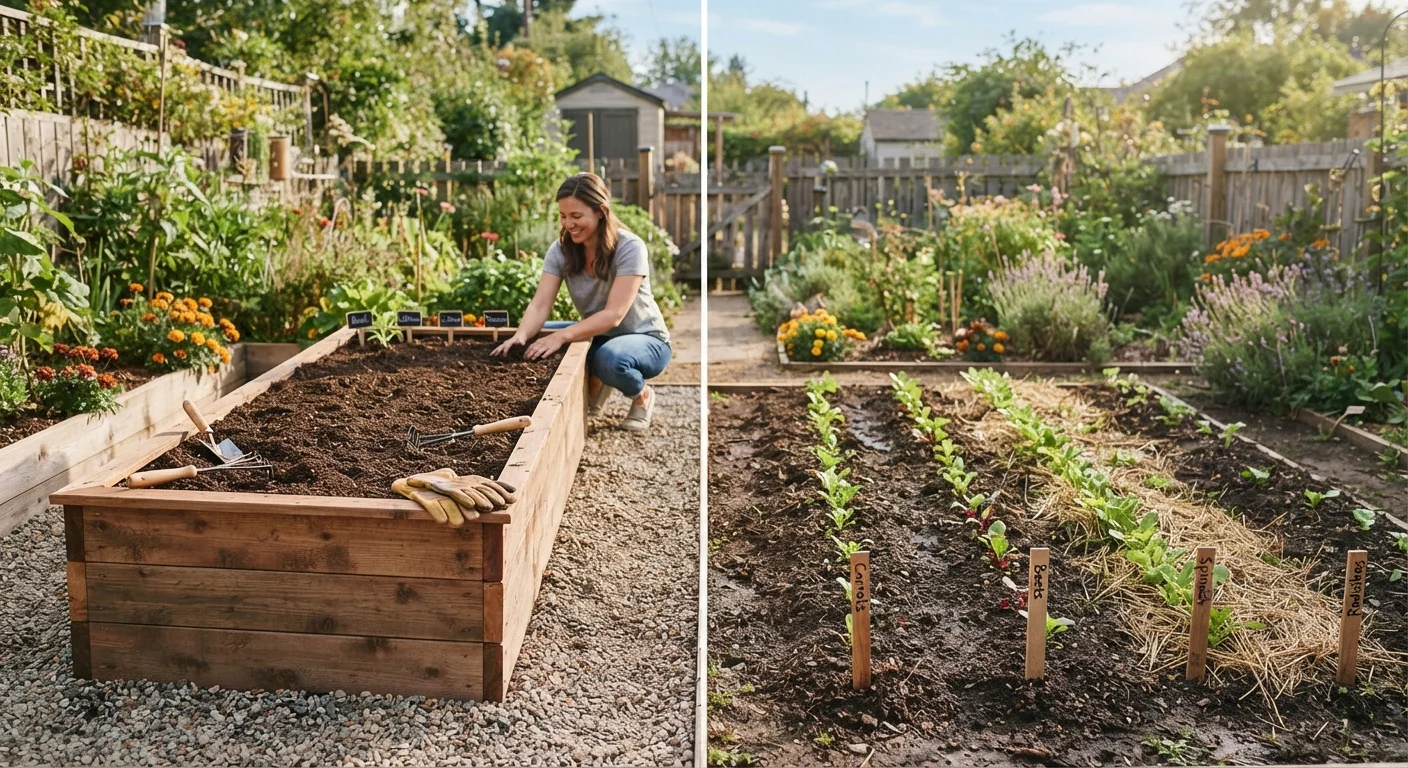
Photo: InsightsTurbo.com | Kickstart Your Knowledge Quest editorial
Key Takeaways
- Raised beds give you immediate control over soil quality, which matters most when native soil is poor or compacted.
- In-ground planting costs less to start but typically requires more prep work to improve drainage and soil structure.
- Raised beds warm up faster in spring, extending the growing season in cooler climates.
- Ground plots scale more easily for larger harvests once soil is improved over time.
- Your budget, physical comfort, and existing yard conditions should guide which method you start with.
What You're Actually Choosing Between
For a new gardener, this decision feels bigger than it needs to be. At its core, you're choosing where your plants' roots will live - in a contained frame filled with imported soil, or directly in the ground beneath your yard. Everything else - cost, effort, weed pressure, drainage - flows from that single difference.
Before you commit to either, it's worth doing a honest read of your specific conditions. Check out our garden readiness checklist to assess your site before you break ground. And if you're starting from zero, starting a garden from scratch offers a grounded overview of what first-time growers genuinely need.
| Criterion | Raised Beds | Ground Planting |
|---|---|---|
| Upfront cost | Higher (materials + fill soil) | Lower (tools + amendments) |
| Soil control | Immediate, full control | Depends on native soil quality |
| Drainage | Consistent, predictable | Variable; may need work |
| Weed pressure | Lower at the start | Higher, especially early on |
| Scalability | Requires buying more materials | Easy to expand in place |
| Season length | Warms faster in spring | Slower to warm in cool climates |
| Physical accessibility | Can be built to any height | Requires bending and kneeling |
| Long-term soil improvement | Needs regular replenishment | Self-improves with organic matter |
The Real Advantages of Raised Beds
Raised beds solve a specific problem extremely well: bad native soil. If your yard has dense clay, sand that drains too fast, compaction from construction, or contamination concerns, a raised bed lets you skip years of soil remediation. You fill it with the mix you want - typically a blend of topsoil, compost, and aged organic matter - and plant immediately.
Drainage is also more predictable. Water moves through a raised bed more consistently than through compacted ground, which reduces the risk of root rot that discourages many beginners. Raised beds also warm up earlier in spring because the soil mass is exposed on multiple sides. In USDA hardiness zones with short growing seasons, that extra warmth can mean a two- to three-week head start.
Weed pressure tends to be lower at the start, partly because you're not working with seed-laden native soil, and partly because a defined edge makes it easier to spot and pull intruders early.
6-8 inches
Minimum recommended raised bed depth for most vegetables
University extension guidelines generally suggest at least 6 inches of soil depth for shallow-rooted crops, and 12 or more for root vegetables like carrots.
~$100-$300
Typical starter cost for a single 4×8 ft raised bed
Estimates vary by lumber type and fill soil source; cedar and untreated pine are common choices, with costs differing significantly by region.
The trade-off is upfront cost. Lumber, corner hardware, and bulk soil fill add up quickly - especially if you're building multiple beds. You'll also need to replenish organic matter each season since the contained volume doesn't self-replenish the way ground soil can over time. Our companion piece on composting at home explains how a simple compost system can offset some of that ongoing cost.
When Ground Planting Makes More Sense
If your existing soil is reasonably workable - loamy, not heavily compacted, with decent drainage - in-ground planting is genuinely the simpler path. You test the soil, amend it with compost and organic matter, and plant. No lumber. No bulk soil delivery. No frame to build.
Ground plots also scale without friction. Want to expand next year? You dig a little further out. That kind of flexibility is hard to replicate with raised beds without buying more materials. And over time, ground soil improves on its own if you keep adding organic matter and avoid over-tilling - a dynamic that rewards patient, long-term gardeners.
The challenges are real, though. Native soil almost always needs work. Drainage may be uneven. Weeds with established root systems in the surrounding ground will find their way in more aggressively. And if you're on a property where the previous owners used herbicides or your local soil has lead concerns (common near older homes), in-ground growing may require additional testing or precautions before it's appropriate for edible crops. Your local cooperative extension office can advise on affordable soil testing options.
For ideas on what to actually grow once your setup is ready, easy vegetables for first-season growers highlights crops that tend to reward beginners in either setup.
Making the Final Call
Neither approach is universally better - they solve different problems. Raised beds trade upfront cost for immediate control. Ground planting trades prep effort for long-term scalability. The right starting point is the one that removes the most friction between you and actually growing something this season.
If you're working in a small or awkward outdoor space, it's also worth knowing that container gardening on a balcony or patio is a third route altogether - particularly relevant for renters without yard access.
Once you've settled on a method, think about what you'll plant. Understanding annuals vs. perennials before you shop will help you build a plan that fits your setup's long-term maintenance reality. Whichever path you choose, starting small and building on what works is almost always better than overcommitting in year one.
A Note on Lumber and Soil Safety
The content provided on our blog site traverses numerous categories, offering readers valuable and practical information. Readers can use the editorial team’s research and data to gain more insights into their topics of interest. However, they are requested not to treat the articles as conclusive. The website team cannot be held responsible for differences in data or inaccuracies found across other platforms. Please also note that the site might also miss out on various schemes and offers available that the readers may find more beneficial than the ones we cover.