
Home Improvement

Lighting an Apartment Well When You Can't Rewire Anything

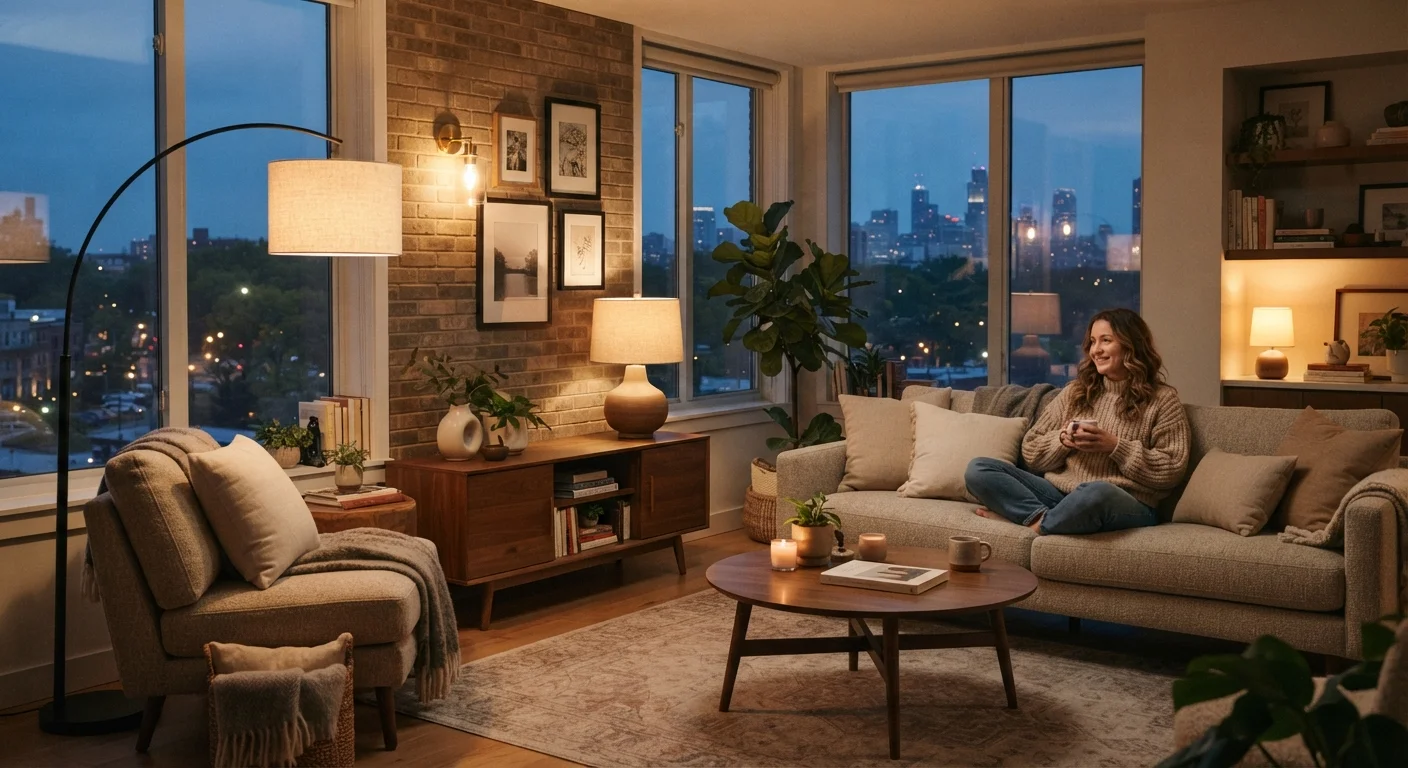
Lighting an Apartment Well When You Can't Rewire Anything

Photo: InsightsTurbo.com | Kickstart Your Knowledge Quest editorial

Renters have more lighting options than most realise. From layered lamps to plug-in sconces, here's how to get good light without touching the wiring.

Key Takeaways

  • Layering three types of light — ambient, task, and accent — makes any rental feel intentional and comfortable.
  • Plug-in sconces, floor lamps, and LED strips can replace or supplement weak overhead fixtures without rewiring.
  • Bulb color temperature (measured in Kelvins) has a significant effect on how warm or clinical a room feels.
  • Smart bulbs and dimmer-compatible lamps give renters control over mood without any permanent changes.
  • Always check your lease before installing anything wall-mounted, even products marketed as damage-free.

Why Apartment Lighting Is So Often Bad

Most apartments ship with a single overhead fixture per room — sometimes a bare bulb socket, sometimes a builder-grade ceiling light positioned dead center. That single source casts flat, unflattering light that makes rooms feel more like a waiting room than a home. The problem isn't the apartment itself; it's the absence of layering.

Good lighting uses three layers working together: ambient (general room fill), task (focused light for reading, cooking, or working), and accent (decorative highlights that add warmth and depth). Most rentals only address ambient, and even then, poorly. Understanding this framework is the first step — for a deeper look at how these layers interact, see The Lighting Decisions That Change How Every Room Feels.

Overhead Fixtures You Can't Remove — But Can Improve

If your apartment has an overhead fixture you dislike but can't replace, you can often swap the bulb for a warmer or dimmer option without touching any wiring. Some fixtures also accept clip-on diffusers or shades that soften harsh light. Check what bulb type the fixture takes before purchasing a replacement — most standard sockets accept E26 (medium base) LED bulbs.

Best Practices for Lighting a Renter-Friendly Space

These approaches work across virtually any apartment layout — no tools, no landlord approval for wiring, and no deposit risk.

1

Replace every bulb in your apartment with a warm-white LED at 2700K–3000K.

Color temperature is one of the most overlooked variables in home lighting. Cool or daylight bulbs (above 4000K) produce harsh, bluish light that makes spaces feel sterile. Warm-white LEDs mimic incandescent tones and make walls, wood, and skin tones look far more inviting. This change costs almost nothing and is fully reversible.
Example: Swapping out a 5000K 'daylight' bulb in a bedside lamp for a 2700K warm-white LED instantly softens the room's feel — many renters describe the difference as dramatic even with nothing else changed.
2

Add at least one floor lamp and one table lamp to every main living area.

Multiple lower light sources distribute light more evenly and eliminate the harsh shadows created by a single ceiling fixture. They also give you control — you can use just the table lamp for a quiet evening, or run everything for a well-lit gathering. Plug-in floor and table lamps require no installation whatsoever.
Example: A tall arc floor lamp positioned behind a sofa can illuminate a reading spot while also filling a corner that the overhead light never reached.
3

Use plug-in sconces to add wall-level lighting without touching the wiring.

Sconces at eye or shoulder height create the kind of layered, considered lighting found in well-designed spaces — but traditionally they require hardwiring. Plug-in versions thread a cord to a nearby outlet and can be hung with adhesive strips or a single small hook, depending on your lease allowances. They're especially effective in bedrooms and living rooms where reading or relaxing happens.
Example: A pair of plug-in fabric-shade sconces flanking a bed headboard replaces two bedside table lamps, freeing up nightstand space while giving each person their own reading light.
4

Use LED strip lights behind furniture or under cabinets to add accent layers.

Accent lighting draws the eye to architectural features, shelving, or artwork, and creates a sense of depth that a flat overhead fixture cannot. Adhesive-backed LED strips are removable, inexpensive, and available in color-adjustable and dimmable versions. They work especially well behind a TV unit, under kitchen cabinets, or along a bookshelf.
Example: LED strips tucked behind a TV console create a soft glow that reduces eye strain during screen time and gives the room a polished, layered look after dark.
5

Install smart bulbs or plug-in dimmer adapters to control light intensity.

A room at full brightness at 10 p.m. signals your brain to stay alert. Being able to dim your lights — even just your floor lamps — supports winding down at the end of the day and lets you shift the same space from functional to relaxing. Smart bulbs screw in like any standard bulb and are fully removable; plug-in dimmer adapters require no electrical knowledge.
Example: Setting a smart bulb to 30% brightness and 2700K in the evening creates a noticeably different atmosphere from the same lamp at full power during daytime work hours.
6

Position lamps to eliminate dark corners, not just to light the center of the room.

Dark corners make rooms feel smaller and less finished. Directing light into corners — with a torchière floor lamp, an upward-pointing table lamp, or even a small plug-in nightlight — visually expands the room and adds warmth. This is especially useful in studios and one-bedroom apartments where every square foot matters.
Example: A slim upward-pointing floor lamp pushed into the far corner of a living room can make a 350-square-foot studio feel noticeably more open by illuminating a previously shadowed zone.

Quick Wins You Can Do Today

You don't need to overhaul every room at once. A few targeted changes this afternoon can meaningfully transform how your space feels tonight.

high Swap every overhead bulb in your bedroom and living room for a 2700K warm-white LED today — it takes under 10 minutes and immediately changes the room's mood.
medium Move an existing table lamp from a low-traffic spot to the darkest corner of your main room to see how corner lighting changes your perception of the space.
high Plug in a simple plug-in dimmer adapter to your brightest floor lamp so you can reduce intensity in the evening without buying anything new.
medium Use a battery-powered LED puck light inside a dark wardrobe or under a kitchen cabinet to add task lighting where no outlet exists nearby.

Better lighting also supports other renter-friendly upgrades. If you're working on making a tight space feel roomier overall, Making a Small Room Feel Larger Without Demolishing a Wall covers how light placement intersects with layout and color choices.

What to Check Before You Mount Anything

Even products marketed as "damage-free" or "renter-safe" can leave residue, pull paint, or breach lease terms if used incorrectly. Adhesive hooks rated for heavier sconces may still violate a no-alteration clause depending on how your lease is written.

Before installing any wall-mounted fixture — even a plug-in sconce with adhesive backing — review your lease carefully. Understanding Your Lease Before You Hang a Single Picture explains what common lease clauses actually prohibit and how to interpret ambiguous language. When in doubt, ask your landlord in writing so you have a record.

Photograph Your Walls Before Using Adhesive Products

Before applying any adhesive hook, strip, or mount, take a photo of the wall area at close range. This documents the wall's condition before your changes and protects you when you move out. When removing adhesive products, follow the manufacturer's removal instructions exactly — pulling at the wrong angle is what causes paint to peel.

Once you've got the lighting right, you may find you want to extend that same intentional approach beyond your main rooms. The principles of layering and ambiance apply just as well outdoors — Setting Up an Outdoor Living Space You'll Actually Use is a useful next read if you have a balcony or patio to work with.

Home & Living Editorial Team

InsightsTurbo.com | Kickstart Your Knowledge Quest

Home & Living Editorial Team is the collective byline for our editorial team and contributor network. Articles published under this byline or an editorial pen name are researched, written, and reviewed according to our editorial standards for clarity, consistency, and independence before publication.

Home Setup BasicsHome ImprovementGarden & Outdoors
View author profile

The content provided on our blog site traverses numerous categories, offering readers valuable and practical information. Readers can use the editorial team’s research and data to gain more insights into their topics of interest. However, they are requested not to treat the articles as conclusive. The website team cannot be held responsible for differences in data or inaccuracies found across other platforms. Please also note that the site might also miss out on various schemes and offers available that the readers may find more beneficial than the ones we cover.