
Building a Home Toolkit: The Basics That Handle Most Jobs

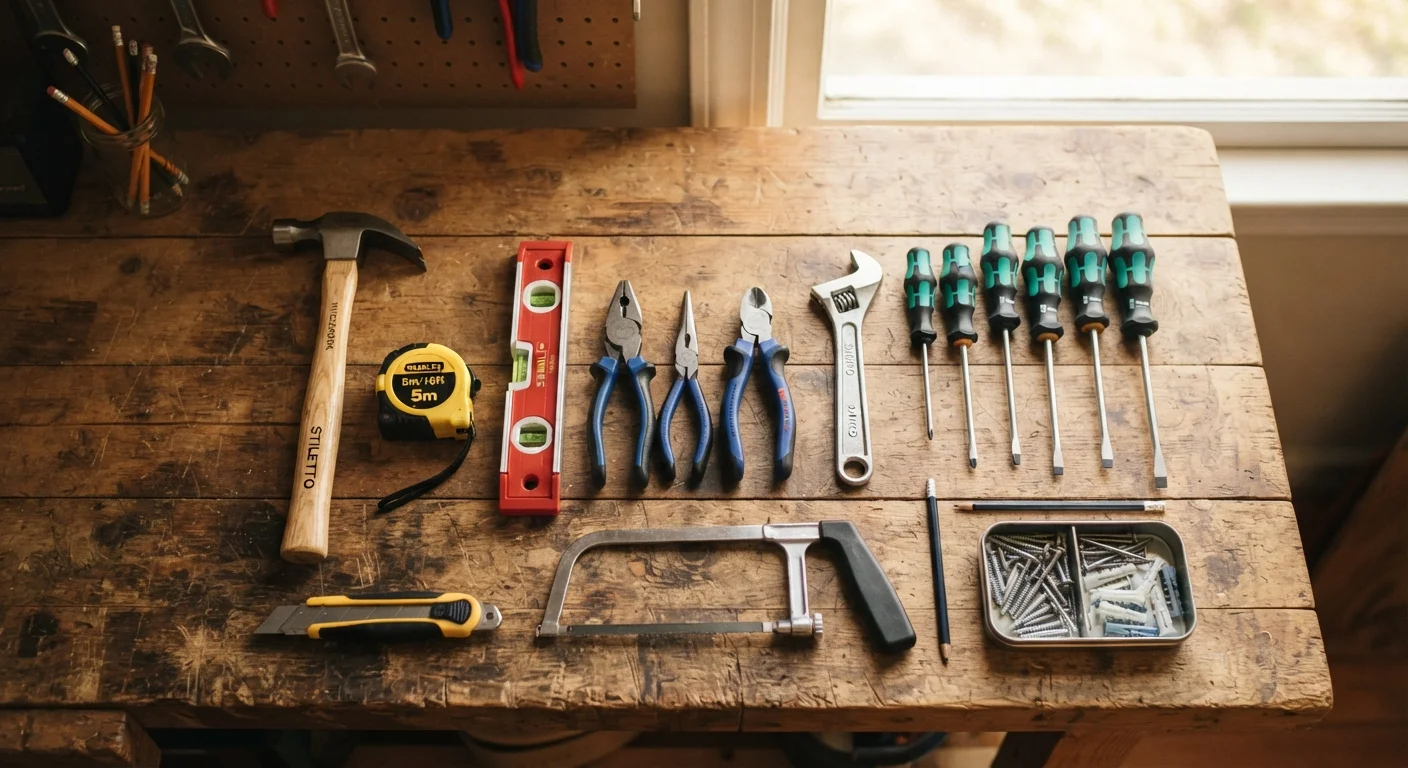
Photo: InsightsTurbo.com | Kickstart Your Knowledge Quest editorial
Why Every Home Needs a Basic Toolkit
Whether you're hanging a shelf, assembling flat-pack furniture, patching a squeaky floorboard, or tightening a loose cabinet hinge, almost every household fix comes down to a handful of reliable hand tools. Starting with the right basics means you'll rarely be caught off guard by a minor problem that turns into an expensive service call.
This reference covers the core tools and supplies that handle the vast majority of everyday household jobs - without overcomplicating your shopping list. If you're just getting started with home upkeep in general, our beginner's home improvement guide walks through essential skills alongside the tools that support them.
| Minimum starter tools recommended | 8-10 hand tools |
| Most versatile hammer weight | 16 oz claw hammer |
| Standard stud spacing in US homes | 16 inches on center |
| Recommended measuring tape length | 25 feet |
| Jobs covered by a basic toolkit | Assembly, hanging, patching, tightening |
The Core Hand Tools
These are the tools that earn their space in any toolkit:
- Claw hammer - Drives and removes nails. A 16 oz head is the most versatile weight for general household tasks.
- Flathead and Phillips screwdrivers - A basic set covering several sizes handles cabinet hardware, outlet covers, furniture assembly, and more. Look for comfortable grip handles.
- Measuring tape - A 25-foot, locking tape measure is the standard for furniture placement, hanging artwork, and general measuring.
- Level - A 24-inch bubble level keeps shelves, frames, and fixtures straight. A small torpedo level (9 inches) is handy in tighter spaces.
- Adjustable wrench - One wrench that opens and closes to fit different bolt and nut sizes, replacing the need for an entire socket set for basic jobs.
- Needle-nose pliers - Grips small objects, bends wire, and reaches into tight spots that fingers can't.
- Utility knife - Scores drywall, cuts packing tape, trims caulk, and dozens of other tasks. Replace blades regularly for clean, safe cuts.
- Cordless drill/driver - Not strictly a hand tool, but indispensable. It drives screws faster and more consistently than a manual screwdriver and doubles as a drill for hanging anchors. Even a basic model handles most home tasks.
Stud
A vertical framing member hidden inside a wall, typically spaced 16 inches apart. Screwing into a stud provides a much stronger anchor point than drywall alone.
Wall anchor
A fastener inserted into drywall or masonry to support a screw when no stud is present. Different types are rated for different weight loads.
Torque
The rotational force applied when tightening a screw or bolt. Applying too much torque can strip screw heads or damage the material being fastened.
Spackling
A lightweight paste compound used to fill small holes, dents, and cracks in drywall. It dries hard and can be sanded smooth before painting.
Pilot hole
A small hole drilled before inserting a screw, preventing wood from splitting and making it easier to drive the screw straight.
Supplies That Belong in Every Toolkit
Tools alone only get you so far. These consumable supplies round out a functional kit:
- Assorted screws and nails - A variety pack covering common lengths saves repeated hardware store trips.
- Wall anchors - Essential for hanging anything on drywall where a stud isn't available. Plastic expansion anchors handle most light-to-medium loads.
- Painter's tape - Used for masking before painting, temporarily labeling things, and light repairs without surface damage.
- Wood glue and super glue - Wood glue for furniture joints; super glue for small ceramic, plastic, or metal fixes.
- Putty knife - For applying and smoothing spackling paste on small wall holes left by nails or screws.
- Spackling paste - Fills minor dents, nail holes, and small cracks in drywall before painting.
- Duct tape and electrical tape - Temporary fixes and insulating electrical connections, respectively.
- WD-40 or similar penetrating oil - Loosens rusted screws, lubricates squeaky hinges, and frees stuck zippers or sliding door tracks.
Many home repairs also call for specialty materials once you get into bathrooms and kitchens. The grout, caulk, and tile adhesive glossary explains the materials you'll encounter in tiling and waterproofing jobs.
Storage Matters as Much as Selection
Knowing When Your Toolkit Isn't Enough
A solid basic kit handles hanging, assembling, patching, tightening, and light repairs. It does not replace a licensed professional for electrical wiring, gas lines, structural work, or plumbing that connects to the main supply. When a job requires a permit or specialized training, the safer and often more cost-effective path is to call a qualified tradesperson.
For a balanced look at when DIY makes sense and when it doesn't, see the real costs of DIY vs. hiring a tradesperson. And once your toolkit is ready, home maintenance tasks every renter and new owner should know gives you a practical checklist of recurring jobs your new tools will help you tackle.
The content provided on our blog site traverses numerous categories, offering readers valuable and practical information. Readers can use the editorial team’s research and data to gain more insights into their topics of interest. However, they are requested not to treat the articles as conclusive. The website team cannot be held responsible for differences in data or inaccuracies found across other platforms. Please also note that the site might also miss out on various schemes and offers available that the readers may find more beneficial than the ones we cover.